What Counts as a Reliable ETA in Road Freight — and Why Most Aren't

What Counts as a Reliable ETA in Road Freight — and Why Most Aren't
An estimated time of arrival (ETA) is only useful if you can act on it. Most road freight ETAs look precise but aren't reliable: they're built on thin tracking data, ignore the things that actually delay a truck, and never get measured against what really happened. A reliable ETA is one you can plan a dock slot around without getting burned. Getting there is less about a cleverer algorithm and more about the quality and breadth of the data feeding it.
Why ETAs decide more than arrival times
A truck's arrival time rarely matters on its own. It matters because a dozen other decisions hang off it: when the warehouse rosters unloading staff, when the next leg's driver starts their shift, when a customer expects their delivery, whether a production line keeps running. When the ETA is wrong, every one of those decisions is wrong too — and the cost lands somewhere downstream as idle labour, missed slots, detention charges, or a broken promise to a customer.
This is why "we have tracking" and "we have reliable ETAs" are not the same statement. Tracking tells you where a truck is now. An ETA tells you where it will be later, and that is a much harder thing to get right. The gap between the two is where most of the operational pain lives.
The difference between precise and reliable
It is easy to confuse precision with reliability. An ETA that says "14:37" looks more authoritative than one that says "early afternoon." But precision is just how specific the number is. Reliability is whether the number turns out to be true.
A reliable ETA has three properties. First, it is accurate — the predicted time lands close to the actual arrival, consistently, not just on easy lanes. Second, it is honest about uncertainty — a good system tells you when it is confident and when it isn't, rather than projecting false precision on a shipment it can barely see. Third, it is stable — it doesn't swing wildly every few minutes, because an ETA that jumps around is one no planner will trust enough to act on.
A number that is precise but none of these things is worse than useless. It invites people to plan around it, then punishes them for doing so.
Where road freight ETAs go wrong
Four problems explain most unreliable ETAs, and only one of them is about the algorithm.
- The blind-spot problem. You cannot predict the arrival of a truck you cannot see. In European road freight, a single shipment often moves across multiple carriers and subcontractors, each on a different telematics system — or none at all. When position data is missing, stale, or only updates every 30 minutes, the ETA is effectively guessing between fixes. Coverage gaps, not maths, are the most common cause of a bad ETA.
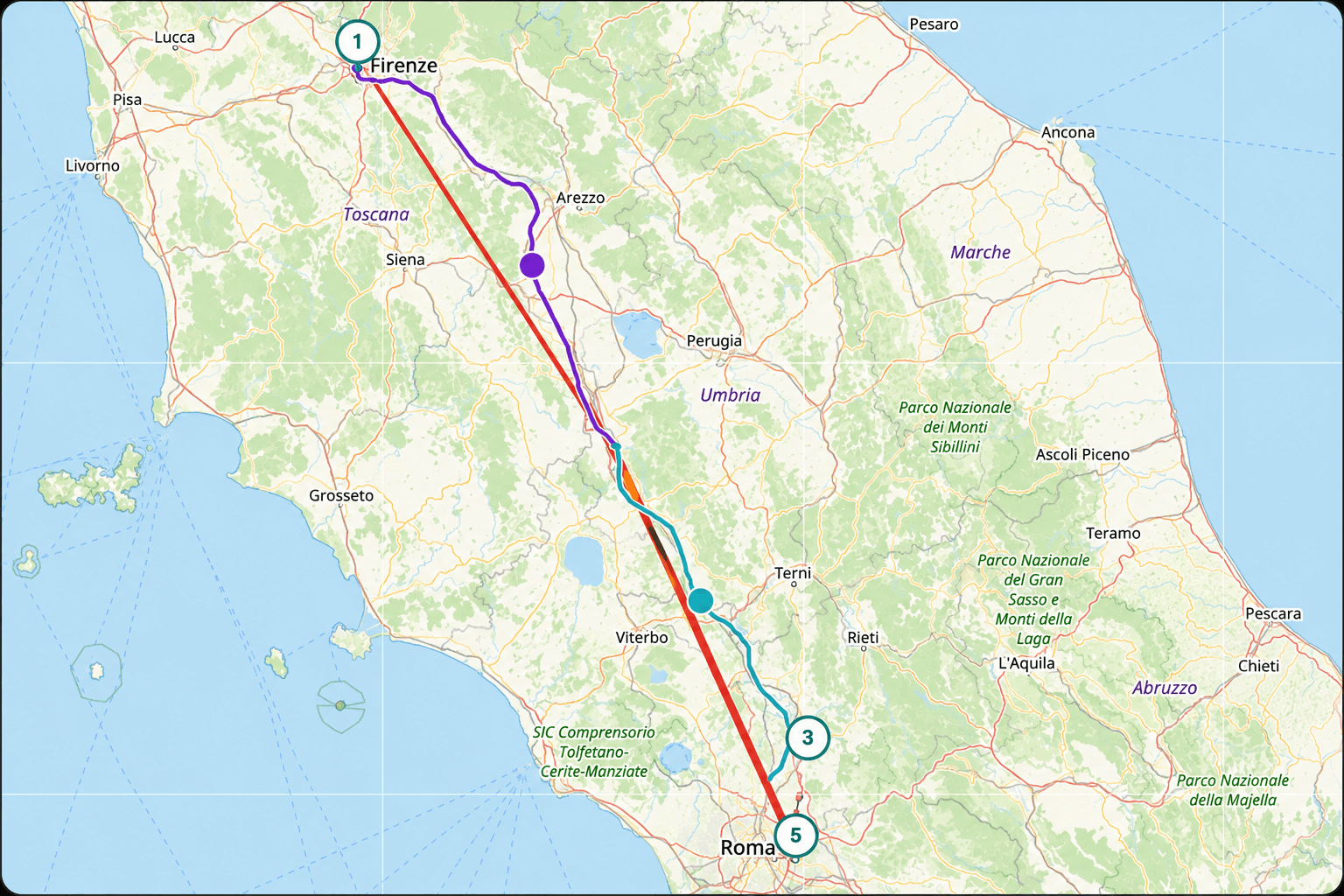
- The straight-line trap. Many ETAs are calculated from distance-to-destination and an assumed average speed. That treats a 40-tonne truck like a delivery van on an empty road. It ignores driver rest rules, which can park a vehicle for 45 minutes or eleven hours regardless of how close it is. It ignores loading and unloading dwell time. It ignores the reality that the last few kilometres into an industrial estate can take longer than the motorway run before it.
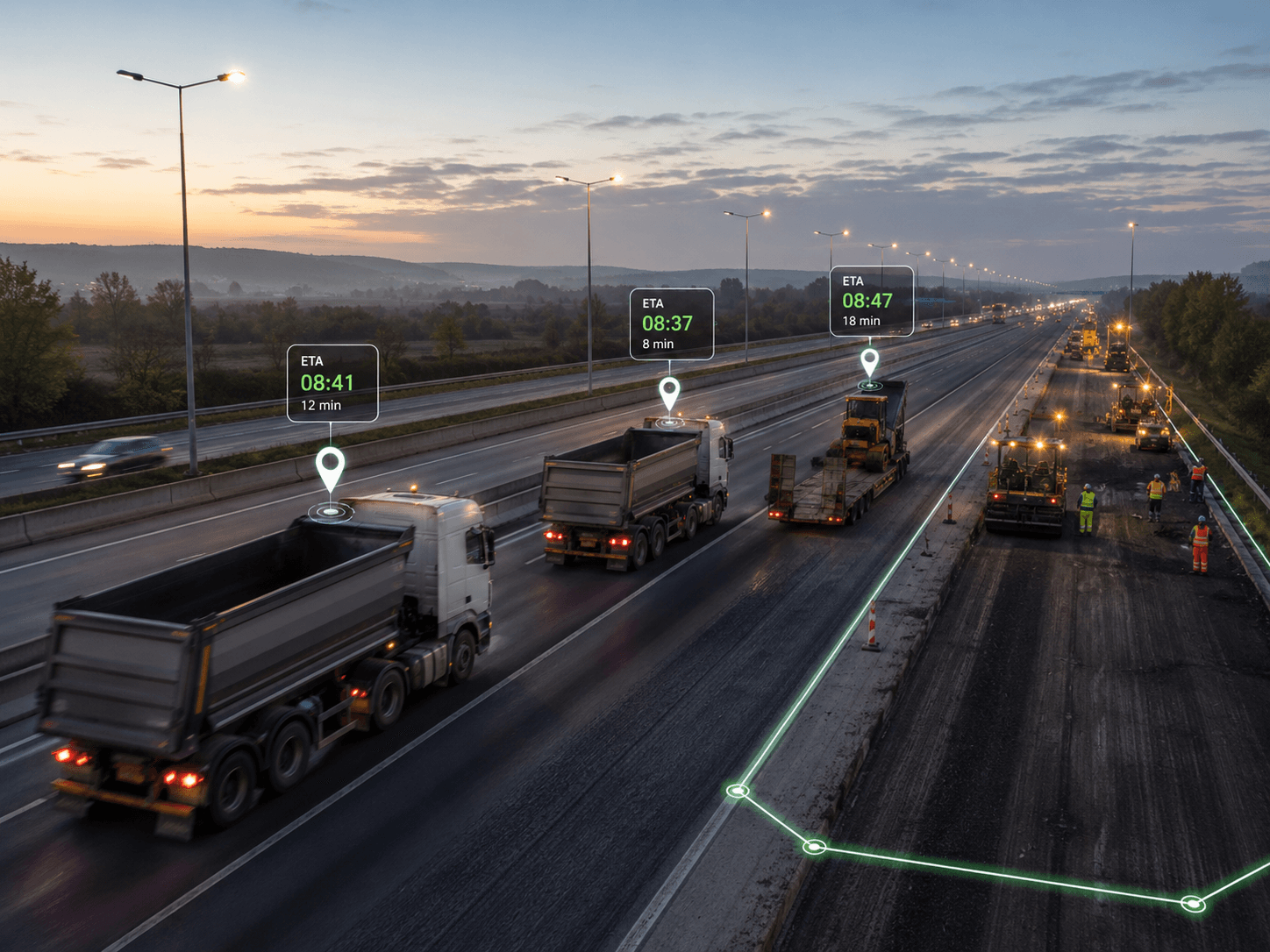
- The static-assumption problem. Traffic, weather, and border or terminal queues change by the hour. An ETA calculated once at dispatch and never refreshed is stale before the truck reaches the first junction. Reliable ETAs are recalculated continuously as conditions change.
- The no-feedback problem. This is the quiet killer. Most operations never compare the ETA they gave to the time the truck actually arrived. Without that loop, nobody knows whether the ETAs are any good, and the system never learns. An ETA engine that doesn't measure itself cannot improve, and you have no basis to decide which ETAs to trust.
What a trustworthy ETA is actually built on
Start with the inputs, not the model. A prediction is only as good as what it can see, and the order of priority is roughly this.
Broad, live position data comes first. The more of the journey you can actually observe — across every carrier and subcontractor on the load, refreshed frequently — the less the system has to guess. Breadth of integration matters as much as the freshness of any single feed, because the weakest-tracked leg sets the reliability of the whole shipment.
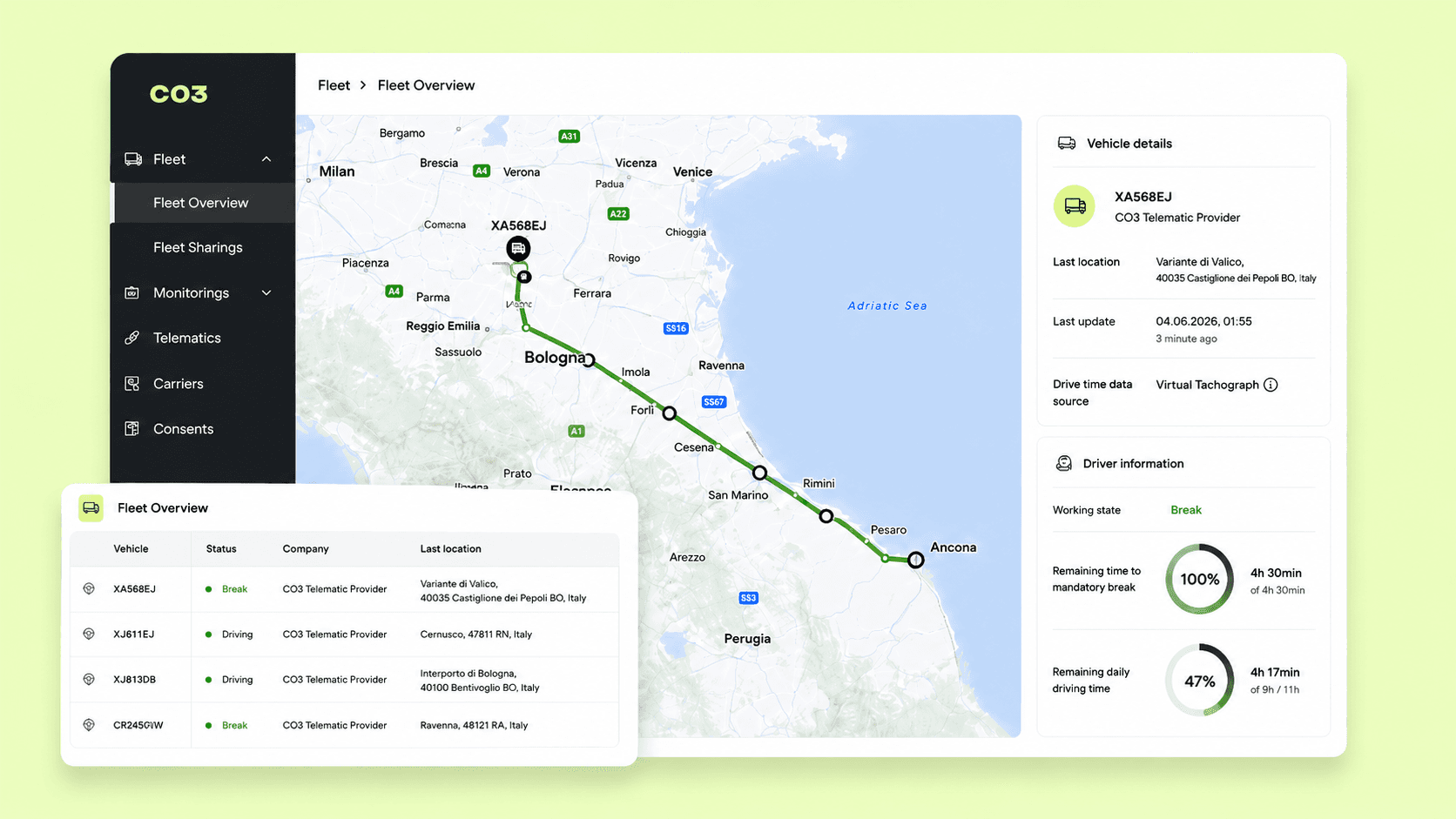
On top of position you layer the things that move a truck's clock: historated travel times for the specific lane and time of day, live traffic and weather, and the operational realities of road freight — driver hours, planned rest, and typical dwell at the loading and unloading sites. A model that knows a driver is approaching a mandatory break will give a very different, and far more accurate, answer than one counting down kilometres.
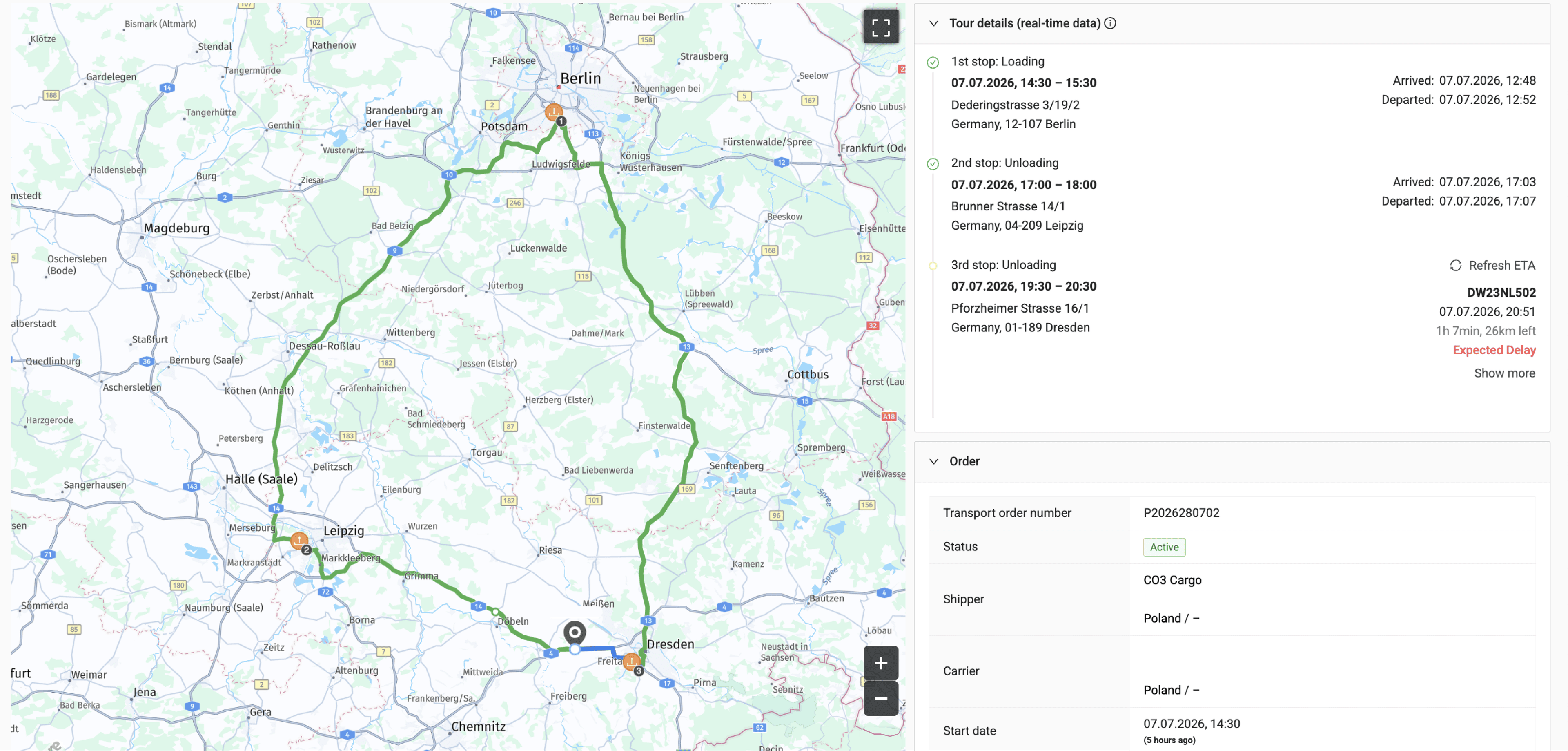
How CO3 approaches this today. CO3 aggregates live telematics from 500+ integrations across trucks, trailers, and subcontractors into a single API, so the ETA is fed by direct vehicle data rather than a single carrier's feed or manual check calls. Because the data comes straight from the vehicles — not modelled estimates — the prediction is grounded in where the freight actually is.
Getting started without replacing your stack
You don't need to rip out your TMS to get better ETAs. A pragmatic path:
First, widen what you can see. Connect the telematics you already have across your carriers and subcontractors so fewer legs are dark. Coverage is the single biggest lever.
Second, start measuring ETA accuracy. Log the predicted ETA at a fixed point (say, dispatch and again two hours out) against actual arrival. You cannot improve what you don't measure, and the first benchmark is usually a wake-up call.
Third, act only on the ETAs that earn trust. Use the confidence signal to decide which predictions drive automated dock-slot booking and customer notifications, and which still need a human eye.
A quick self-assessment
Run your current ETA setup through these questions:
- Can we see live position for every leg of a shipment, including subcontracted ones?
- How often does our position data refresh — minutes, or tens of minutes?
- Does our ETA account for driver hours and rest rules?
- Does it factor live traffic and weather, recalculated en route?
- Do we know our actual ETA accuracy, by lane, as a number?
- Do we capture a confidence level alongside each ETA?
- When an ETA changes, does anyone downstream find out automatically?
- Do we feed actual arrivals back into the system so it learns?
If you answered "no" or "not sure" to three or more, your ETAs are probably precise without being reliable. CO3 can run this assessment with your operations team against your live data.
What to watch over the next 12–18 months
Three shifts are worth tracking. Customer expectations are converging on parcel-style precision — narrow delivery windows and proactive alerts are becoming table stakes for road freight, not a premium. Regulation is reshaping the underlying data: from July 2026, more light commercial vehicles in international and cabotage work come into scope for second-generation smart tachographs, widening the pool of vehicles that can feed accurate, rules-aware ETAs. And buyers are getting more sceptical — "we have AI-powered ETAs" means little without a published accuracy figure, so expect accuracy benchmarking to move from nice-to-have to procurement requirement.
Closing thought
A reliable ETA isn't the one with the most decimal places — it's the one you can build a plan around and not regret it. Reliability comes from seeing the whole journey, modelling the things that actually delay a truck, and measuring yourself honestly against reality. If you can't state your ETA accuracy as a number today, that's the place to start. CO3 can help you measure it and close the gap.
Glossary
- ETA (Estimated Time of Arrival): The predicted time a shipment will reach its destination.
- Telematics: In-vehicle hardware/software that transmits data such as GPS position, speed, and fuel use.
- Dwell time: Time a vehicle spends stationary at a site for loading or unloading.
- Subcontractor leg: A portion of a shipment moved by a carrier other than the contracting one — often on a different (or no) tracking system.
- Confidence band: A range expressing how certain the system is about a prediction.
- Cabotage: Domestic transport carried out by a haulier registered in another country.
- Second-generation smart tachograph: EU-mandated device recording driving and rest time; required for more vehicle classes from 2026.


























.png&w=3840&q=75)











.png&w=3840&q=75)