One construction site, 40 trucks, 12 carriers: the mixed-fleet visibility problem

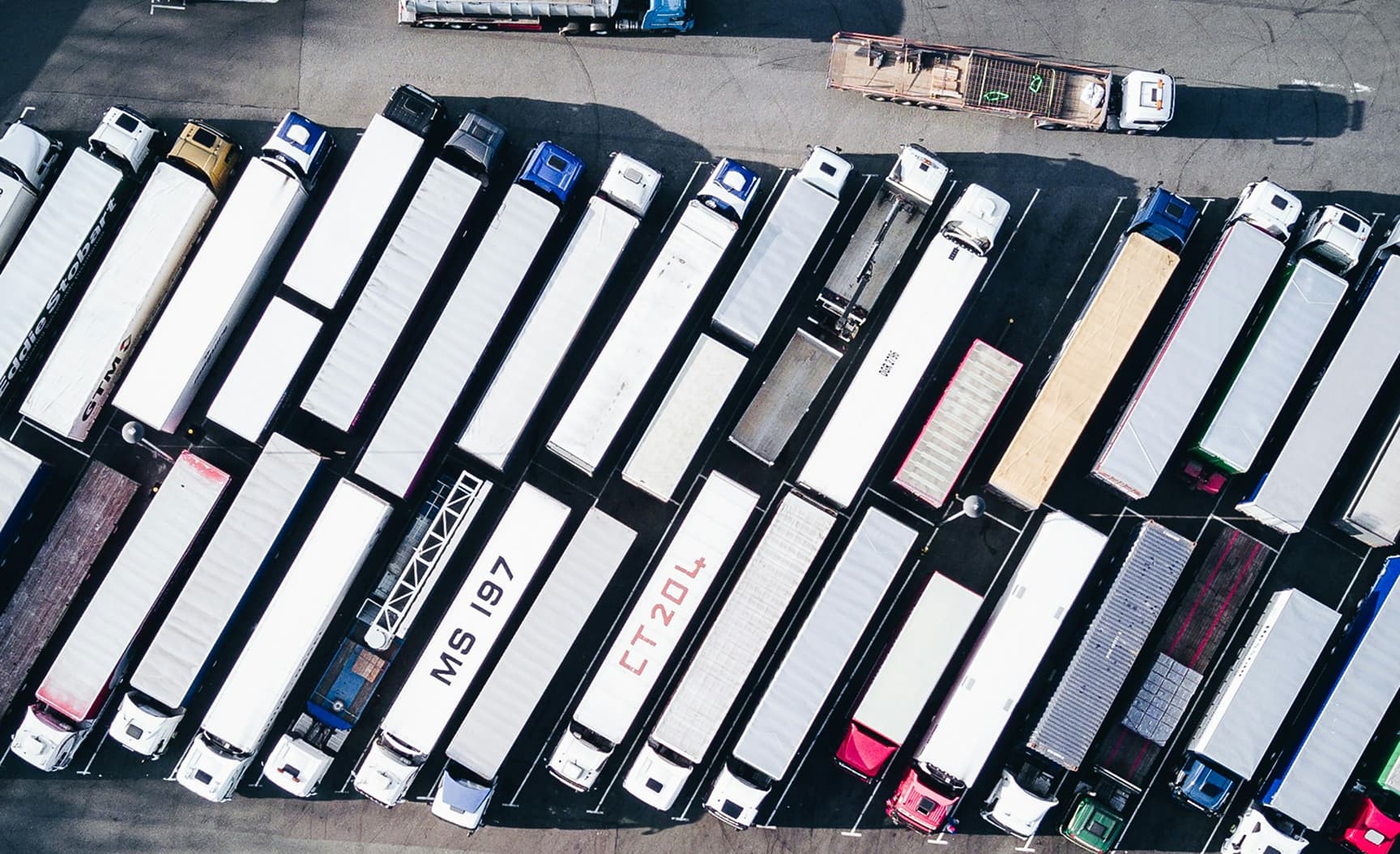
One warehouse site, 40 trucks, 12 carriers: the mixed-fleet visibility problem
A typical European warehouse sees forty truck movements a day across twelve carriers, of which only the contractor's own fleet — usually 20% of the trucks itself — appears in any telematics dashboard. The remaining 80% is the visibility gap. Here is how to close it without forcing every subcontractor onto a new system.
Why this matters?
Construction logistics is not a single fleet. On a midcap contractor's site, the truck movements break down roughly:
- 20% own fleet — owned trucks, the contractor's telematics installed.
- 60% regular subcontractors — hauliers under repeating contracts, each on their own telematics provider.
- 20% occasional carriers — spot hires, brokered loads, plant transporters, ad-hoc truck operators.
Every fleet-telematics product on the market today sees the first 20%. Most see none of the rest. This is the gap that matters for three increasingly serious reasons: per-warehouse site CSRD CO2 sustainability reporting, planning-consent compliance evidence, and dwell-time accountability for the loads that actually slow the site down.
Why most telematics doesn't reach the other 80%
The fragmentation is by design. Subcontractors invest in their own telematics — Volvo Connect, Scania Fleet Management, Webfleet, MiX, Geotab — for their own operational reasons. They will not install the contractor's system. They have no reason to.
So the standard approach — "let's roll out one telematics provider across all our suppliers" — fails on day one of every procurement conversation. The right approach is different: read the data the subcontractor already produces, with consent, and stitch it into the contractor's warehouse site view.
The integration model that works
Three observations make the mixed-fleet problem solvable without forcing system changes:
- The telematics provider catalogue is finite. Across most European subcontractor populations, 80% of trucks are on one of about 25 telematics providers. CO3 maintains 500+ integrations across these and adjacent systems; any subcontractor a contractor commonly uses is almost certainly already wired.
- Consent is per-subcontractor, not per-vehicle. The subcontractor's fleet manager flips one switch in their existing telematics console. That action shares event-level data (geofence enter/exit, drive time, fuel signal, CO2) with the contractor's warehouse site view, for the duration of the contract.
- The contractor never sees the subcontractor's other customers. Data scope is constrained to the contractor's geofences and shipments. Subcontractors share the same data with one customer that they already share via PDF reports with another — but now in real time.
This is not a procurement project. It is a data-sharing agreement, an API hookup, and a five-minute switch flip.
What the contractor sees after the switch is flipped
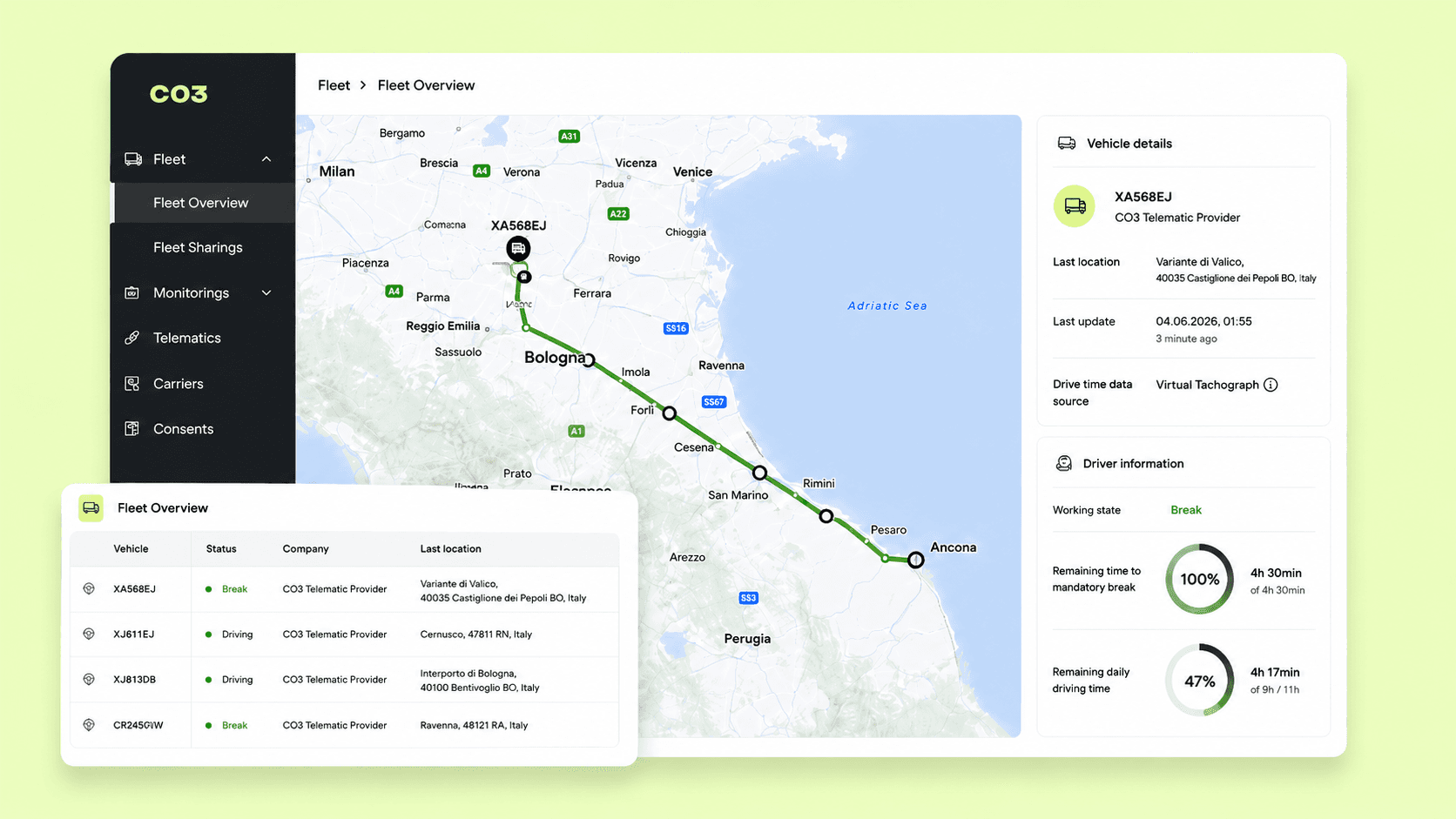
The warehouse site dashboard moves from "20% of trucks visible" to "all twelve carriers visible inside two weeks". The day-to-day operational view changes:
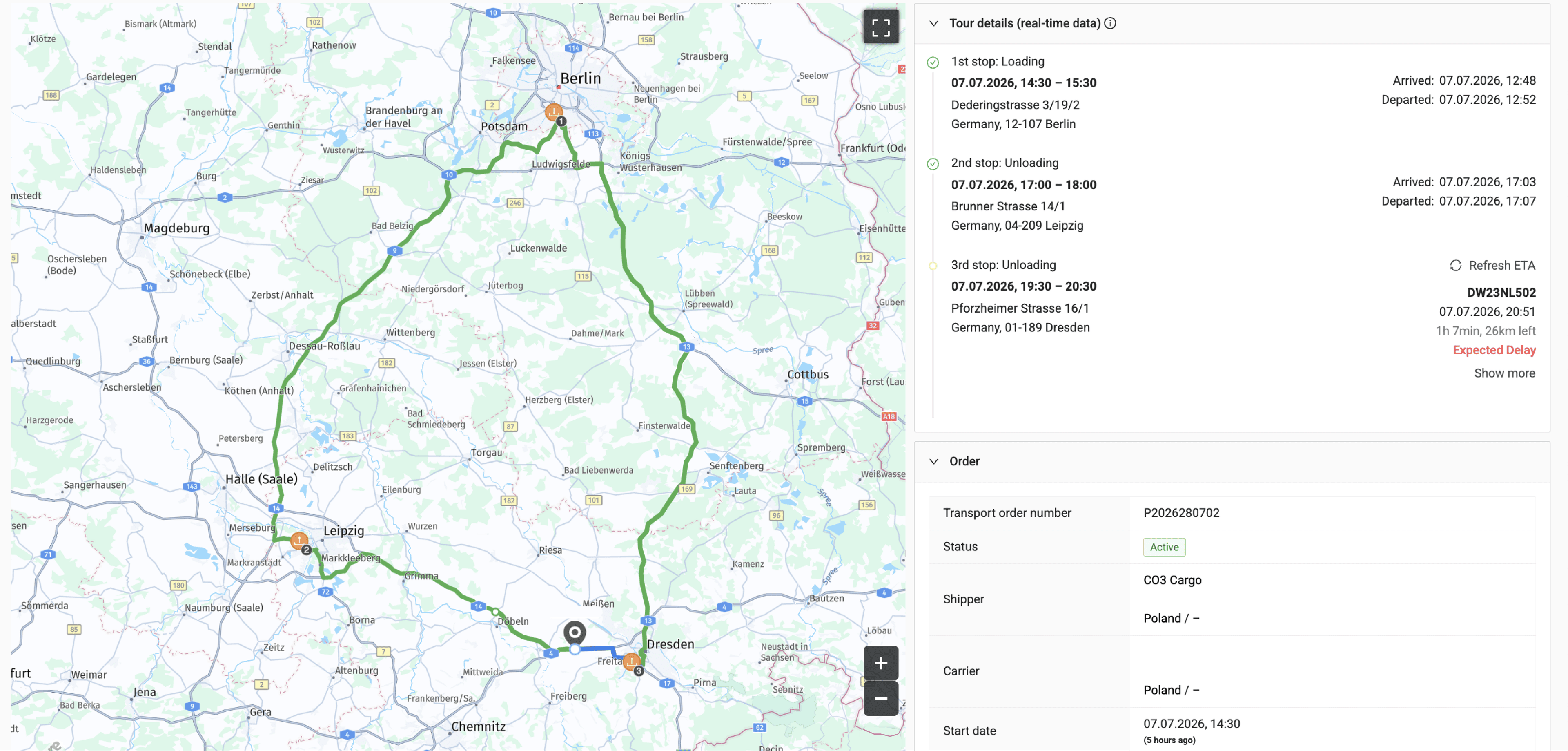
- Gate flow. The site logistics manager sees the next ten trucks approaching, their ETA, and their cargo class — across own fleet and subcontractors.
- Dwell accounting. Time on site, by carrier, by load type. The conversation with the slowest subcontractor goes from anecdotal to numeric.
- CO2 per warehouse site. Aggregated across all 40 movements per day, attributable to the project. This is the number CSRD asks for.
- Compliance evidence. Every truck movement, with Euro class and route, available for the planning-consent monthly report.
A 30-day rollout
- Days 1–5 — Inventory the subcontractor base. Twelve carriers per site is the modal number for midcap contractors; the inventory is one analyst day.
- Days 6–15 — Map each subcontractor to their telematics provider. Send the consent request to the top six (covering ~80% of volume). Most respond inside a week.
- Days 16–25 — Activate the connections. Validate against warehouse site gate logs on three live shipments per carrier.
- Days 26–30 — Turn on the warehouse site dashboard. Run a parallel-week against current manual logging. The visibility delta is usually self-evident.
CO3 has run this 30-day pattern across European construction logistics operations.
What to watch over the next 12 months
- Planning consent in the UK, DE, and FR is increasingly conditional on live truck-movement evidence. Local-authority requirements will tighten in 2026–27.
- The new CountEmissionsEU methodology requires per-leg CO2 attribution; for construction this maps directly onto per-warehouse site CO2.
- Mixed-fleet visibility is the precondition for predictive warehouse site ETA. Concrete and asphalt deliveries (90-minute windows) need this.
Closing thought
The mixed-fleet problem is not a system-change problem. It is a data-sharing-architecture problem, and the architecture exists. Twelve carriers, forty trucks, one dashboard — inside thirty days, without forcing any subcontractor to change anything they already do.
Glossary
- Own fleet — vehicles owned and operated by the contractor.
- Subcontractor — third-party haulier under contract; uses its own telematics.
- Occasional carrier — spot hire, brokered load, ad-hoc truck operator.
- Geofence — a virtual perimeter; entering/exiting it produces a timestamped event.
- Aggregator — a telematics integration platform that connects multiple OEM/provider feeds.
- Planning consent — local-authority approval to operate a construction site, often with traffic conditions.
- CountEmissionsEU — EU methodology for transport CO2 disclosure.






























.png&w=3840&q=75)










.png&w=3840&q=75)