How freight forwarders win with real-time data

How freight forwarders win with real-time data
Freight forwarders don't own the trucks. That used to be an advantage
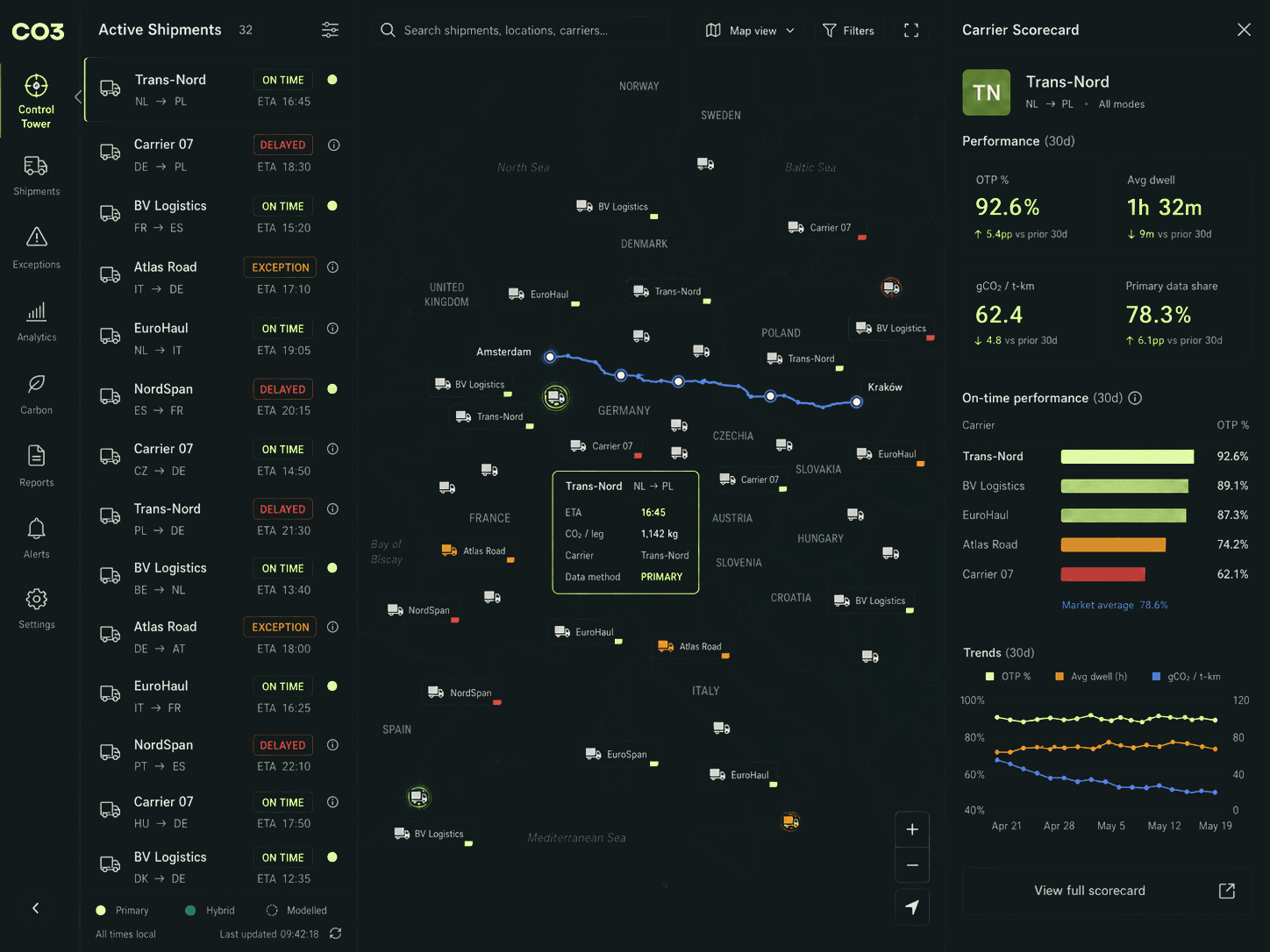
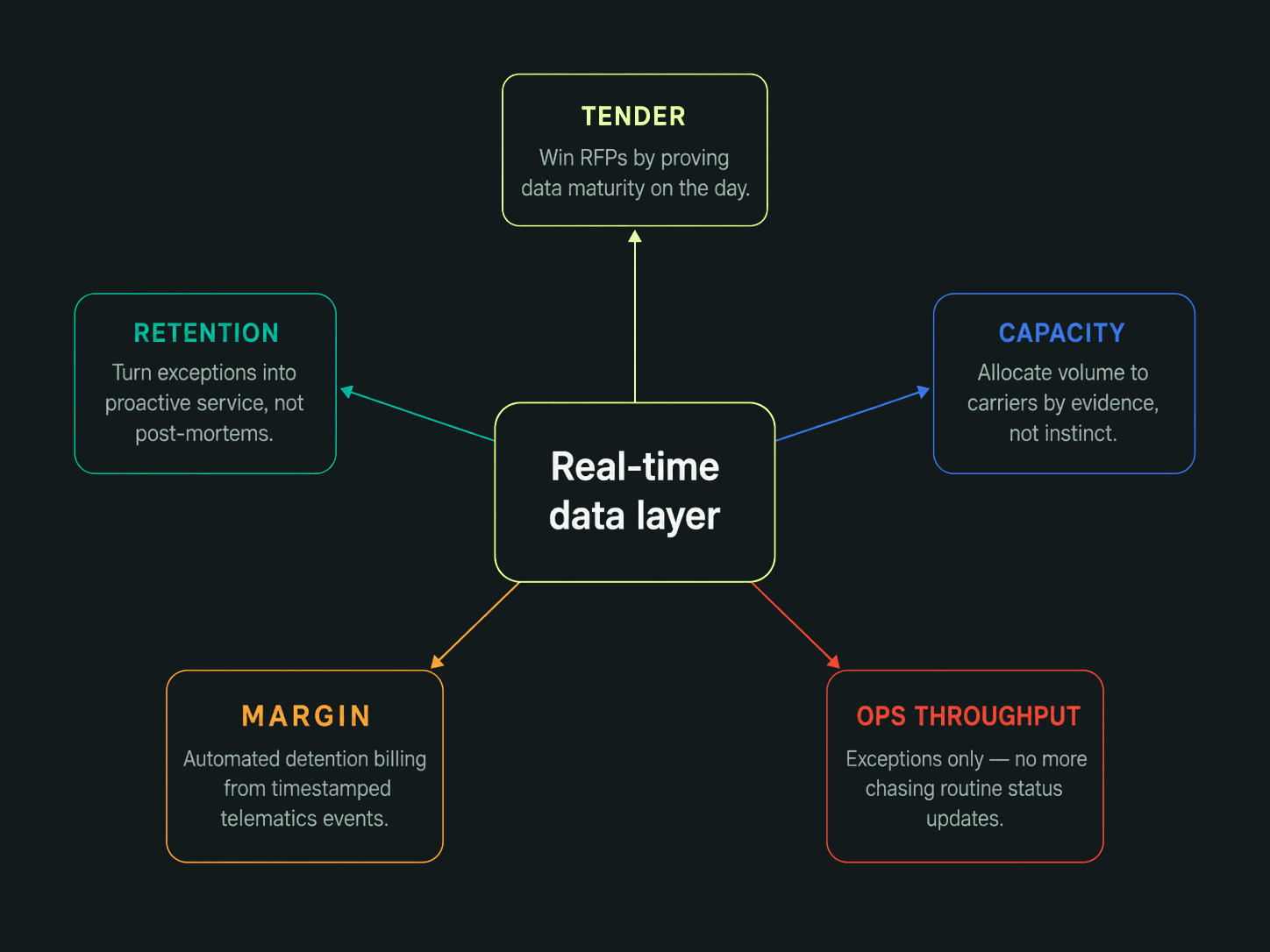
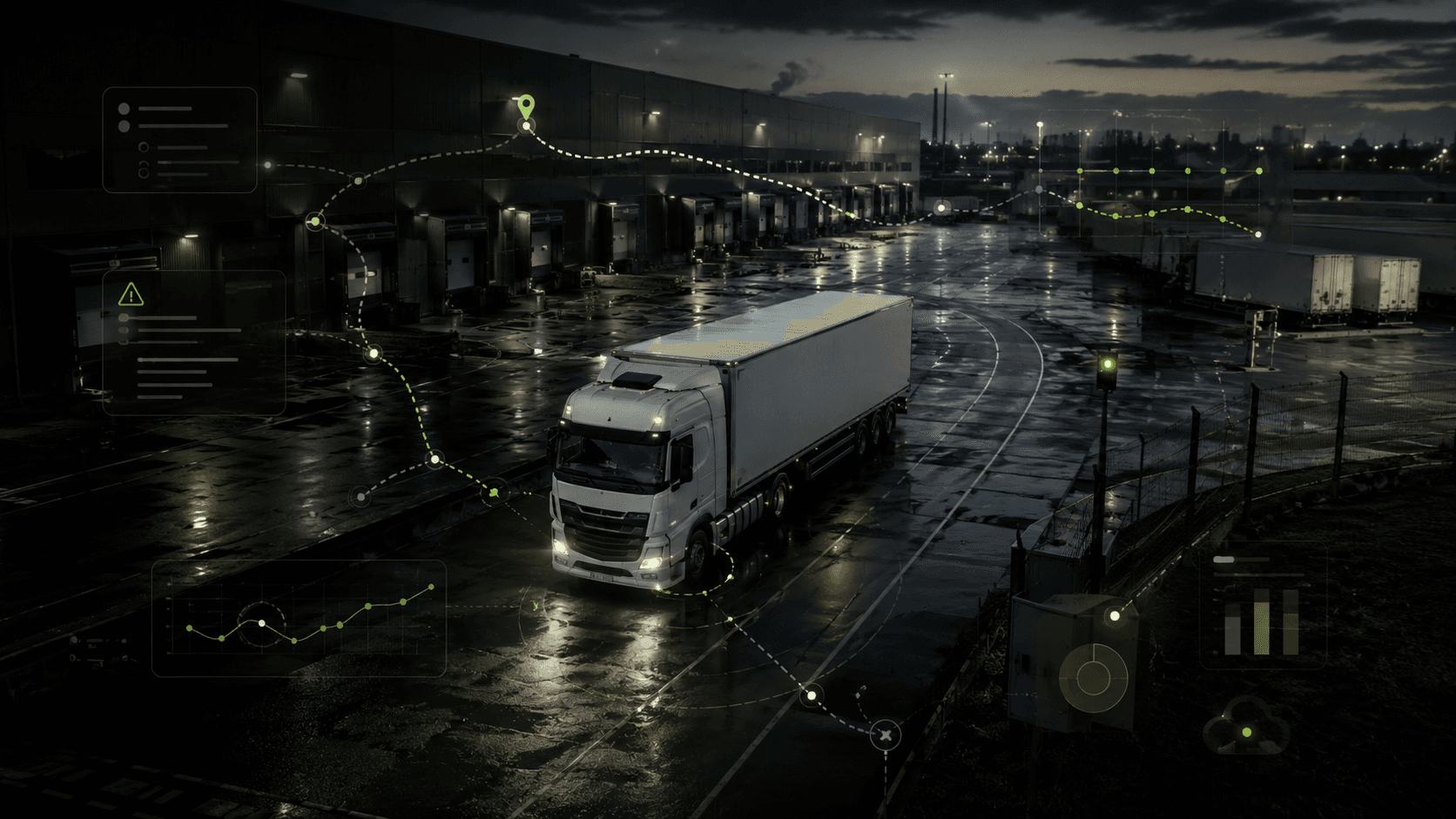
Light balance sheet, flexible capacity, pure margin on coordination. Today, this setup can quickly become a liability. Shippers now expect per-shipment visibility, emissions transparency and proactive exception handling as table stakes. This data they want is sitting inside the subcontracted carriers' telematics systems — which forwarders have historically had the least access to. The forwarders winning 2026 tenders are not the ones buying trucks. They are the ones building a real-time data layer across every carrier they use — and turning that layer into five distinct commercial wins: better tenders, higher retention, protected margin, smarter capacity allocation and faster ops.
Why freight forwarders are uniquely exposed
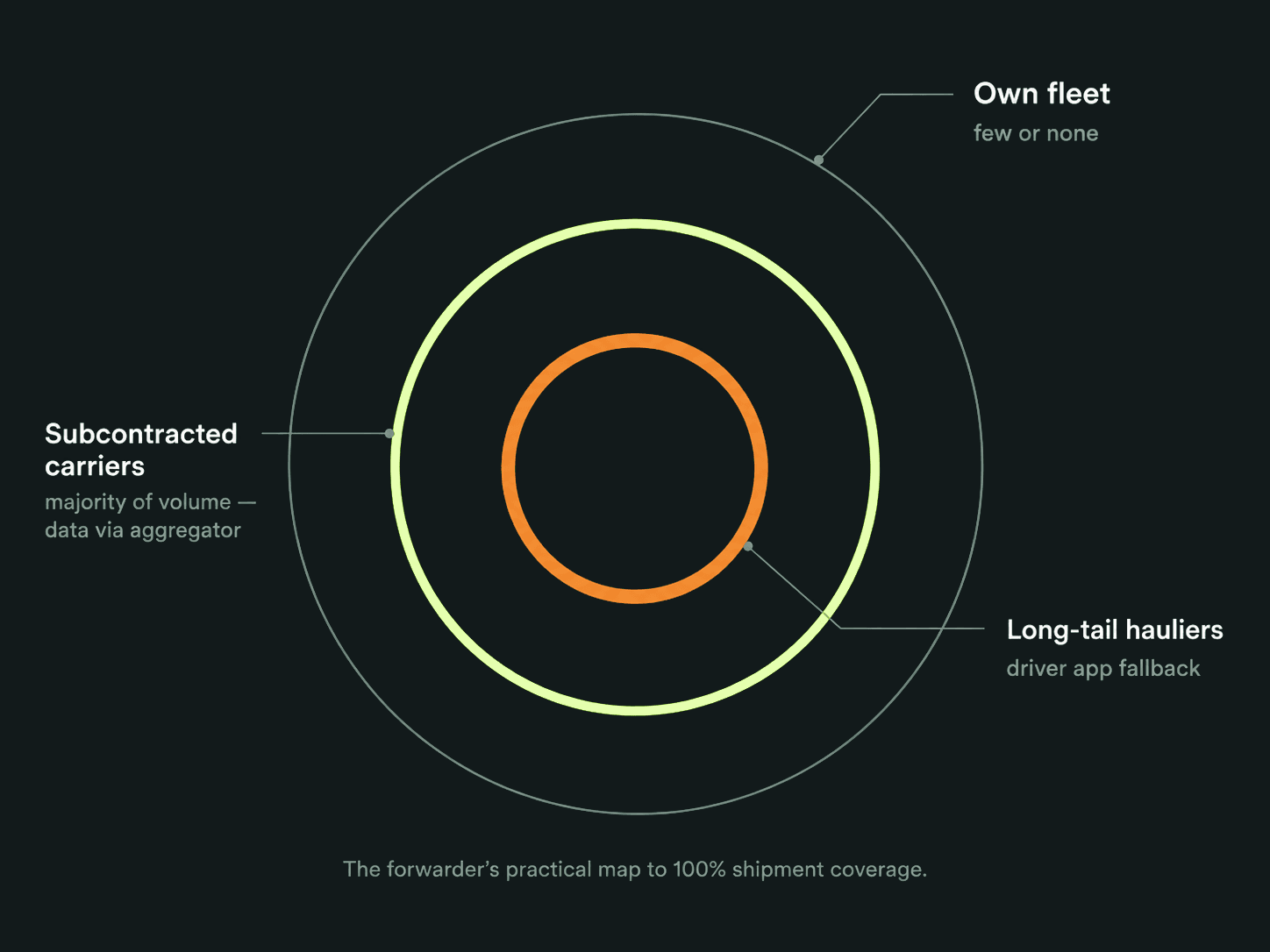
A freight forwarder — also called a 3PL, an LSP (Logistics Service Provider), or, in some European markets, a commissionnaire de transport / Spediteur — is in the business of arranging transport on behalf of shippers, usually by contracting it out to carriers. A forwarder may operate thousands of shipments a week and own very few vehicles of its own. Its product is the coordination layer, not the asset.
For decades this was a structural advantage. Asset-light meant you could pivot lanes, flex capacity up and down seasonally, and avoid the capital intensity that sank so many hauliers through fuel-price cycles. The margin came from knowing the right carrier, at the right price, at the right moment.
In 2026, three forces are putting pressure on that model at the same time.
- Shippers have established visibility requirements. Where a shipper once asked for a monthly performance report, they now ask — at tender time, before contracts are signed — for per-shipment live ETA sharing, per-leg CO₂ emissions in an ISO 14083-aligned form, a documented exception-management process, and a data feed into their own TMS or control tower. A forwarder who can provide this wins shelf space. A forwarder who cannot is quietly descoped at the next RFP.
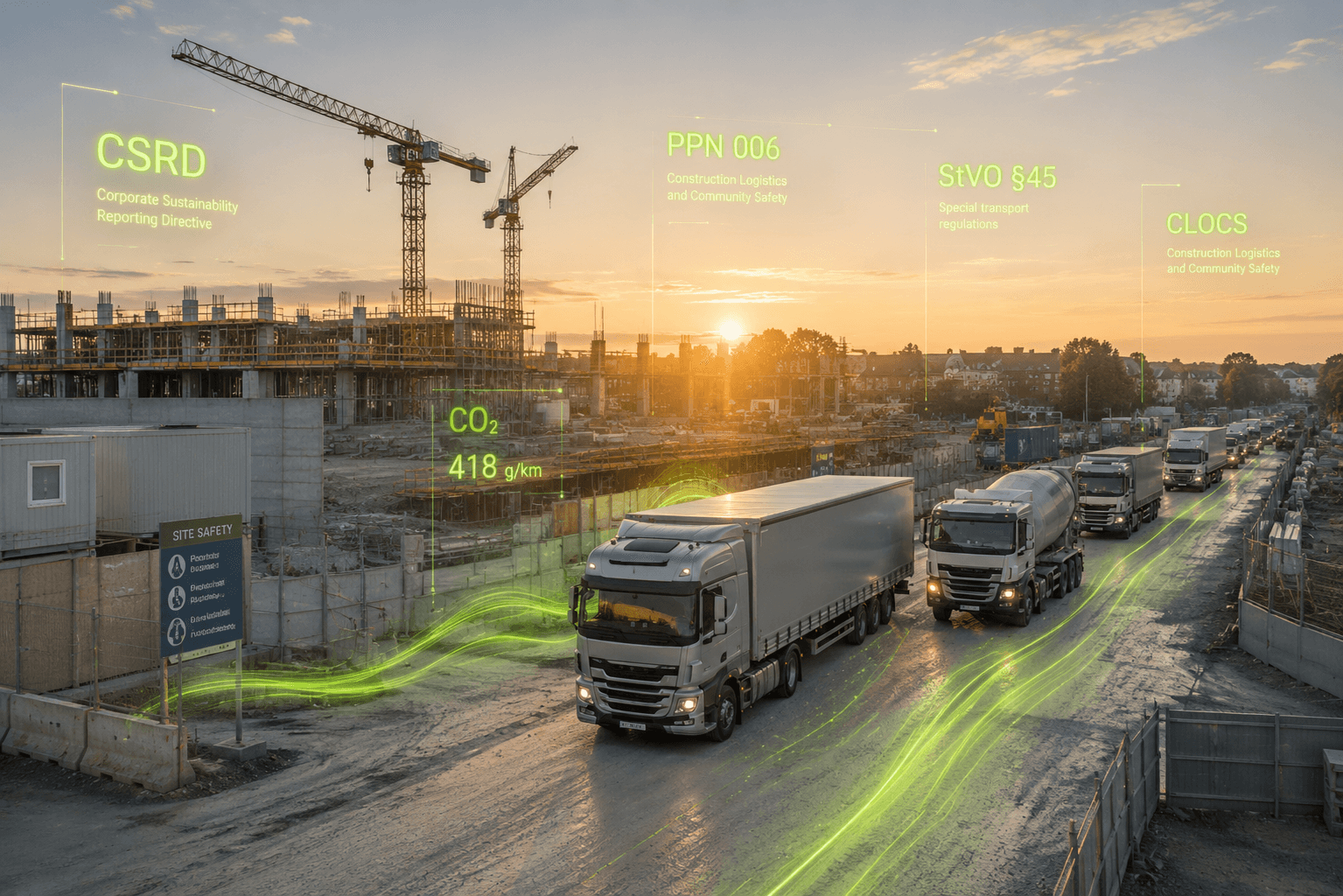
- Sustainability reporting shifted the question from the forwarder's own footprint to the forwarder's supplier emissions. Large shippers are in scope of the EU's Corporate Sustainability Reporting Directive (CSRD) and have to report their Scope 3 Category 4 emissions — upstream transport. Every shipment the forwarder arranges on their behalf shows up in that report. When the forwarder cannot supply primary-data emissions for a load, the shipper falls back to defaults and notices that the forwarder's number is systematically higher than a direct carrier's. Over multiple cycles this becomes a structural disadvantage.
- Digital-native competitors are arriving. A new generation of visibility-first 3PLs — digital forwarders, agentic-AI-powered brokers — is selling the data layer as the product and treating capacity as almost secondary. Traditional forwarders with the better carrier network but the thinner data layer are finding themselves in an awkward position: superior physical network, inferior customer experience.
The combination means that the forwarder's ability to collect, structure and expose real-time data from every carrier it uses has quietly become its core commercial capability — and the one most under-invested today.
What shippers are actually asking for in 2026
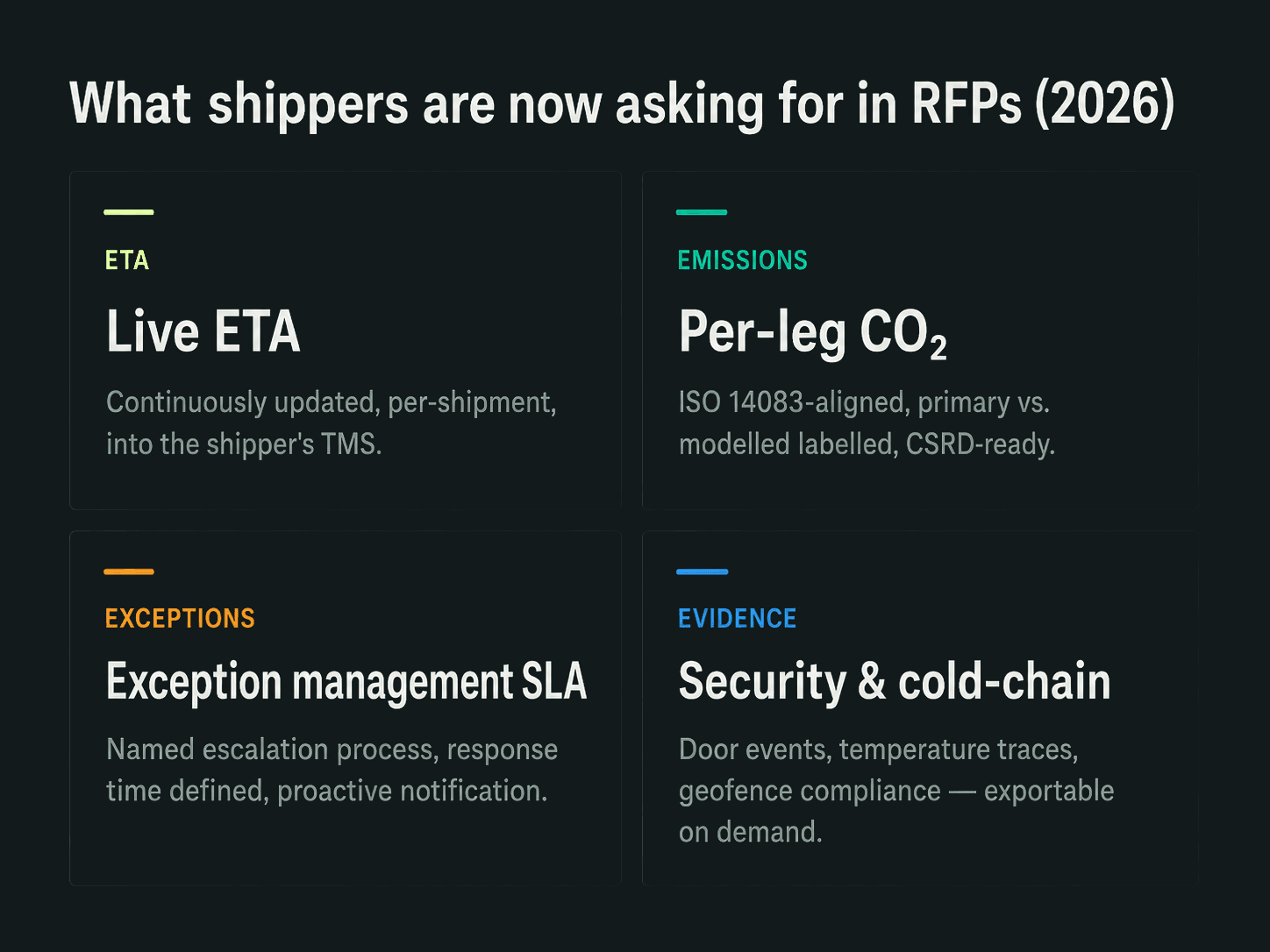
Before walking through the five wins, it's worth setting out what "real-time data" means from your shipper's or customer's side. Four requirements now show up in almost every serious European transport RFP.
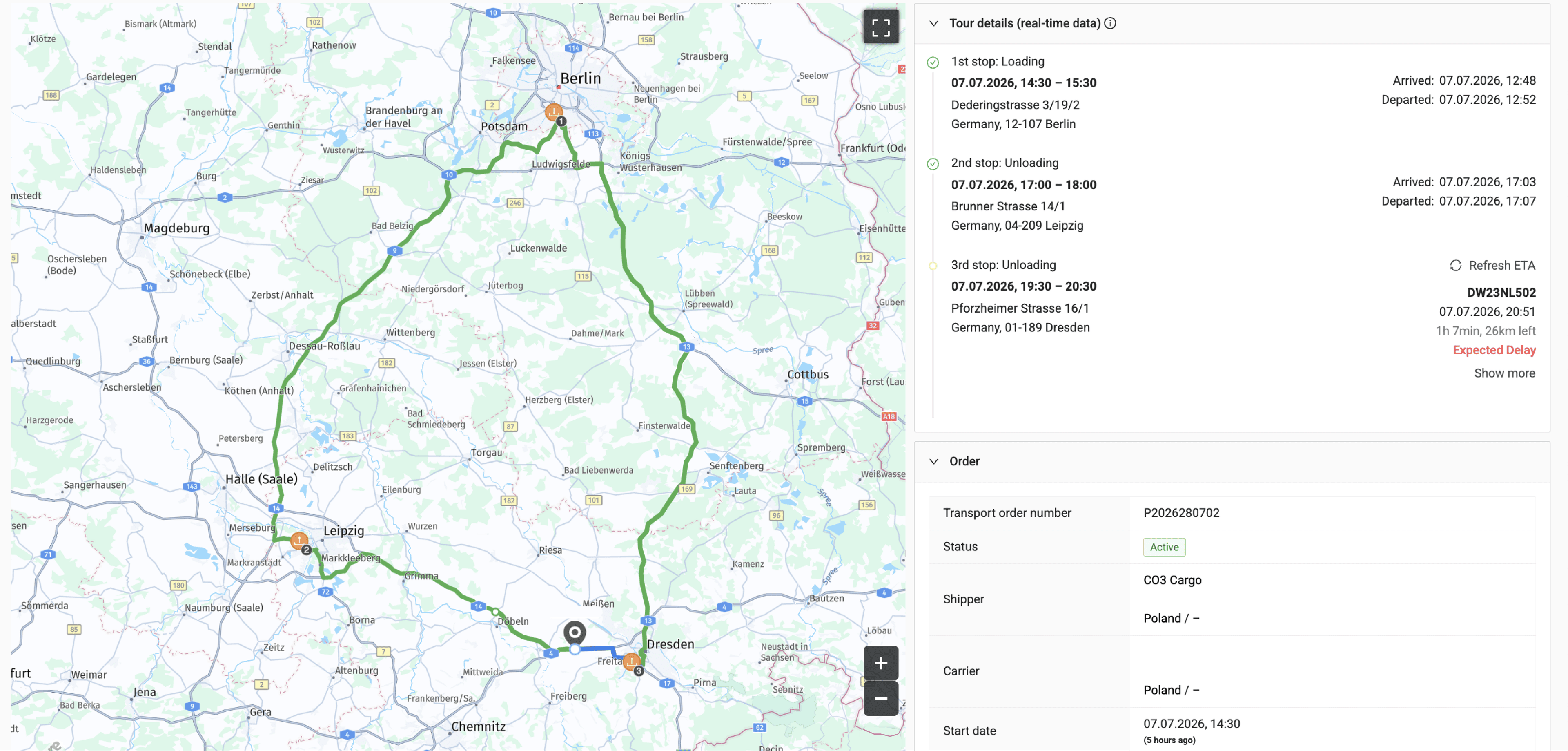
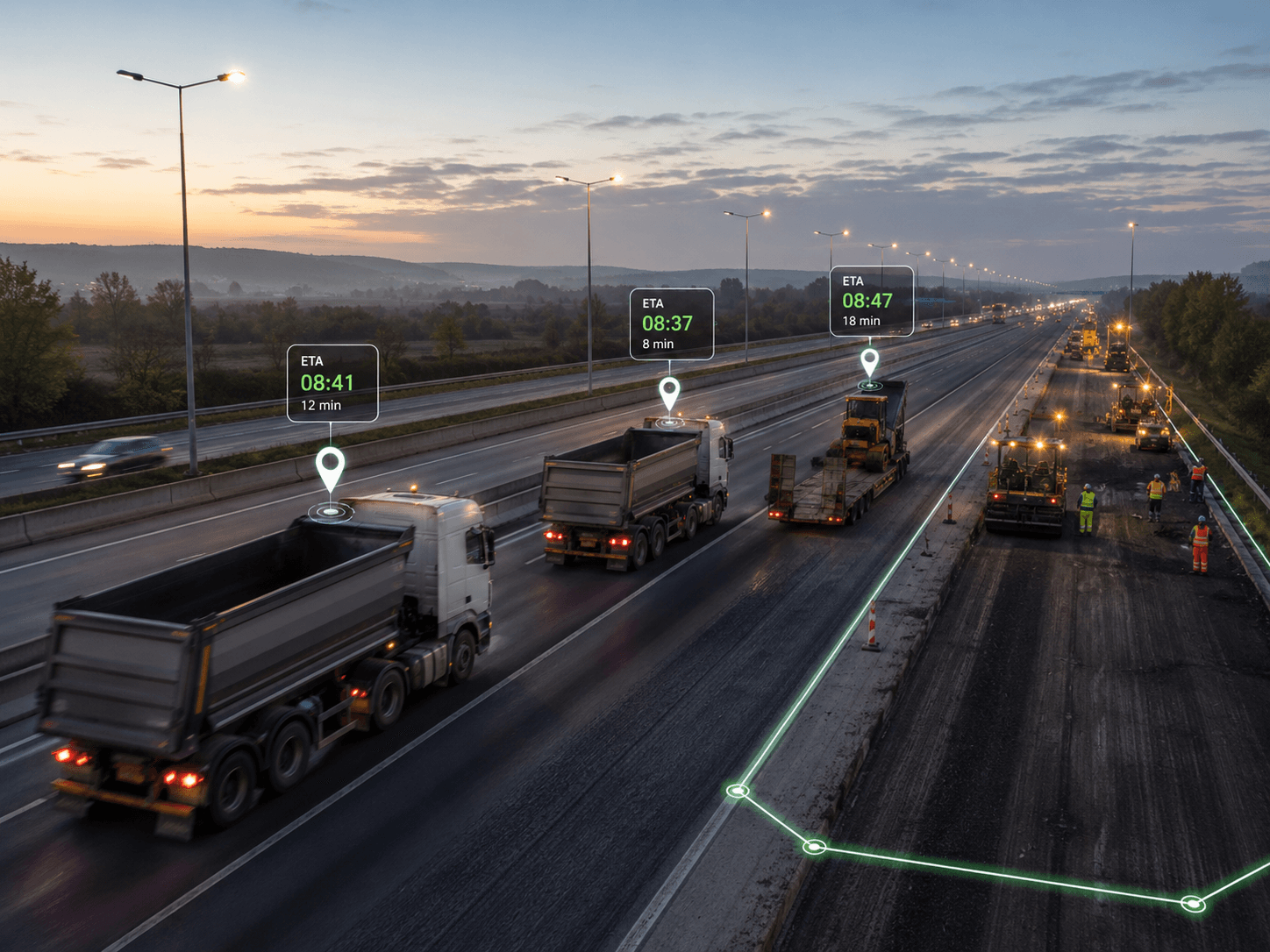
Per-shipment live ETA. Not "I will let you know when we arrive". A continuously updated estimated time of arrival, streamed to the shipper's TMS, that reflects the actual truck, actual traffic, actual driver hours, actual border crossings, and the specific carrier's historical performance on that lane.
Per-leg CO₂ emissions, ISO 14083-aligned. Not a spreadsheet once a quarter. A per-leg, per-order number, calculable at tender time and finalised at delivery, with a clearly labelled method (primary vs. modelled) and a primaryDataShare figure that shippers can roll up into their own CSRD report.
Exception management with a named process. The shipper wants to know, in writing, who gets paged when a truck is 90 minutes late; what the forwarder does without being asked; what the re-planning logic is; and how long it takes for the shipper to be told. "Our ops team calls the driver" is no longer a satisfactory answer.
Evidence for high-value and temperature-sensitive loads. Door events, temperature traces, geofence compliance, secure-parking adherence — all exported on demand, with a timestamp chain that holds up for a cargo-insurance claim.
Almost none of this data originates inside the forwarder's own systems. All of it originates inside the carrier's telematics — which is the crux of the forwarder's data problem, and the reason so few forwarders own this end-to-end today.
The five places real-time data creates commercial leverage
Win 1 — Tender economics: move up the ladder by proving data maturity
Modern transport RFPs increasingly include a qualitative scoring section on data and sustainability — often 15–25% of the total score. A forwarder that can demonstrate, with a live link on the day of the tender, that every contracted carrier exposes real-time GPS, live ETA and primary-data emissions into a single feed for the shipper is scoring near-maximum on that section before they've even quoted a rate. Forwarders whose response is a stack of PDFs and a promise to "explore" integration score close to zero.
This is the single highest-value win from a real-time data layer — because unlike rate competition, data maturity compounds. A carrier network you've already integrated for shipper A is already integrated for shipper B on day one of the next tender.
Win 2 — Retention: exception management you can actually prove
Losing a contract on pricing is a normal commercial event. Losing it on service quality is an expensive one. Shippers churn forwarders most often after an unmanaged exception — a missed appointment with the factory, a spoiled reefer load, a theft on an unsecured parking lot — where they found out late and had no context. Real-time data converts the exception from a post-mortem into a live event: the route deviation, the door open off-stop, the temperature excursion, the 20-minute stall on an unsecured parking lot — all flagged inside seconds, with a workflow that puts the right human on the phone to the right carrier before the shipper has noticed anything is wrong.
A forwarder who can send a "here's what happened and here's what we did about it" message to the shipper before the shipper calls has just moved a notch up the scorecard that is genuinely hard to reverse.
Win 3 — Margin protection: dwell, detention and demurrage visibility
Freight forwarders quietly absorb some — and often a lot — of dwell and detention costs that would belong to the shipper under stricter accounting. On multi-stop domestic networks, consolidation hubs, and cross-border runs, a few unbilled hours per leg compound into real money — frequently more than the full operating margin of the lane.
Real-time arrival, stop and departure timestamps — from the carrier telematics, not from the driver's retrospective note — give the forwarder three margin-protecting capabilities: (a) automated detention calculation and billing, because the evidence is complete and machine-readable; (b) insight into which lanes and which customers are structurally bleeding time, so commercial terms can be renegotiated; and (c) carrier-side SLA enforcement on the other side of the trade.
Published case studies from European visibility peers have claimed ~30% reductions in demurrage and detention costs on controlled lanes through this pattern. The underlying mechanic — turn every stop into a timestamped, disputable event — is widely available through any serious aggregator today.
Win 4 — Capacity allocation: carrier scorecards that actually use data
A forwarder's competitive advantage is its carrier network. The better you can measure carriers, the better you can allocate to them — and the less exposed you are to a single carrier's failure.
A real-time data layer gives you a continuously updated scorecard per carrier, per lane, covering on-time pickup, on-time delivery, dwell, fuel efficiency (via fuel per 100 km for comparable vehicles), emissions (as primaryDataShare and modelled gCO₂/t-km), exception response time and security compliance (e.g. secure-parking adherence). Once you have that scorecard, routing decisions become evidence-based: the best-performing carrier on a given lane gets more volume, the worst-performing is retrained or replaced, and the shipper benefits from a network that is measurably improving.
Without the data layer, this is instinct. With it, it is a defensible commercial process that can be shown to a shipper and baked into the tender response.
Win 5 — Operations throughput: stop re-keying, start exception-managing
A shipment that goes well does not need a human in the loop. A shipment that goes wrong needs one immediately. Most forwarder ops teams spend the majority of their day on the first case — retyping pickup times into emails, chasing a driver for an ETA, answering a "where is my truck?" call from a shipper who could see it for themselves if the forwarder exposed the data. The second case — genuine exception management — gets the residual attention.
A real-time data layer inverts this. Pickup and delivery confirmations auto-generate and flow to the shipper's TMS. ETA changes flow automatically too. Ops gets paged only on exceptions. Existing teams can handle significantly more volume without adding headcount — and the work they do handle is the work that actually moves the commercial relationship.
The subcontracted-fleet problem — and why it's actually solvable
Every forwarder reading this hits the same objection: "We don't own the trucks, so we can't demand the data." In practice this turns out to be far less of a blocker than it looks.
Three dynamics are on the forwarder's side.
Most carriers already have the data — they just aren't shipping it anywhere. A typical European haulier runs a modern telematics box (Webfleet, Transics, Astrata, Continental VDO, Geotab, a national provider, or an OEM fleet portal for newer trucks). The data already exists in an API somewhere. The cost to the carrier of exposing it to a forwarder via an aggregator is negligible and usually asynchronous: tokens are shared once, then the data flows.
Shipper pressure gives the forwarder leverage. Carriers who refuse to share real-time data out of their telematics are increasingly being descoped on RFPs at the shipper level. A forwarder making this a precondition of being on-panel is essentially relaying a requirement the shipper would anyway enforce directly within 12 months.
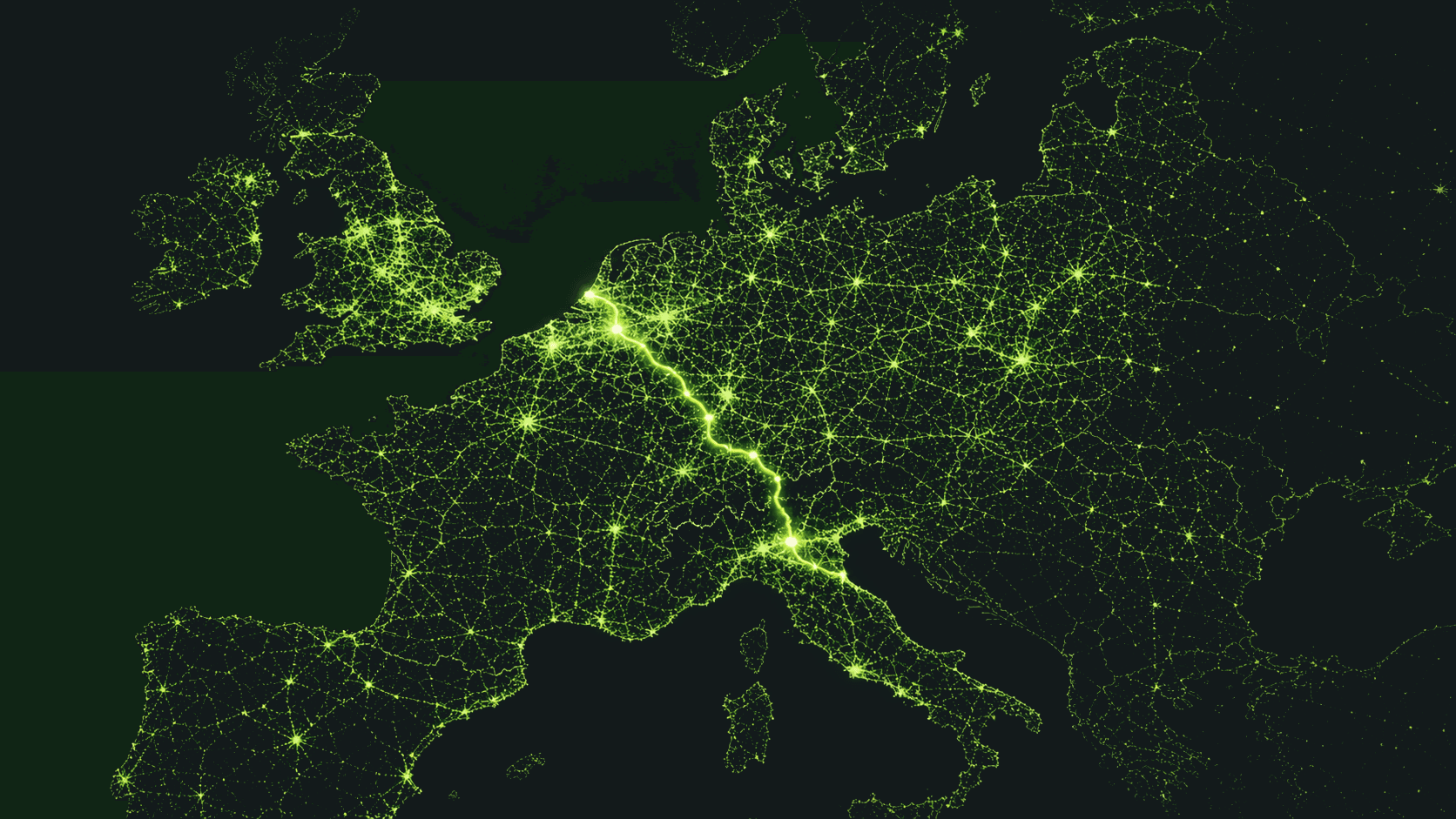
An aggregator absorbs the integration cost. The forwarder does one integration — to the aggregator. The aggregator connects the carriers. CO3, for example, runs 500+ live telematics integrations across Europe, adding new ones continuously. A mid-sized forwarder running 80 regular carriers may find that 60 of them are integrated on day one of onboarding.
The remaining gap — small subcontractors with no telematics at all, or with only an OEM fleet-portal login — is a real but shrinking category. For these, a lightweight driver app with a handful of key events (loaded, departed, arrived, unloaded, door-open-at-delivery) closes most of the information gap until the carrier upgrades.
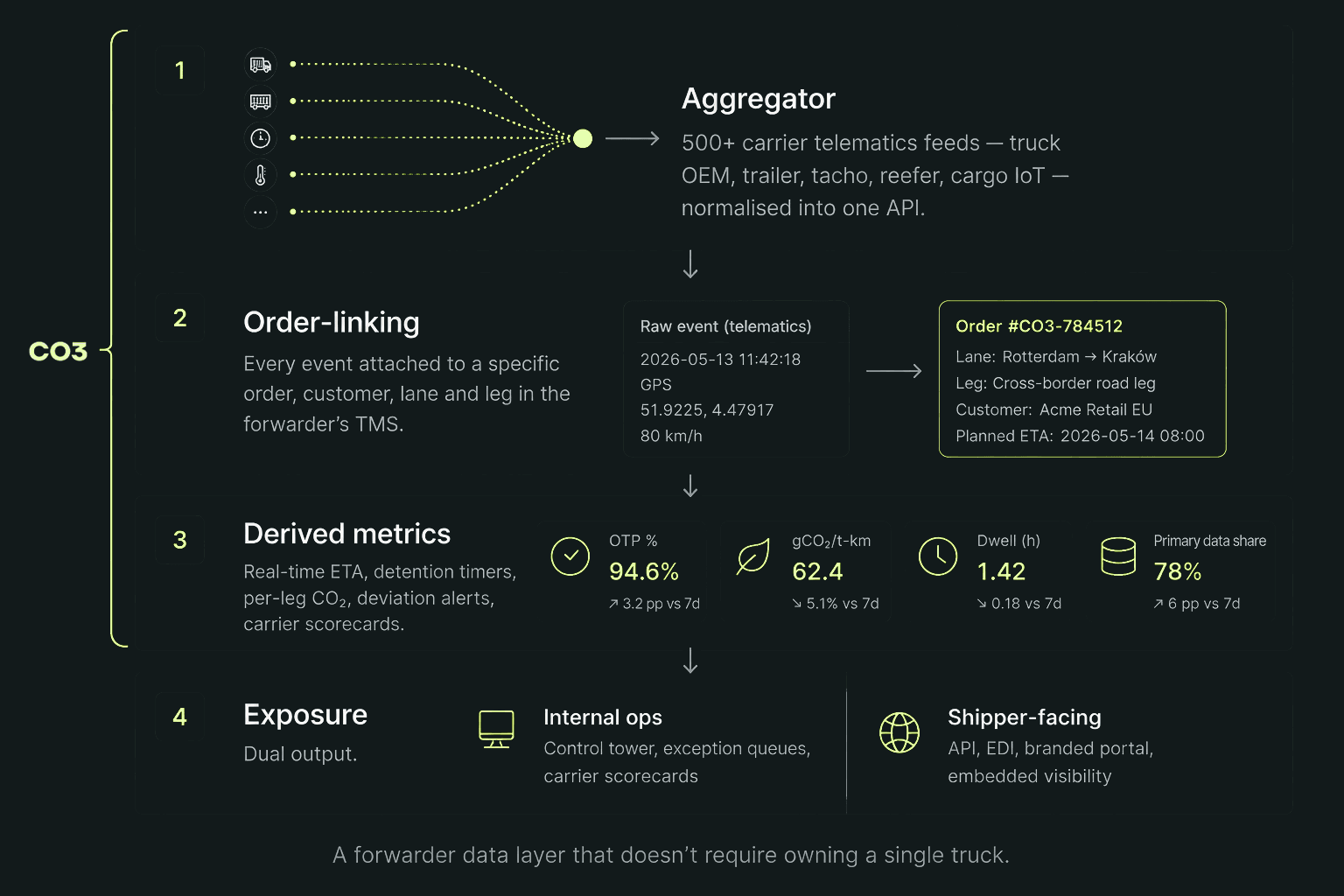
A reference architecture for the forwarder data layer
The architecture a forwarder needs looks similar to the one a carrier or a shipper needs — but the accountability is different. The forwarder does not need to own the telematics. It needs to own the coordination layer on top.
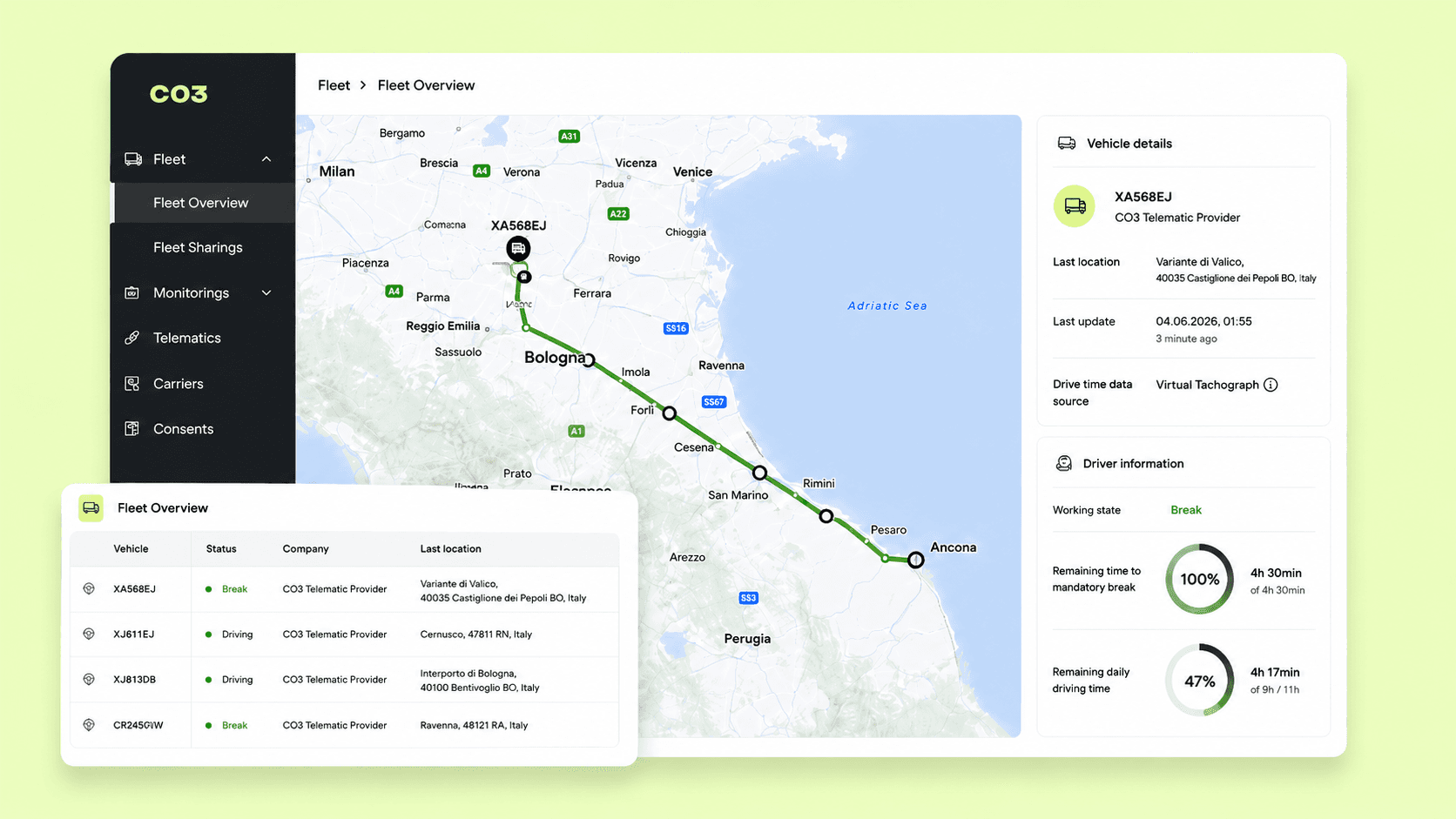
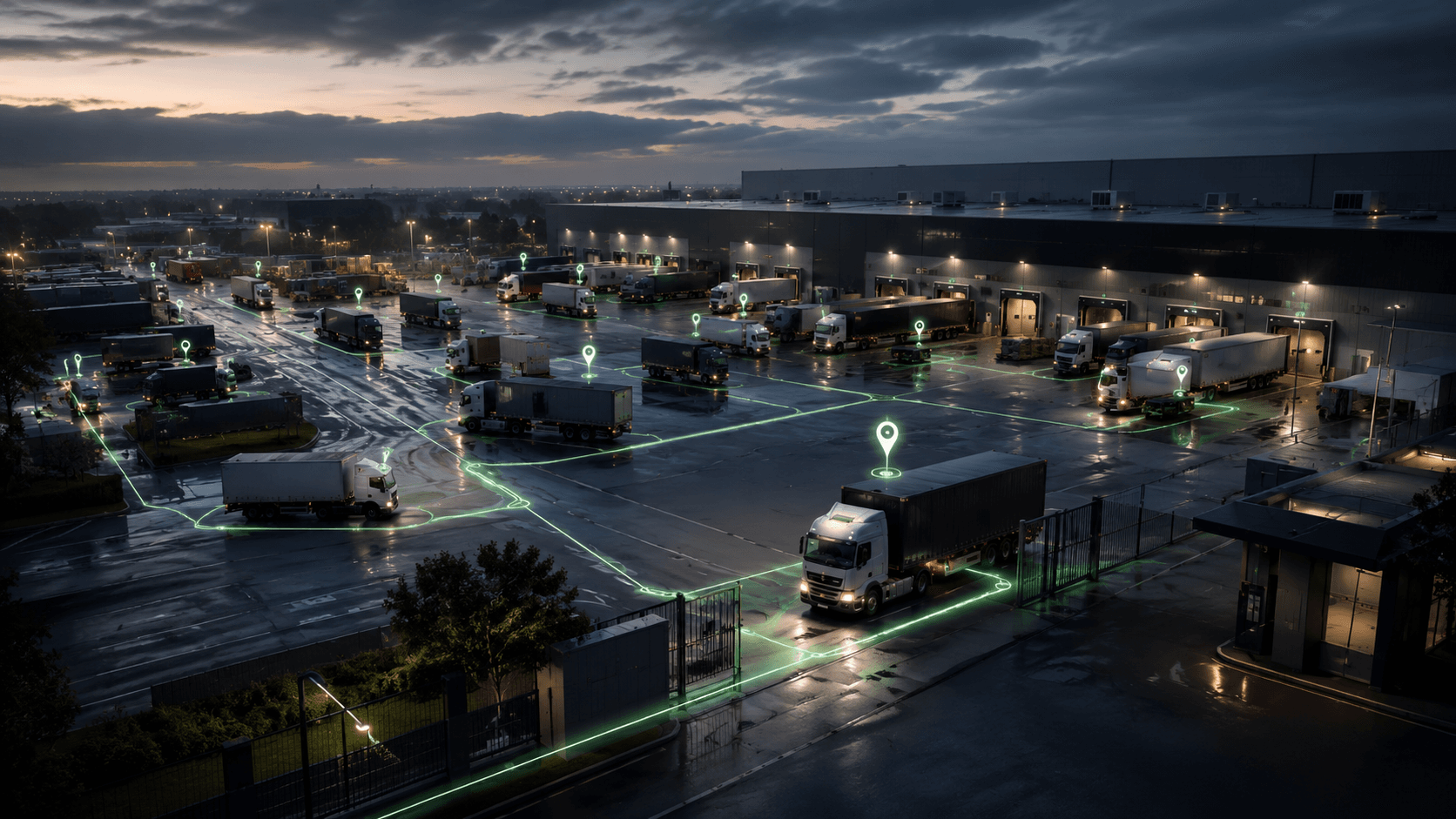
Layer 1 — One integration point to an aggregator. The aggregator absorbs the 500+ carrier-side feeds (truck OEM, trailer OEM, third-party telematics, tacho, reefer, cargo IoT) and exposes them through a single, normalised API. The forwarder's IT team does one well-documented integration, not many.
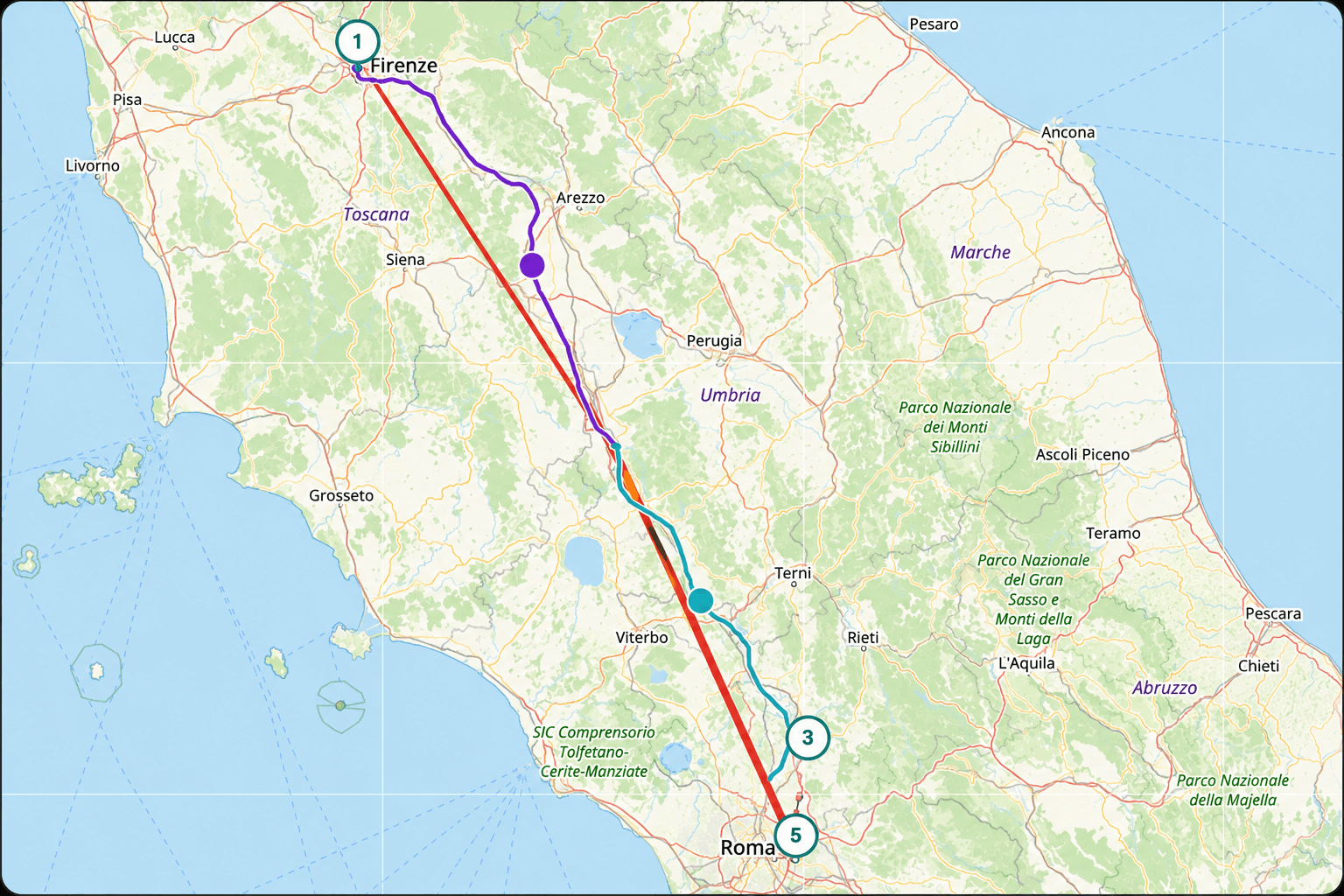
Layer 2 — Tie the carrier data to the forwarder's order model. Every event that arrives (stop, door event, temperature reading, fuel burn) must be attached to a specific order, customer, lane and leg in the forwarder's TMS. This is the step at which the data goes from "carrier telemetry" to "shipper-relevant evidence". It requires disciplined metadata at booking — the carrier, the VIN or registration plate, the planned corridor, the stops, the appointment windows — but it is tractable and one-time.
Layer 3 — Derived metrics and carrier scorecards. Real-time ETA, detention timers, per-leg CO₂, deviation alerts, carrier performance over a rolling window. This is the layer that drives Wins 2, 3 and 4.
Layer 4 — Exposure outwards. Two audiences: the forwarder's ops team (control tower, exception queues, carrier scorecards) and the forwarder's shipper customers (API, EDI feed, branded portal or embedded control tower). The shipper-facing surface is the one that turns the internal data layer into a visible product.
How CO3 does this today. CO3 sits as the aggregator layer (Layers 1 and 2) and a significant portion of the metrics layer (Layer 3). Core capabilities exposed through a single API: real-time GPS, live ETA, fuel consumption, per-leg CO₂ aligned with ISO 14083 / GLEC, and temperature compliance for refrigerated shipments. CO₂ emissions are calculated per leg with a three-tier method hierarchy — PRIMARY (measured fuel or energy), HYBRID (real distance from telemetry + default coefficients), MODELLED (shortest feasible distance with uplift + defaults) — with each leg returning a calculationMethod field and an order-level primaryDataShare metric. Legs map to GLEC Transport Chain Elements (TCEs), with active-leg reconstruction handling trailer swaps and recouplings automatically. Current scope is road-only for completed orders; live emissions on in-progress orders are on the roadmap but not yet in production. Forwarder customers typically use CO3 to serve both their own internal control tower and the shipper-facing visibility product they sell on to their customers.
Getting to a real-time data layer without a big-bang project
Forwarders typically resist visibility projects because previous ones have been expensive, slow, and heavy on IT dependency. The pragmatic path is three steps, small enough that the first customer-facing result lands within a quarter.
Step 1 — Carrier inventory. Pull a list of every carrier you used in the last 12 months. Sort by volume. For the top 20 carriers (usually 70–80% of your volume), identify the telematics vendor, the data fields available, and whether the carrier is already integrated with a major European aggregator. You will typically find that 60–70% of volume is reachable on day one.
Step 2 — One customer, one lane, one pilot. Pick a single large shipper customer with demanding data requirements and one of their core lanes. Wire up the aggregator for every carrier serving that lane. Expose the live feed (ETA, CO₂, exception alerts) to the shipper for 6–8 weeks. Use the pilot to develop the SLA language, the exception playbook and the shipper-facing surface. The commercial proof point comes from the customer, not from an internal business case.
Step 3 — Make data maturity the default in carrier onboarding. Add a single page to the carrier onboarding process: telematics vendor, share of fleet with real-time API exposure, temperature feed (for reefer), door-event exposure. From that moment on, every new carrier added to the panel is coming in already-instrumented — and the data layer improves mechanically as the network evolves.
Most forwarders see the first "this is why I picked you" shipper feedback inside one tender cycle after the pilot is operational.
A ten-point self-assessment: is our data layer good enough to win the next tender?
Each "no" is worth a commercial conversation.
- For our top 20 carriers by volume, we receive real-time GPS for every shipment — not end-of-day reports. Y / N
- Our ETA for each shipment's next stop is updated continuously and shared into each shipper's preferred system (API, EDI, portal or embedded). Y / N
- We can deliver an ISO 14083 / GLEC-aligned CO₂ number per shipment — with a clearly labelled primary vs. modelled data share — to any customer that asks. Y / N
- We run carrier scorecards covering OTP, dwell, fuel, emissions, exception response and security compliance, refreshed at least monthly. Y / N
- Detention and dwell billing is generated automatically from timestamped telematics events, not from driver-submitted paperwork. Y / N
- On reefer and high-value lanes, we monitor temperature traces and security events (door, geofence, corridor deviation) in real time, with an alerting workflow that reaches a human in under 60 seconds. Y / N
- We can onboard a new carrier's data feed in days, not quarters. Y / N
- Our ops team spends the majority of its day on exceptions, not on chasing routine pickup and delivery status updates. Y / N
- A small, long-tail carrier without mature telematics can still report key shipment events (loaded, departed, arrived, delivered, door open at drop) through a lightweight driver app tied to our data layer. Y / N
- Our RFP response includes a live demo of our shipper-facing visibility product, not a PDF screenshot. Y / N
A forwarder answering "yes" to 8 or more is already a digital forwarder in substance, even if not in brand. A forwarder answering "yes" to 4 or fewer is structurally vulnerable on every 2026 tender above a certain size.
CO3 can run this audit with your team in a 60-minute workshop and a two-week read across your carrier network. Book at co3.io/forwarder-audit.
What to watch over the next 12–18 months
Shipper-direct integration over forwarder-mediated data. A growing number of shippers are contracting directly with visibility aggregators and demanding that their forwarders push into the shipper's single pane of glass. Forwarders who own the data layer comfortably survive this shift. Forwarders who rely on the shipper not asking will be disintermediated from the data relationship — and soon after from the commercial one.
Agentic-AI transport co-pilots. The first wave of agentic AI for freight coordination — proactive carrier outreach, automatic re-booking, automated customer communication — is arriving on top of existing data layers. The interesting consequence for forwarders is that an AI layer can only be as good as the data beneath it. A well-instrumented network gets multiplicative leverage. A poorly instrumented one gets a chatbot with no information.
CSRD simplification does not reduce the pull. The EU's simplified ESRS, expected in late 2026 with mandatory reporting from FY2027, narrows the paperwork but not the principle. Shippers still have to report Scope 3 Category 4 with a defensible method. Forwarders' emissions numbers will continue to be pulled into those reports — and forwarders without primary-data sources will continue to score worse than their direct-carrier competition.
eCMR going mainstream across the EU. As the digital consignment note becomes the default, the forwarder's ops workflow shifts onto the same shared timestamp record as the shipper and the carrier. This is a net benefit — but only for forwarders whose visibility layer is already structured to ingest and produce eCMR-grade events. For the rest, it becomes yet another parallel system to keep in sync.
Closing thought
The traditional forwarder argument — "we know the carriers, we know the lanes, we broker capacity" — is still true. It is no longer sufficient. The shipper now wants the same product wrapped in a real-time data layer that proves the coordination, the service and the emissions. Building that layer does not require buying trucks. It requires treating carrier telematics as a first-class input to your operations, and investing in the one integration that absorbs the 500+ downstream ones.
The forwarders winning the tenders of 2026 are the ones who have already done it. The rest will spend the next 18 months explaining why they haven't.
See how CO3 gives European freight forwarders a single real-time data layer across every carrier they use — 500+ live telematics integrations in one API. Book a 20-minute walkthrough.
Freight forwarder — A company that arranges transport on behalf of shippers, usually by contracting with carriers. Also called a 3PL, LSP, commissionnaire de transport or Spediteur depending on the market.
3PL — Third-Party Logistics provider. Broad term overlapping with "freight forwarder".
LSP — Logistics Service Provider. Used interchangeably with 3PL in Europe.
Asset-light — A business model that does not own the operational asset (e.g., the truck); works through subcontracted capacity.
Carrier — The company that physically moves the goods with its own trucks and drivers.
Subcontracted carrier / sub-carrier — A carrier working under contract to another carrier or a forwarder; often provides a significant share of a forwarder's volume.
Telematics — Hardware and software that collects and transmits vehicle data (GPS, engine, driver) in real time.
TMS — Transport Management System. The forwarder's or carrier's operations and booking software.
Aggregator — A platform that consolidates many telematics vendors' data into a single API.
ETA — Estimated Time of Arrival. For real-time purposes, continuously recomputed.
Detention / dwell time — Time a truck spends waiting at a loading or unloading point, often beyond a contractual free-time window.
Demurrage — The same concept applied to containers held beyond a free period — typically at ports or intermodal terminals.
OTP — On-Time Performance. A carrier or lane metric.
CSRD — The EU's Corporate Sustainability Reporting Directive.
Scope 3 Category 4 — Upstream transportation and distribution emissions in the shipper's CSRD report.
ISO 14083 — The international standard for calculating and reporting transport emissions.
GLEC Framework — The Global Logistics Emissions Council methodology for freight emissions, aligned with ISO 14083.
Primary data — Measured operational data (e.g., litres burned from the vehicle) rather than modelled or defaulted data.
eCMR — The electronic version of the international road-freight consignment note.
Digital forwarder — A freight forwarder that sells its real-time data and workflow layer as a primary product.
















.png&w=3840&q=75)










.png&w=3840&q=75)