The EU Mobility Package, Explained for Fleet Operators
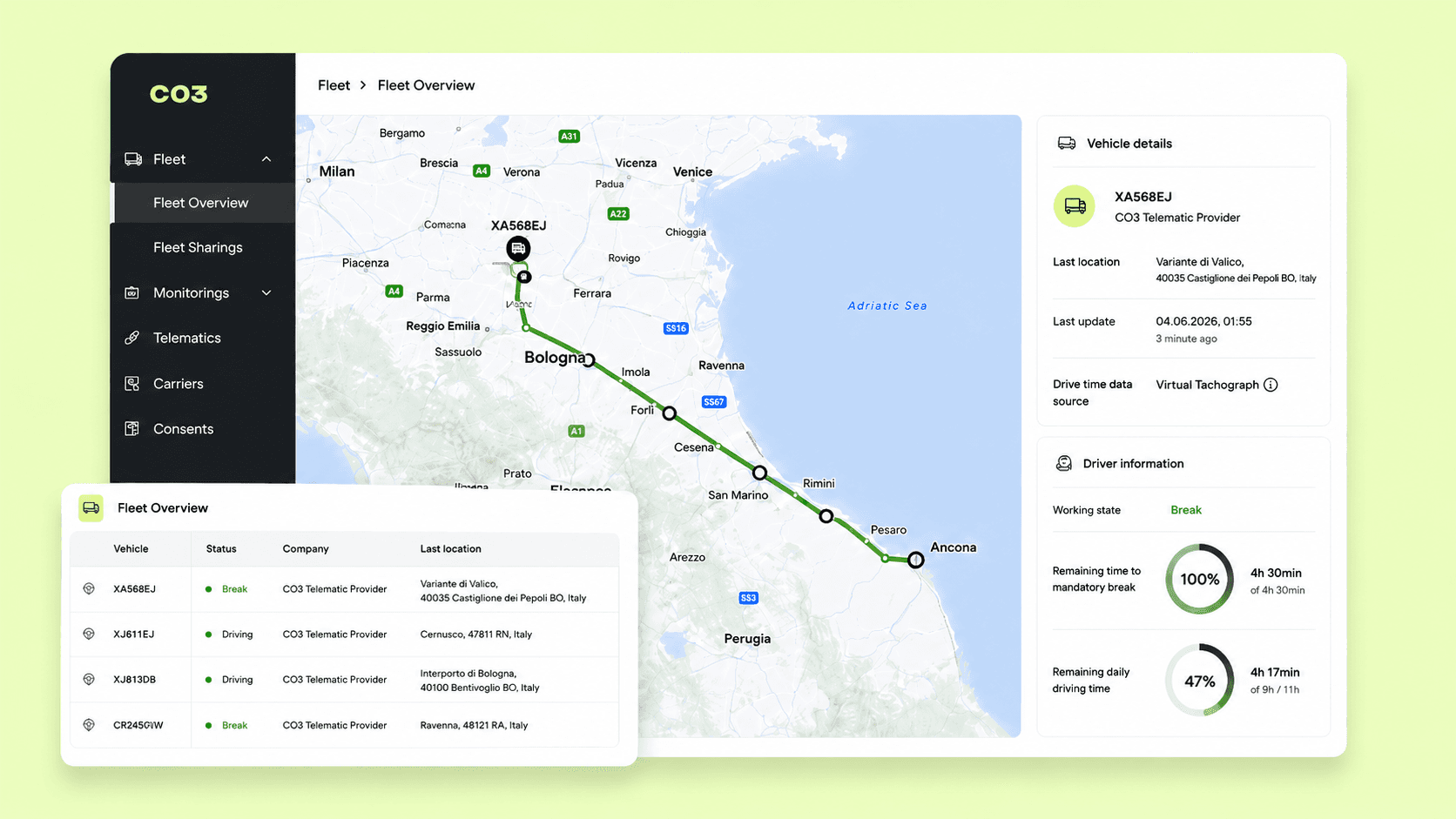
The EU Mobility Package, Explained for Fleet Operators (2026)
The EU Mobility Package is a set of rules, phased in since 2020, that reshapes how international road freight operates in Europe — covering driver rest, vehicle returns, cabotage limits, posting of drivers, and tachographs. From July 2026 it reaches further, pulling larger vans (light commercial vehicles over 2.5 tonnes in international and cabotage work) into scope and requiring second-generation smart tachographs. For operators, the practical upshot is that compliance now depends on data: you have to prove where vehicles and drivers were, and when. This guide explains the rules in plain language and what they mean for your fleet.
Why this matters now
If you run or rely on international road freight in Europe, the Mobility Package is the regulatory backdrop to almost every operational decision — where a truck can pick up its next load, when a driver must stop, when a vehicle has to go home. It was designed to level the playing field between Western and Eastern European hauliers, improve driver working conditions, and cut "letterbox" operations where companies register vehicles in low-cost countries they barely operate in.
The reason it's worth revisiting in 2026 is twofold. First, the rollout isn't finished — a significant extension lands in July 2026. Second, enforcement has matured: with smart tachographs now feeding detailed position and time data, "we think we complied" is no longer good enough. Authorities can check, and increasingly do. Surprisingly, the competitor and visibility-platform content estate barely covers this topic — which makes it both a knowledge gap for operators and a genuine pressure point.
The five pillars, in plain language
The Mobility Package is easier to digest as five themes rather than a wall of regulation.
- Driver hours and rest. The core limits are familiar but tightened: a maximum daily driving time of 9 hours (extendable to 10 hours no more than twice a week), and a 45-minute break after 4.5 hours of driving, which can be split into 15 + 30 minutes. The notable change is the regular weekly rest can no longer be taken in the cab — drivers must be given suitable accommodation, paid by the employer.
- Return of the driver. Operators must organise work so that drivers can return either to the company's operational centre or to their place of residence at least once every four weeks, for a regular weekly rest of at least 45 hours. The point is to stop drivers being kept on the road indefinitely.
- Return of the vehicle. A vehicle used in international transport must return to the operating centre in its country of establishment at least once every eight weeks. This is the rule that most directly affects routing and asset utilisation, because an empty repositioning leg may be required purely for compliance.
- Cabotage. A haulier may carry out up to three cabotage operations (domestic transport in another member state) within seven days of an international delivery. After that, there's a four-day "cooling-off" period during which the vehicle cannot perform further cabotage in that country. This curbs hauliers effectively running permanent domestic operations under an international guise.
- Posting of drivers. When a driver works in another member state beyond transit and bilateral transport, posting rules apply: the driver is entitled to that country's minimum wage and certain working conditions, and the operation must be declared (typically via the EU's IMI portal), with a posting certificate available.
What changes in July 2026
The headline 2026 change is scope. From 1 July 2026, light commercial vehicles over 2.5 tonnes and up to 3.5 tonnes used in international transport or cabotage for hire or reward come into the Mobility Package framework. In practice that means:
- These larger vans must be fitted with second-generation (smart) tachographs.
- Their drivers become subject to the driving-time, break, and rest rules described above.
- Operators using such vehicles need the appropriate Community licence and must meet establishment requirements.
For many parcel, e-commerce, and express operators who built networks on sub-3.5-tonne vehicles precisely to stay outside heavy-truck rules, this is a meaningful shift. The "van loophole" narrows considerably.
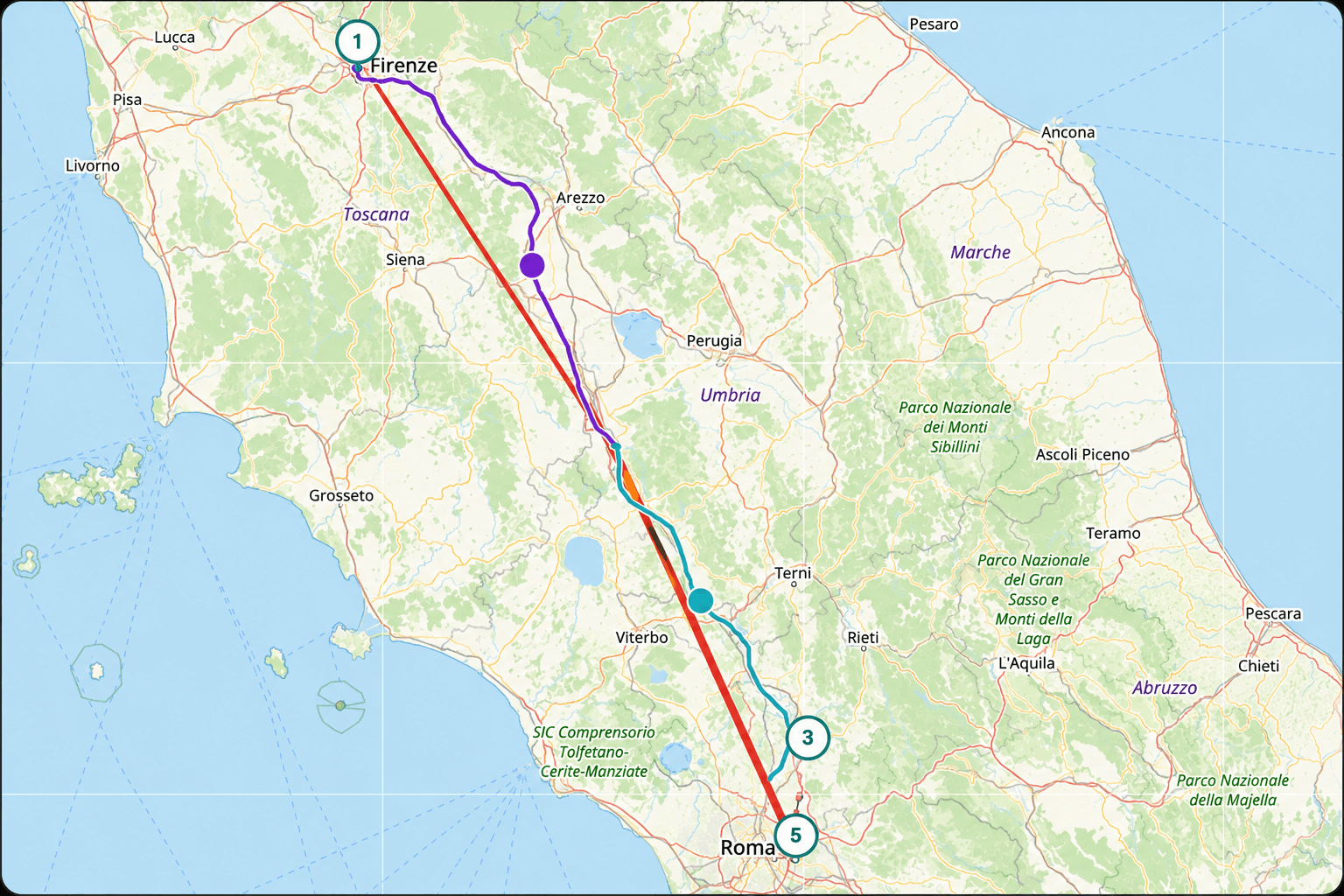
The smart tachograph itself matters beyond compliance paperwork: the second-generation device automatically records border crossings and position at key points, which is exactly the data enforcement bodies use to check vehicle-return and cabotage compliance.
Where operators get stuck
The proof problem. Most rules now hinge on evidence of where a vehicle and driver were, and when. Operators who can't reconstruct a vehicle's movements over the past eight weeks can't prove the return rule was met — even if it was.
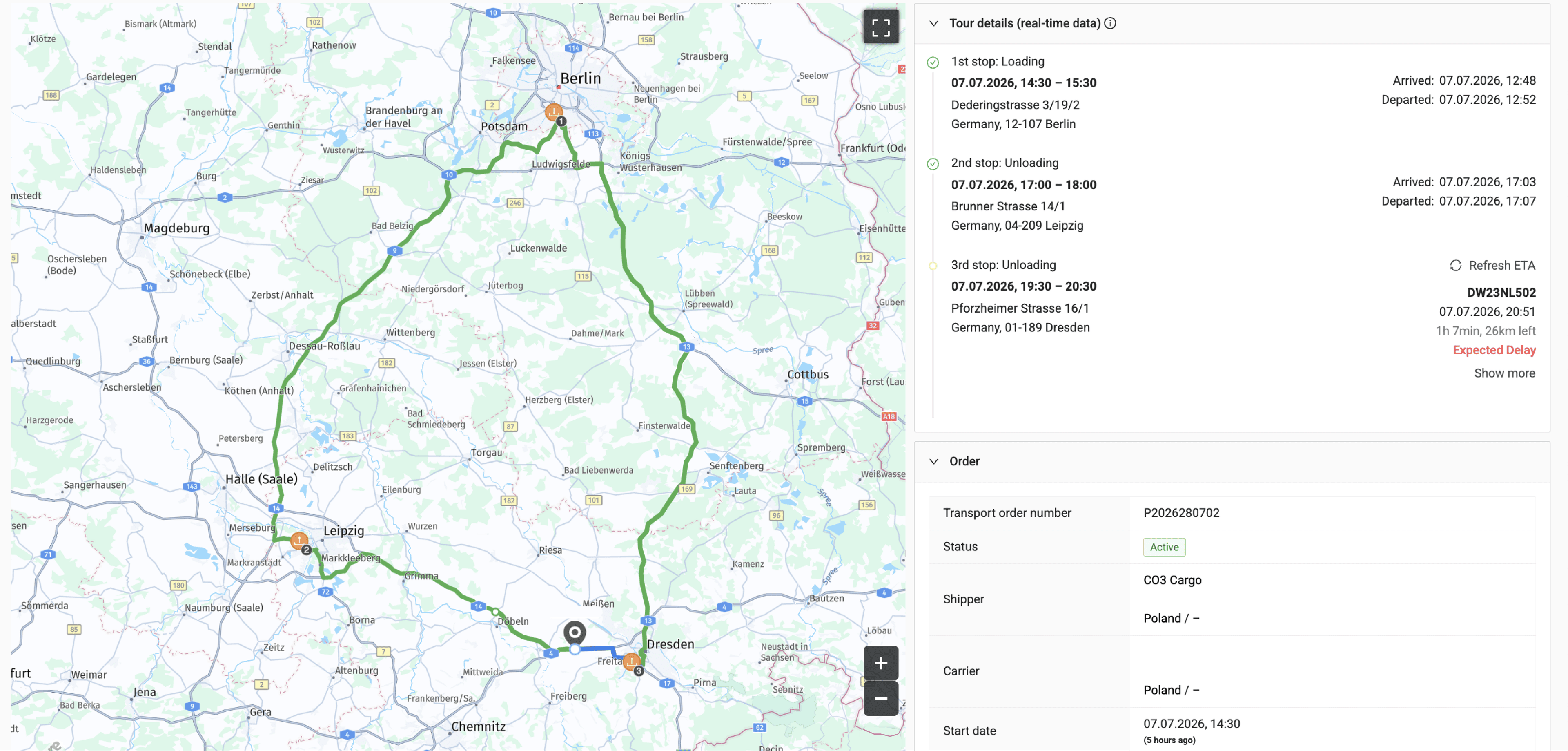
The fragmented-data problem. A single international operation may involve multiple vehicles, drivers, and subcontractors on different systems. Stitching tachograph, GPS, and job data together after the fact, by hand, is slow and error-prone — and that's usually only attempted when an audit or roadside check forces it.
The utilisation tension. Vehicle-return and cabotage limits work against asset efficiency. The eight-week return can force an empty leg; cabotage cooling-off can leave a truck without a domestic backload. Operators who plan these constraints into routing in advance lose far less than those who discover them retroactively.
The van-fleet surprise. Operators bringing larger vans into scope in 2026 often underestimate the operational drag of tachograph rules — break planning, rest scheduling, and record-keeping they've never had to do before.
A practical approach: treat compliance as a data problem
The shift the Mobility Package forces is from intending to comply to demonstrating it. That makes clean, unified movement data the foundation. If you can see, for every vehicle and driver, where they've been and when — across your own fleet and subcontractors — most compliance questions answer themselves, and routing decisions can respect the rules before a truck rolls.
How CO3 fits. CO3 aggregates live position and telematics data from 500+ integrations across trucks, trailers, and subcontractors into a single API. That unified movement history is the same data that underpins vehicle-return and cabotage checks — so a single source can serve both operational visibility and the evidence trail that compliance now requires. CO3 is a visibility platform, not a tachograph or a legal-compliance product; it complements your tachograph and compliance systems rather than replacing them.
Getting started without disruption
First, map your exposure. Which of your operations are international or cabotage? Which vehicles cross the 2.5-tonne threshold and will be in scope from July 2026?
Second, make movement data unified and retrievable. Ensure you can reconstruct any vehicle's last eight weeks and any driver's last four weeks on demand, across all carriers — not buried in separate tachograph downloads.
Third, build the constraints into planning. Treat vehicle-return windows and cabotage limits as routing inputs, not afterthoughts, so compliance costs you the minimum in empty kilometres.
Self-assessment checklist
- Do you know which of your vehicles fall into Mobility Package scope from July 2026?
- Can you prove, on demand, that every international vehicle returned within eight weeks?
- Can you show each driver had the required four-weekly return?
- Are your cabotage operations tracked against the 3-in-7-days limit and cooling-off?
- Are posting declarations filed for relevant operations?
- Are your larger vans (over 2.5t) fitted with second-generation smart tachographs?
- Is your movement data unified across own fleet and subcontractors, or scattered?
- Could you assemble an evidence trail quickly if checked?
A run of "no" answers suggests your compliance rests on good intentions rather than demonstrable data. CO3 can help you unify the movement data that underpins the evidence.
What to watch over the next 12–18 months
The July 2026 LCV extension is the immediate item — operators with larger vans should be acting now, not in June. Beyond that, enforcement is converging on the smart-tachograph data trail, so expect more data-driven roadside and remote checks. And the broader direction of EU transport policy continues toward tighter social and environmental rules, meaning the compliance-as-data principle will only deepen.
Closing thought
The Mobility Package isn't one rule to memorise — it's a framework that turns compliance into a question of evidence. The operators who'll find 2026 easiest are the ones who already have clean, unified movement data and treat the rules as planning inputs rather than after-the-fact problems. That data foundation is exactly what CO3 provides.
Glossary
- Mobility Package: A set of EU regulations (phased from 2020) reforming road transport rules on driving time, posting, cabotage, and vehicle/driver returns.
- Cabotage: Domestic transport operations carried out by a haulier registered in another country.
- Posting of drivers: Rules entitling a driver working in another member state to local wage and conditions, with declaration requirements.
- Vehicle return rule: Requirement for an internationally used vehicle to return to its country of establishment at least every 8 weeks.
- Driver return rule: Requirement to enable drivers to return home/to base at least every 4 weeks.
- LCV (Light Commercial Vehicle): A goods vehicle; here, those over 2.5t and up to 3.5t coming into scope in 2026.
- Smart tachograph (2nd generation): EU device automatically recording driving/rest time and position, including border crossings.
- IMI portal: EU Internal Market Information system used for posting declarations.
Community licence: Authorisation required to operate international road haulage in the EU.































.png&w=3840&q=75)











.png&w=3840&q=75)