A Practical Cost Reduction Framework for Road Freight: Where the Money Actually Leaks

Road freight costs in Europe have risen for three straight years, and 2026 brings more of the same: driver wages climbing around 2% a year, tolls jumping by double digits in several countries, and non-fuel costs up almost 8% over two years. You cannot negotiate your way out of structural cost inflation — but most operations are still leaking money in places they can measure and fix. This post lays out a four-lever framework: empty kilometres, fuel and driving behaviour, waiting time, and toll optimisation. Each lever starts with the same prerequisite — data you can trust.
Why cost pressure is structural, not cyclical
It is tempting to treat today's cost squeeze as a phase. The data says otherwise. France's national road transport committee (CNR), which tracks haulier cost structures more rigorously than anyone in Europe, reported that non-fuel operating costs rose 2.4% in 2025 on top of similar rises the year before — a cumulative increase of 7.7% in two years. The biggest single line, driver wages and social charges, keeps climbing at roughly 2.2% a year, and with hundreds of thousands of driver positions unfilled across Europe, that pressure will not reverse.
Tolls are moving even faster. Czechia raised truck tolls 14.4%, Austria 7.7%, and Poland is phasing in steep increases. Germany's CO2-differentiated Maut already adds a surcharge of €200 per tonne of CO2 emitted. Toll-related expenses now make up roughly 14% of total freight costs on average — and more than 20% on some single trips.
The only line that fell in 2025 was diesel — and no sensible operator builds a cost plan on the hope that fuel stays cheap.
The conclusion: if input costs rise structurally, the margin has to come from running the operation tighter. That is a data problem before it is a procurement problem.
The four levers — and what each is worth
Lever 1: Empty kilometres
Across the EU, about 21.6% of all truck kilometres are driven empty — nearly nine years after "digitisation" became the industry's favourite word. National transport runs even higher, around 24%. Every empty kilometre carries the full cost of the loaded one: driver, vehicle, toll, fuel — with zero revenue against it.
You will never reach zero; repositioning is part of the business. But the gap between a well-managed fleet and the average is typically several percentage points, and on a fleet of 50 trucks running 120,000 km a year each, cutting empty running by 3 percentage points frees roughly 180,000 km of capacity — capacity you can sell instead of burn.
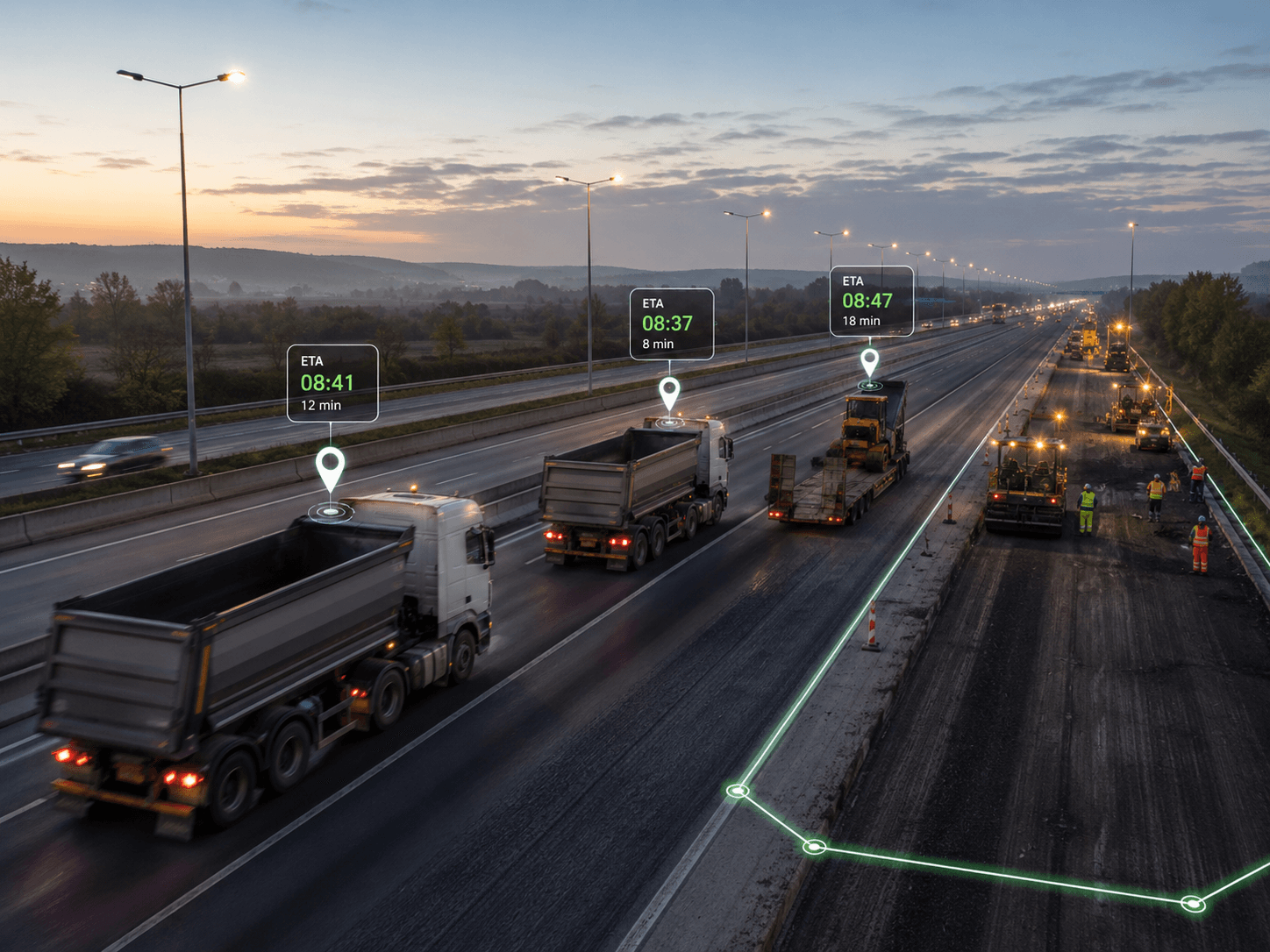
The catch: you cannot reduce what you cannot see. Most operators know their empty-kilometre share roughly, annually, from accounting data. Managing it requires per-vehicle, per-week visibility — which means position and trip data flowing automatically from the fleet, not reconstructed from driver notes.
Lever 2: Fuel and driving behaviour
Fuel remains one of the largest controllable costs, typically a quarter to a third of total operating cost depending on diesel prices. The spread in consumption between the most and least efficient drivers on identical routes is consistently reported at 8–12% — idling, harsh acceleration, poor anticipation, and speed discipline explain most of it.
The lever only works with measured fuel data per vehicle and per trip. Fuel-card data tells you what you bought, not what you burned or where. Telematics-based consumption data — straight from the vehicle's CAN bus — tells you litres per 100 km by driver, route, and load, which is what a coaching programme needs.
Lever 3: Waiting time at ramps and sites
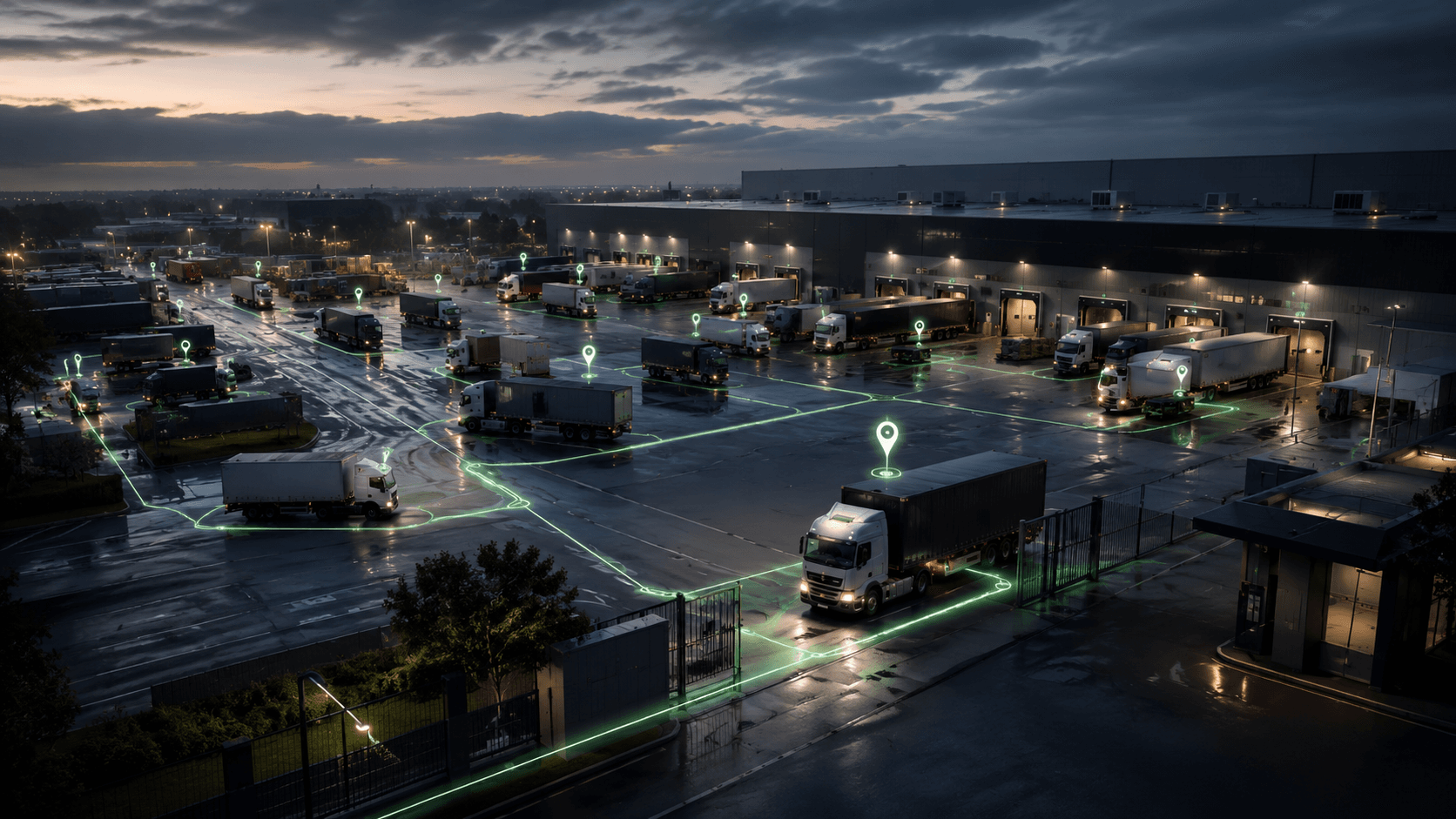
Waiting time is the cost nobody invoices properly. A truck standing at a loading bay costs you driver hours (your scarcest resource), burns legal driving-time windows, and quietly destroys your schedule for the rest of the day. Most carriers under-bill detention simply because they cannot prove it: arrival and departure times live in the driver's memory, not in a system.
Automatic geofence-based arrival and departure timestamps change the conversation with customers from argument to evidence. Carriers that systematically document waiting time typically find billable detention they were silently absorbing.
Lever 4: Toll optimisation
Tolls used to be a pass-through. With CO2-differentiated tolling now live in Germany, Austria, Czechia, Belgium and Hungary, they have become a lever: a truck in the best CO2 class can pay 20–25% less per kilometre in Germany than the same-size vehicle in Class 1 — a difference that can reach €5,000–10,000 per truck per year. Fleet renewal decisions, route choices, and which truck you assign to which corridor all now carry a toll consequence you can calculate in advance.
The common prerequisite: one trustworthy data layer
Notice what all four levers share. None of them is a negotiation. All of them start with the same sentence: "First, measure it accurately, per vehicle, automatically."
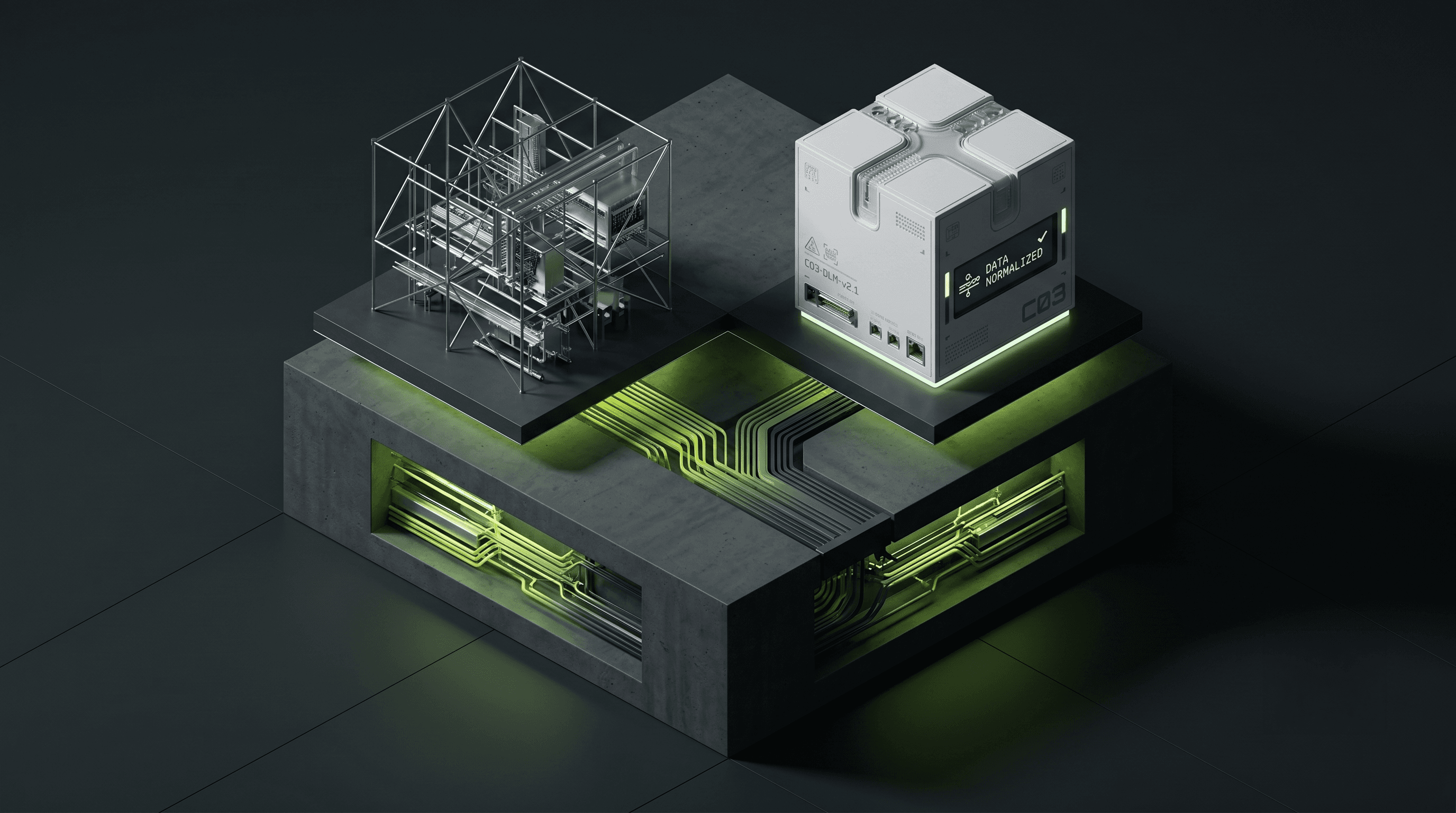
That is where most cost programmes stall. The data exists — in OEM telematics, trailer units, aftermarket boxes, and subcontractor systems — but in a dozen incompatible formats. The fix is not more hardware; it is aggregation and normalisation of the feeds the fleet already produces.
How CO3 does this today
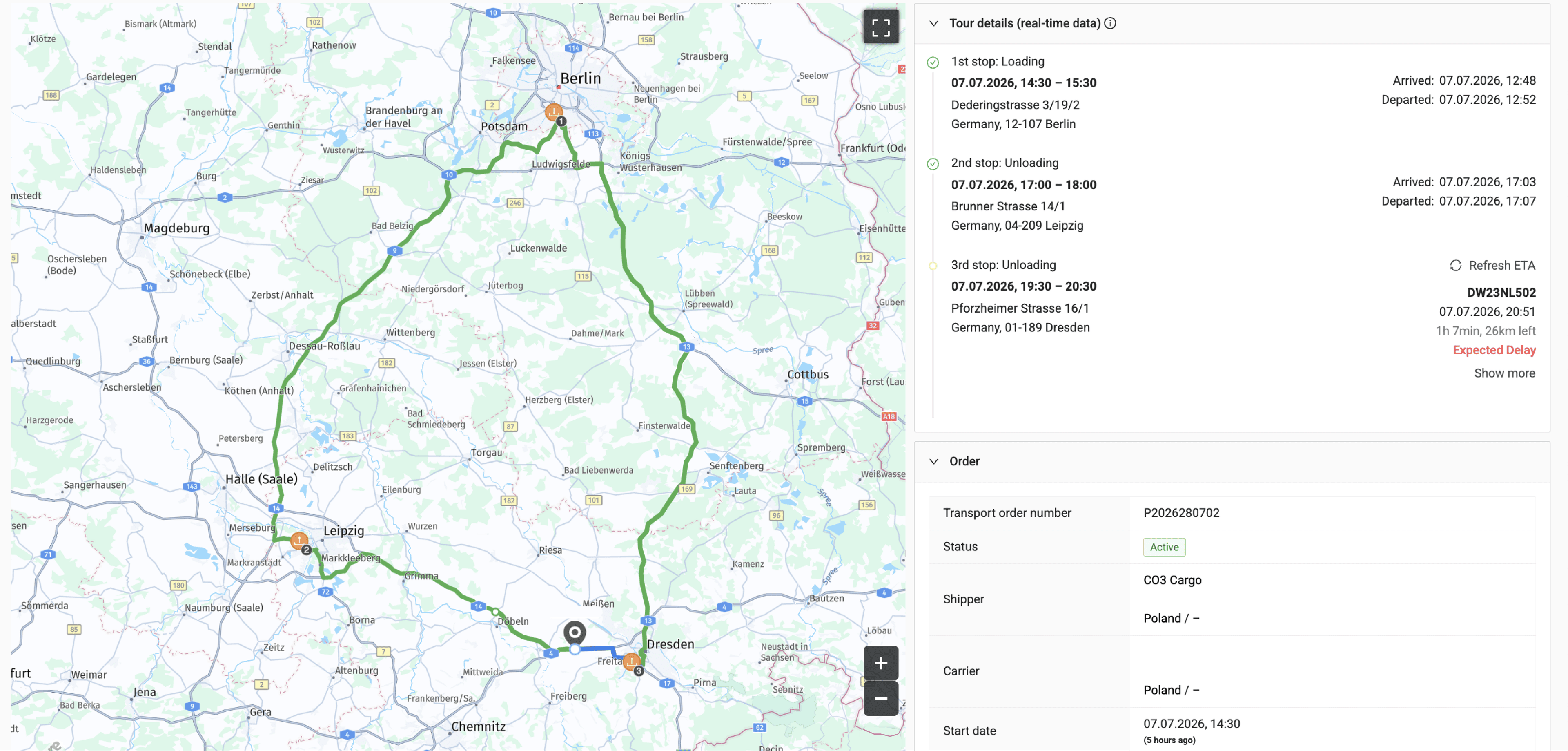
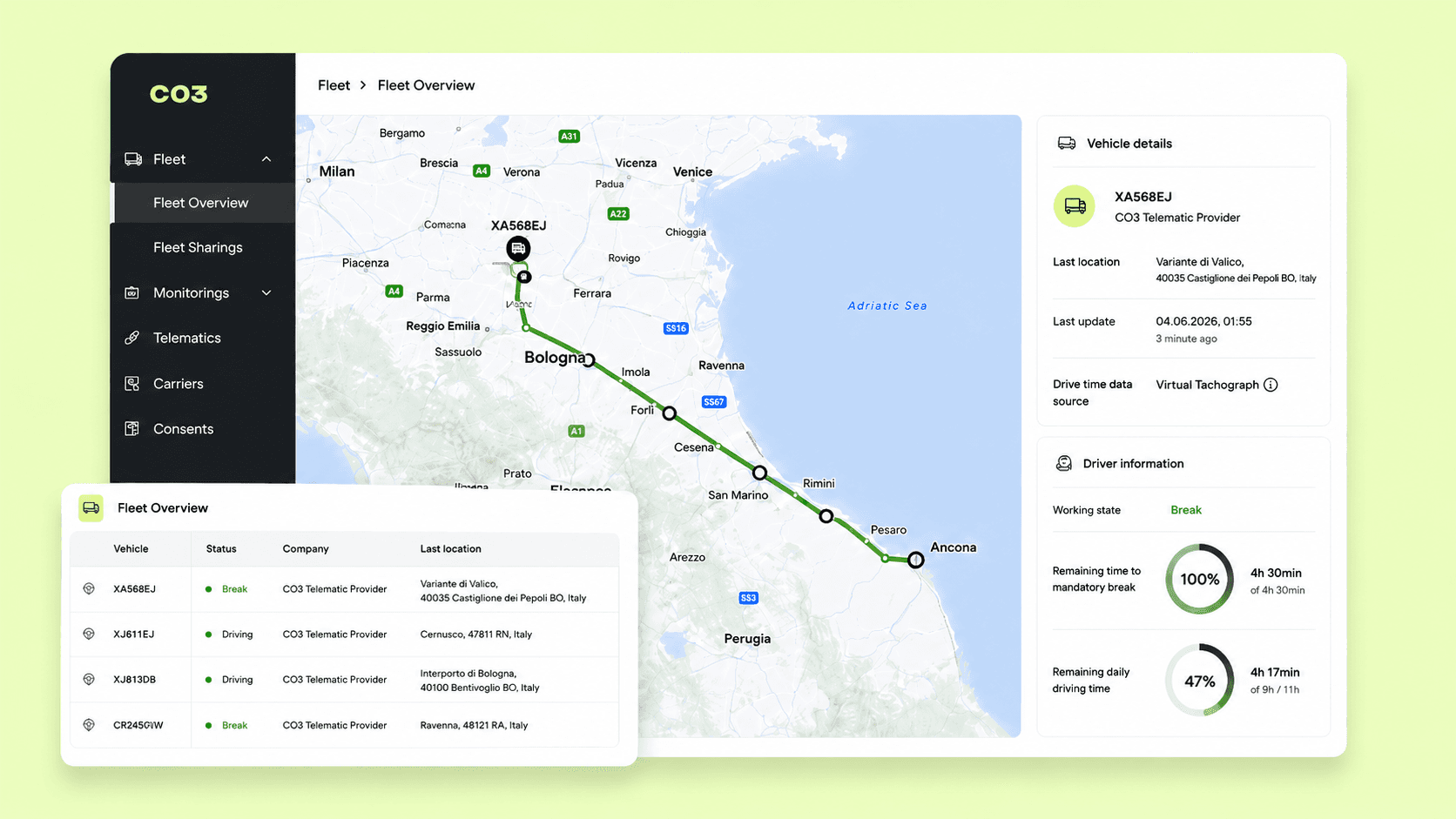
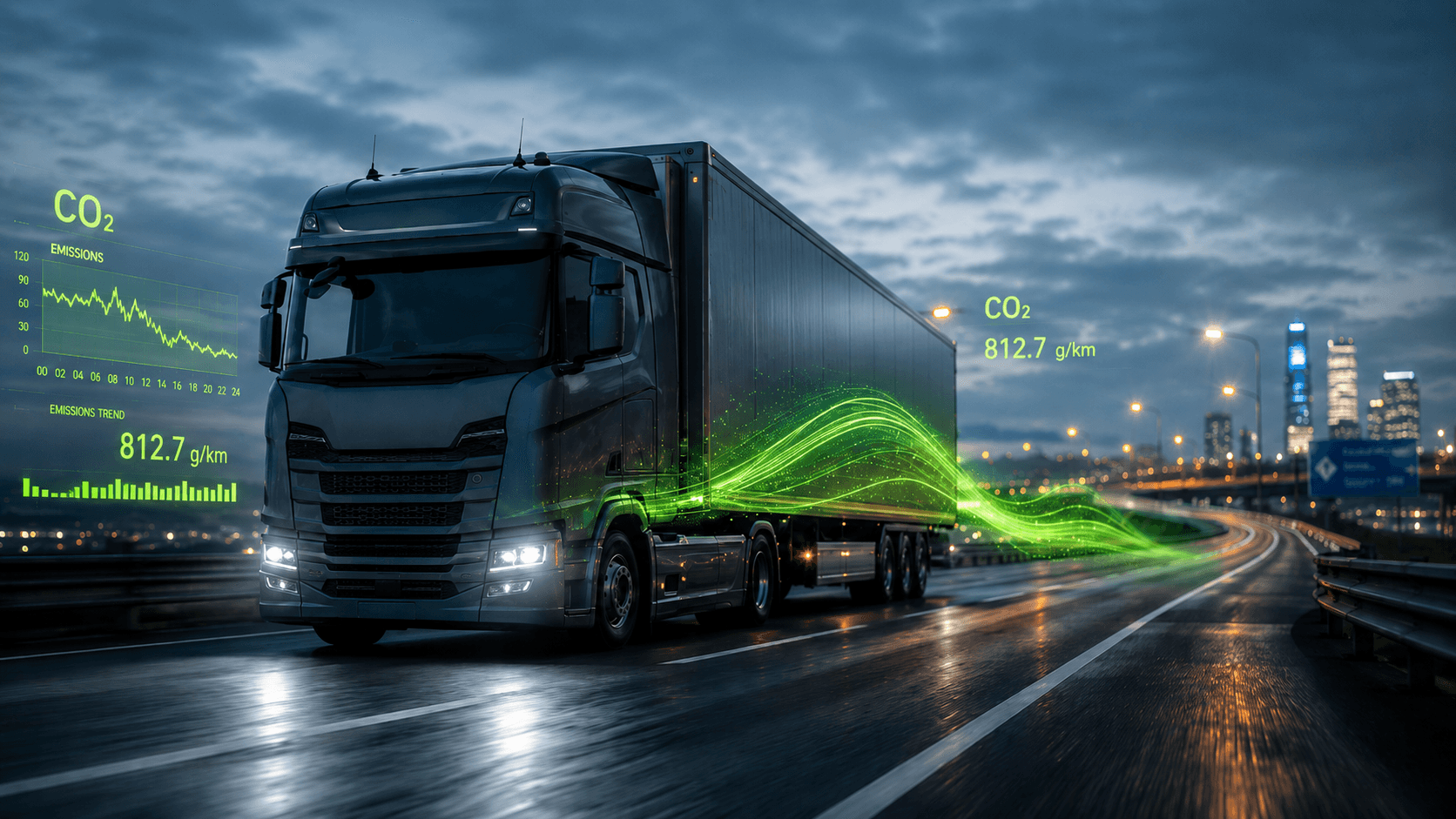
CO3 aggregates data from 500+ telematics integrations — trucks, trailers, and subcontractor systems — into a single API, with no new hardware installed. That feed carries the inputs the four levers need: positions and trips (empty-kilometre analysis, geofence timestamps for waiting time), measured fuel consumption per vehicle, and CO2 reporting per leg and order using a three-tier method hierarchy (primary measured data where available, hybrid or modelled where not), with each leg labelled by calculation method. The CO2 methodology is aligned with the GLEC Framework and ISO 14083. Today the emissions reporting covers completed road transports.
Getting started without a restructuring project
- Pick one lever and one number. Empty-kilometre share is usually the best start: it is simple to define and the savings are intuitive. Establish the real baseline from automatic trip data for 4–6 weeks.
- Make the number weekly and visible. A metric reviewed annually is an accounting figure; reviewed weekly per traffic or depot, it becomes a management tool.
- Expand to the next lever once the first is routine. Fuel coaching and detention documentation each take one quarter to embed. Toll class optimisation slots into the next fleet-renewal cycle.
Self-assessment: where do you stand?
- Do you know your fleet's empty-kilometre share for last month — per vehicle?
- Can you see measured fuel consumption (not fuel-card purchases) per truck and trip?
- Do you have automatic arrival/departure timestamps at customer sites?
- Did you invoice detention in the last quarter — with data attached?
- Do you know which CO2 toll class each truck in your fleet falls into?
- Have you calculated the toll difference of assigning your cleanest trucks to your highest-toll corridors?
- Can you compare driver fuel efficiency on like-for-like routes?
- Does your subcontractor capacity show up in the same data view as your own fleet?
- Is any of the above reviewed weekly rather than annually?
Five or more "no" answers means the savings are sitting in the data you are not yet collecting. CO3 can run this assessment with your team against your actual fleet data.
What to watch over the next 12–18 months
- Toll spread widens. More countries are implementing CO2-differentiated tolling under the revised Eurovignette rules; the cost gap between clean and standard fleets grows every year.
- Driver cost inflation continues. CNR projects another ~2.4% rise in non-fuel costs for 2026; wages remain the dominant driver. Productivity per driver-hour becomes the key ratio.
- Customers start asking for CO2 per shipment. Cost and carbon are converging into one optimisation — fuel saved is both.
- Capacity stays tight. EU truck registrations fell about 6% in 2025; running existing assets harder and emptier is getting more expensive, not less.
Closing thought
Cost inflation in road freight is structural, but so is the waste: a fifth of kilometres empty, fuel spreads of 10% between drivers, undocumented hours at the ramp. The operators who win the next three years will not be the ones who negotiated hardest — they will be the ones who measured first. Start with one lever, one number, one weekly review. CO3 can help you get the data layer in place in weeks, not quarters.
Glossary
- Empty running / empty kilometres: Distance a truck drives without cargo, typically repositioning between a delivery and the next pickup.
- CNR (Comité National Routier): France's national road transport committee, publisher of widely used haulier cost indices.
- CAN bus: The vehicle's internal data network; source of measured fuel, speed, and engine data.
- Detention / waiting time: Time a vehicle spends held at a loading or unloading site beyond the agreed free period; often billable.
- Geofence: A virtual boundary around a location (e.g., a warehouse) used to trigger automatic arrival/departure timestamps.
- CO2-differentiated tolling: Road charging where the per-km rate depends on the vehicle's CO2 emission class (live in Germany, Austria, Czechia, Belgium, Hungary).
- Maut: The German distance-based truck toll.
- Eurovignette Directive: The EU framework governing road charging for heavy goods vehicles, revised to require CO2 differentiation.
- GLEC Framework / ISO 14083: The leading methodology and international standard for calculating logistics emissions.
- Telematics: In-vehicle systems transmitting GPS position, fuel use, and other operational data.














.png&w=3840&q=75)









.png&w=3840&q=75)