Inside Europe's 320+ low-emission zones: the construction-truck routing problem
Inside Europe's 320+ low-emission zones: the construction-truck routing problem
There are now more than three hundred low-emission zones across Europe, and the number is rising every quarter. For construction fleets — heavy-duty, often older — they are a routing constraint that grows every January. Here is the structure of the rules, where the heavy-truck exposure sits, and how to route around the fines.
Why this matters
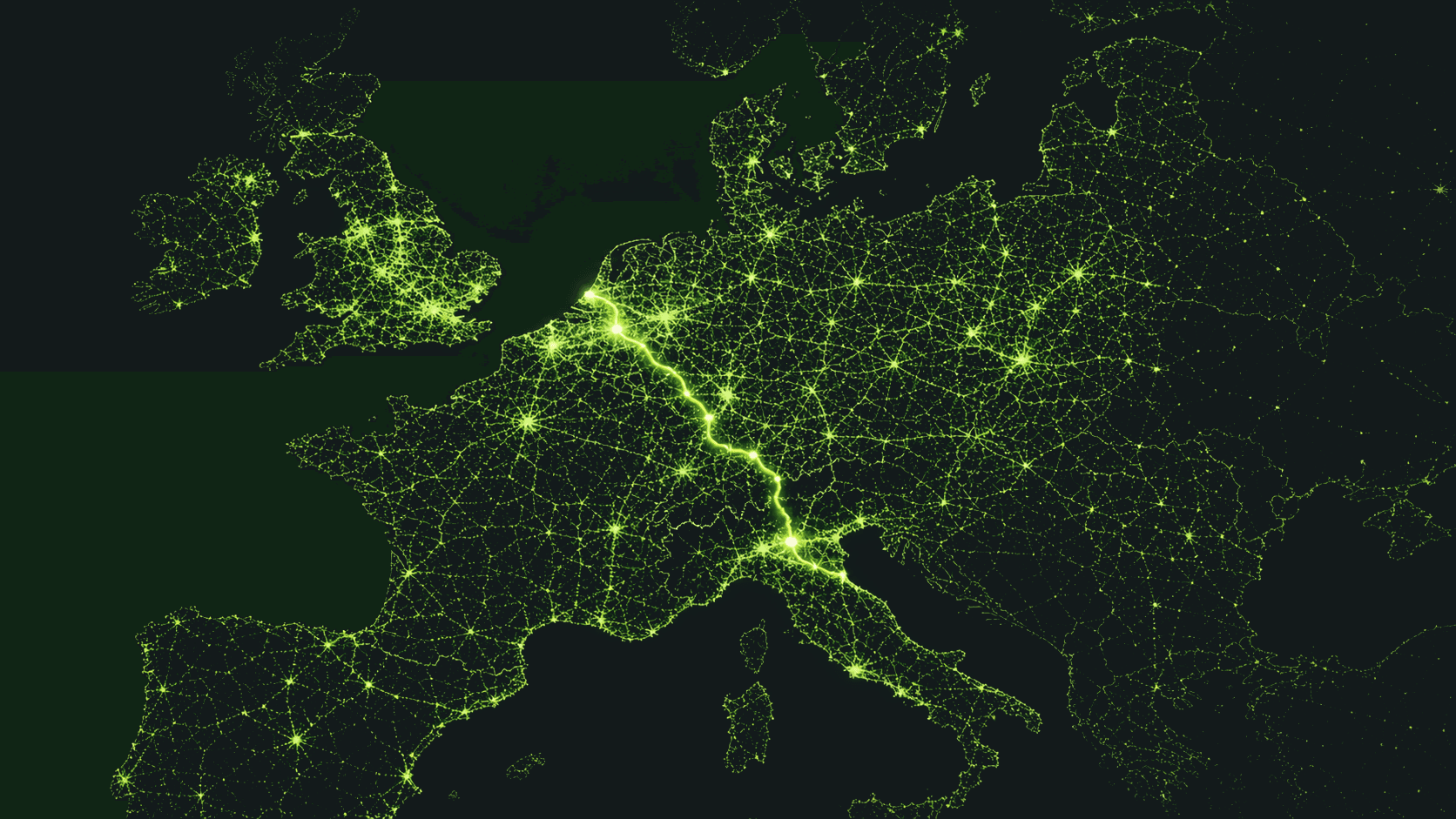
Low-emission zones (LEZs) started as a passenger-vehicle measure. They have crossed into heavy-duty regulation. As of 2026, more than 320 LEZs operate across Europe — up from roughly 250 in 2022. Wallonia's regional LEZ activated January 2026; Krakow's Clean Transport Zone launched the same month; Brussels, Madrid, Milan, Berlin, Paris and London (ULEZ) have all tightened their thresholds since 2023.
For a construction fleet, three things make this harder than for general road freight:
- Older average vehicle age — Construction trucks rotate more slowly than long-haul tractors. A pre-Euro VI tipper that still earns out economically is a fine waiting to happen.
- Urban deliveries are the bread and butter — Aggregates, concrete, demolition waste — these move into and out of city centres by definition.
- Local nuance — LEZ rules are not harmonised. The Euro class, the time window, the vehicle category, and the daily-pass mechanism vary by city.
The structure of the rules
There are four families of LEZ rule, broadly:
- 1. Euro-class threshold — Most LEZs set a minimum Euro emissions class. In Germany, the "green sticker" (Umweltplakette) requires Euro IV (or Euro III with a particulate filter) for N2/N3 trucks. In the Netherlands, most LEZs require Euro VI for heavy-duty diesel. The threshold moves up over time.
- 2. Time-window restrictions — Some zones operate only on weekdays, some on certain hours. Brussels' LEZ is permanent; Antwerp's was permanent on entry; many Italian "Zone a Traffico Limitato" operate by hour-band. Routing has to consider not only the zone but the time of crossing.
- 3. Daily-pass mechanism — Several cities (London ULEZ being the most visible) allow non-compliant vehicles to enter on payment of a daily charge. Berlin and Stuttgart do not. The construction-fleet question becomes: pay the pass or reroute?
- 4. Future-stage announcements — Most LEZs publish a phased tightening (e.g., Euro IV → Euro V → Euro VI over five years). A fleet investment decision in 2026 has to model the curve.
Where the heavy-truck exposure sits
The exposure for a typical European construction fleet concentrates in two clusters:
- DACH urban projects — Berlin, Hamburg, Munich, Stuttgart, Frankfurt, Cologne, Düsseldorf, Hannover, Leipzig — and Switzerland's UNECE zones. German Umweltzone is among the strictest in Europe for heavy trucks.
- Benelux + Northern France — Brussels, Antwerp, Ghent, Rotterdam, Amsterdam, The Hague, Paris, Lille. The Dutch ZE-zones (Zero-Emission zones for city logistics) are tightening progressively from 2025–30.
A construction truck operator running aggregates into any of these markets has LEZ exposure on a meaningful share of daily movements. Without active routing, the fines compound.
What a routing-compliant fleet looks like
Five operational habits separate compliant routing from accidental fines:
- Per-vehicle Euro-class register — Every truck's Euro class is in the routing engine, not in a spreadsheet.
- Live LEZ database — The zone definitions, threshold dates, and time windows are kept current. Most fleets rely on stale 2022 data.
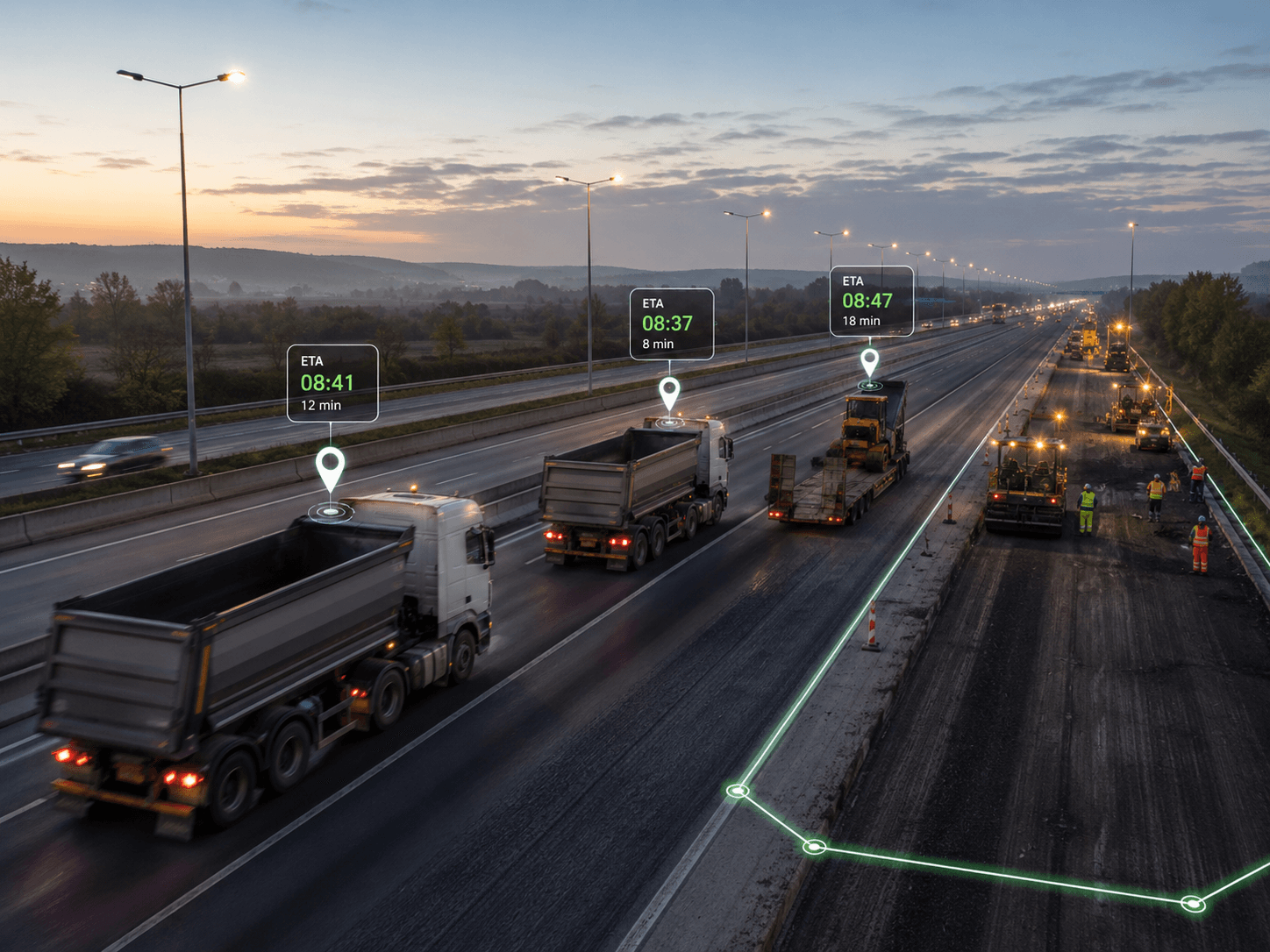
- Pre-trip routing check — Routing engines flag any planned route that crosses a non-compliant zone, before dispatch.
- In-trip alert — If a truck deviates into a non-compliant zone mid-shift, the dispatcher gets pinged in real time.
- Daily-pass workflow — When a daily-pass route is cheaper than rerouting (an arithmetic question that depends on the load), the pass is purchased automatically.
The CSRD overlap
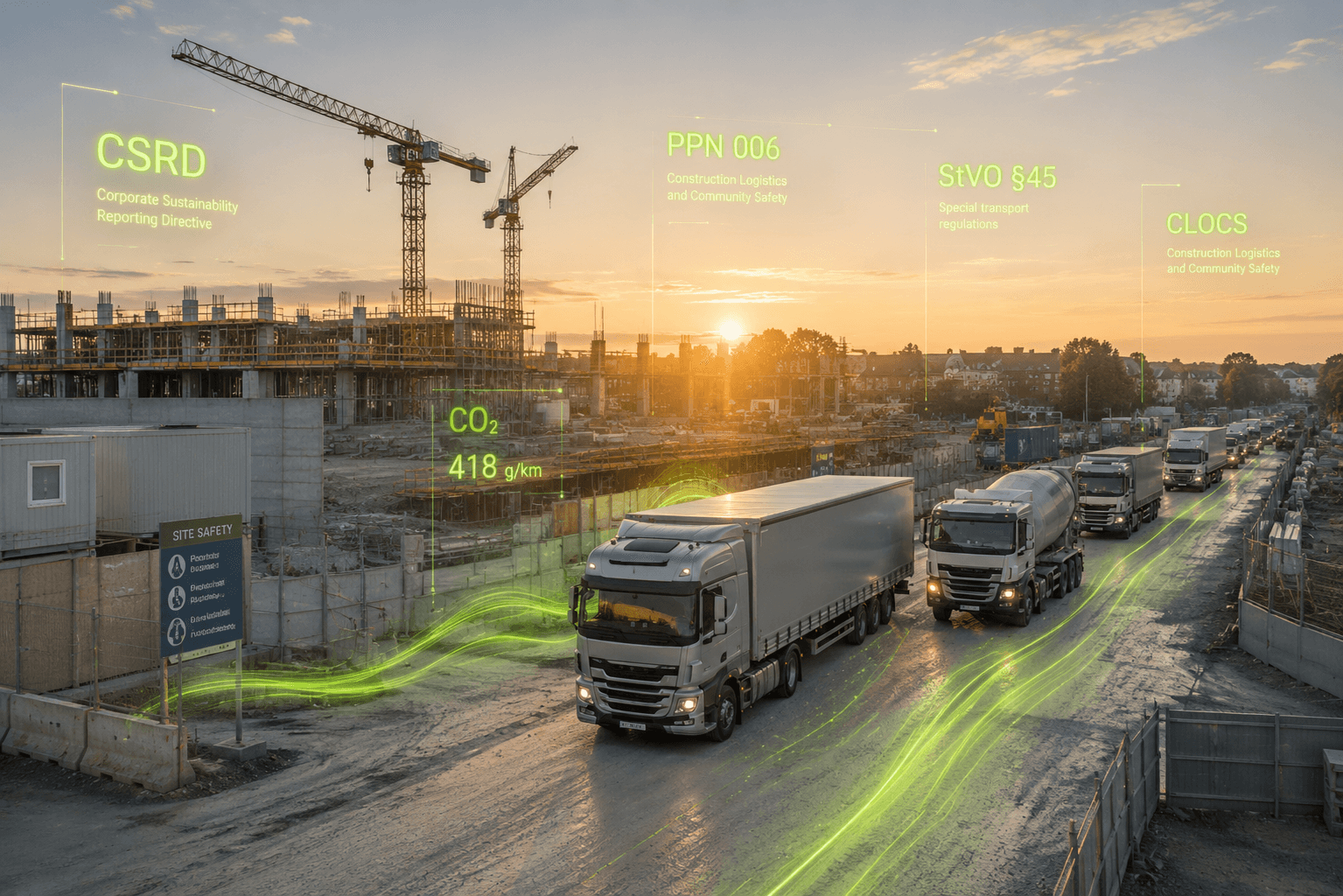
LEZ compliance and CSRD reporting reinforce each other. Both require per-vehicle data — Euro class, route, fuel, emissions. A fleet that has solved one is most of the way to solving the other. Specifically:
- The vehicle profile (VIN-resolved Euro class) — is the same input for LEZ routing and for primary-data CO2.
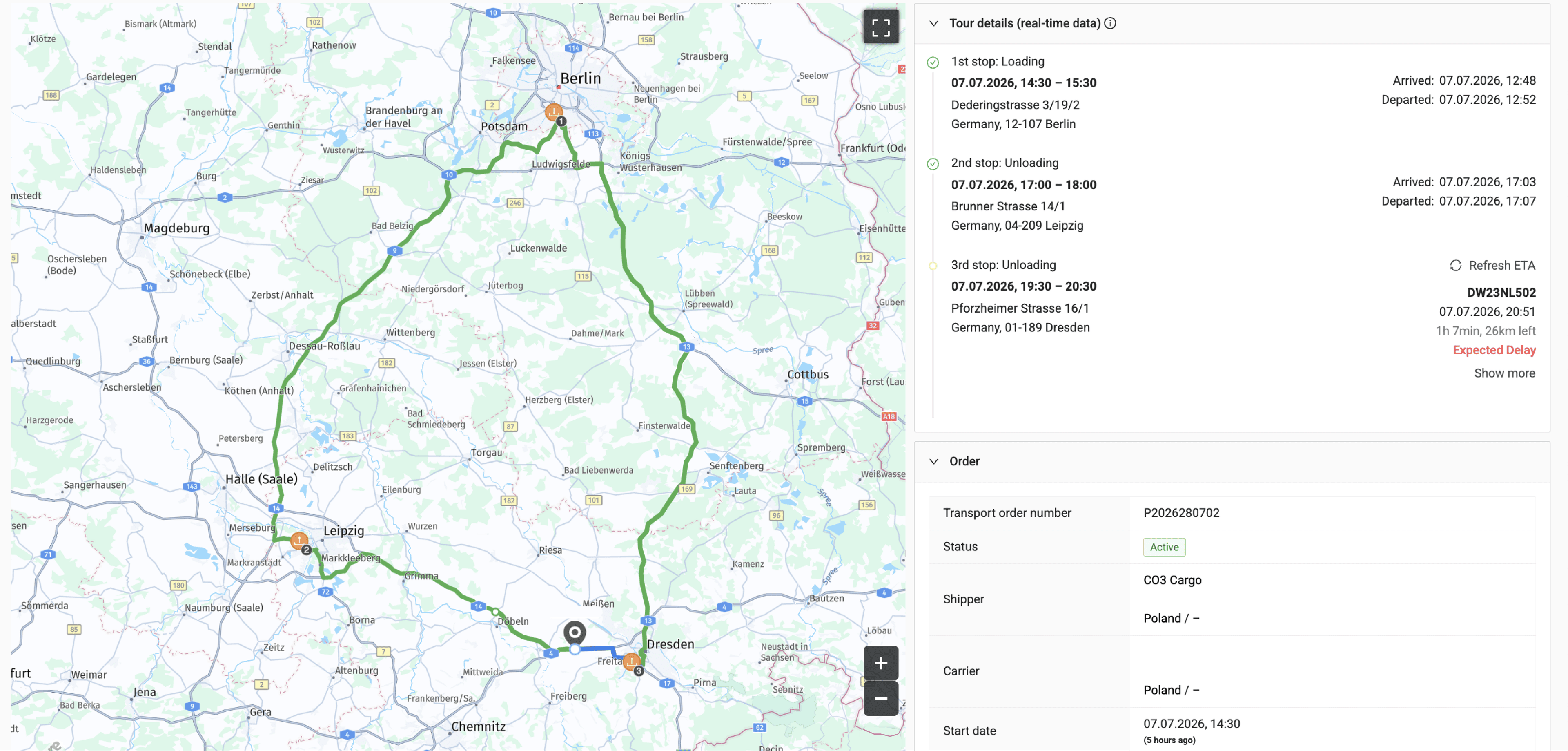
- The route record (GPS path) — is the same evidence for LEZ compliance and for CountEmissionsEU per-leg attribution.
- The exception log (deviations into restricted zones) — is the same audit artefact for local authorities and for sustainability reviewers.
This is why the LEZ project and the primary-data project should be one project, not two.
A practical adoption sequence
- Quarter 1 — Build the per-vehicle Euro-class register. One-off project, one analyst week for a 200-truck fleet.
- Quarter 1 — Subscribe to a live LEZ database. Urban Access Regulations Europe (urbanaccessregulations.eu) is the canonical reference; several routing engines now ship LEZ overlays.
- Quarter 2 — Wire pre-trip routing checks into dispatch. Most TMS estates support this with a configuration change.
- Quarter 2 — Roll out in-trip alerts. This is a notification rule on the telematics platform.
- Quarter 3 — Move to scenario-modelling on the announced LEZ tightening curve. This shapes the next round of fleet investment.
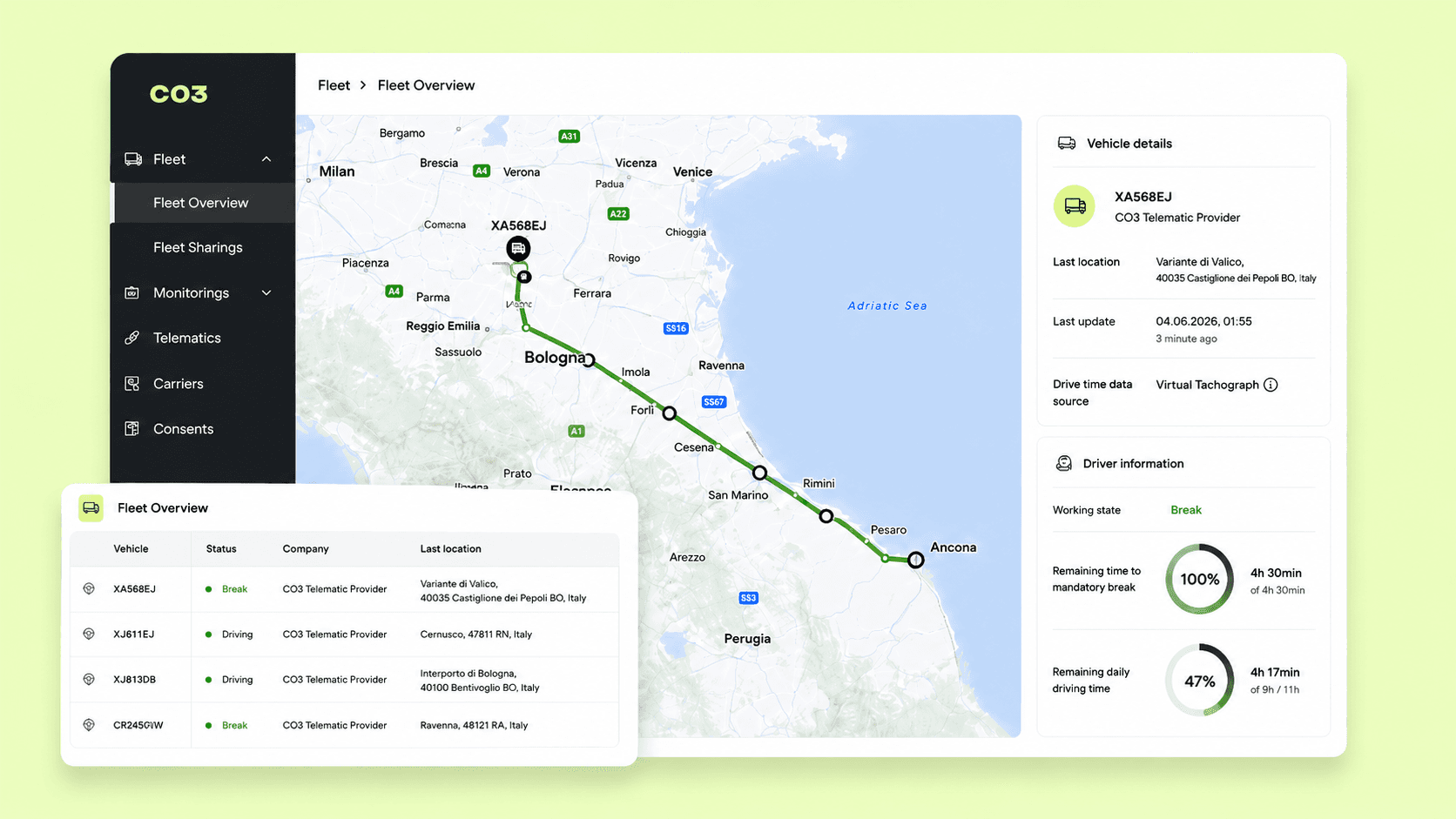
CO3's vehicle data platform sits underneath this — the VIN-resolved profile, the live GPS, the geofence event log. The routing engine sits on top.
What to watch over the next 12–18 months
- The Dutch ZE-zone rollout (10 cities scheduled by 2030, four already live).
- The Berlin "Umweltzone Plus" proposal under discussion for 2027.
- The London ULEZ heavy-vehicle threshold next review (announced expansion under consultation).
- Wallonia's first full enforcement year (2026).
- Krakow's first full enforcement year (2026).
Closing thought
LEZs are no longer a passenger-car story. They are now a structural constraint on heavy-truck routing in every major European urban market. A construction fleet without a per-vehicle Euro-class register and a pre-trip routing check is exposed to a fine on every restricted-zone crossing. The fix is procedural, not capital-intensive — and it doubles as the foundation for primary-data CSRD reporting.
Glossary
- LEZ — Low-Emission Zone. Geographic area with vehicle-emissions restrictions.
- ULEZ — Ultra Low Emission Zone. London's tightened LEZ.
- ZE-zone — Zero-Emission zone (Netherlands). City-logistics ban on combustion vehicles.
- Euro class — European emissions standard, currently I (oldest) to VI (current heavy-duty).
- Umweltplakette — German "green sticker" certifying Euro class for urban LEZs.
- Daily pass — payment mechanism allowing non-compliant entry for a specific date (e.g., London ULEZ).
- Pre-trip routing check — dispatch-stage validation that a planned route does not cross non-compliant zones.














.png&w=3840&q=75)









.png&w=3840&q=75)