Amazon Just Entered LTL. Here's What European Road Freight Should Actually Do About It
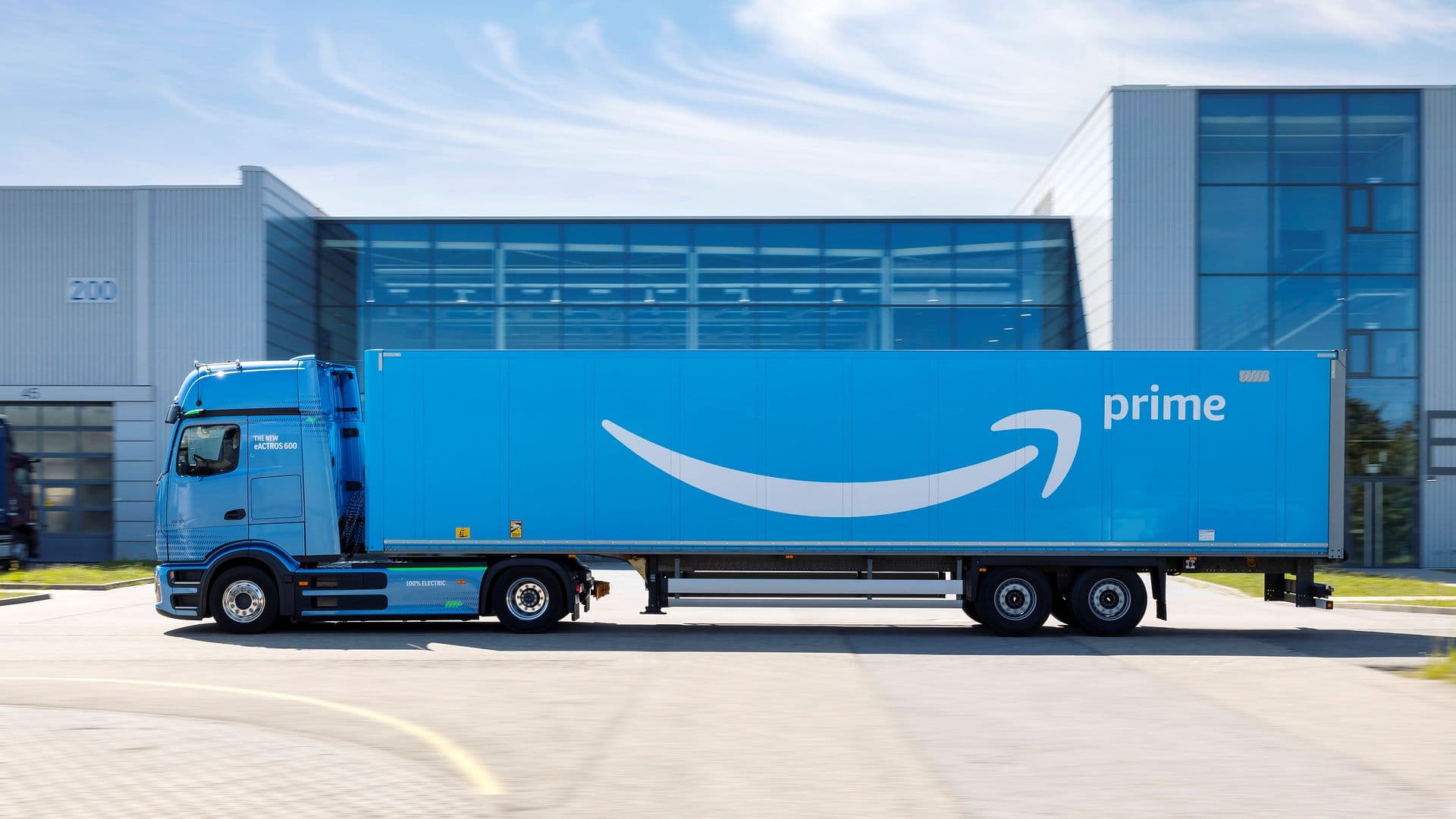
On 10 June 2026, Amazon opened its less-than-truckload (LTL) freight network to all businesses in the US — five weeks after launching Amazon Supply Chain Services, which opened its ocean, air, ground, and rail capabilities to anyone. Freight stocks fell on both announcements. The instinctive reaction in Europe is either complacency ("US only, not our market") or alarm ("Big Tech is coming for freight").
Both miss the real signal: read Amazon's own press release and notice what it sells hardest — not trucks, but real-time GPS tracking, proactive milestone updates, sensor-equipped trailers, and automated alerts.
Amazon is competing on the data layer, and that is the one part of its playbook every European carrier and logistics service provider can adopt — without Amazon's capital, and while keeping control of the asset Amazon would most like to have: your operational data.
What actually happened
Two announcements, five weeks apart, that belong together.
On 5 May 2026, Amazon launched Amazon Supply Chain Services (ASCS) — opening the logistics network it built for itself over nearly three decades to businesses of all types and sizes. Not just Amazon sellers: anyone. The portfolio spans ocean and air freight, ground and rail, customs, warehousing, fulfilment, and last-mile delivery, backed by roughly 80,000 trailers, 24,000 intermodal containers, and around 100 aircraft. Procter & Gamble, 3M, and other household names signed up early. UPS and FedEx shares fell around 9–10% on the news.
On 10 June 2026, the follow-up: Amazon expanded its LTL freight service — previously inbound-to-Amazon only — to any destination in the US: third-party warehouses, distribution centres, retail partners. Pallet-level freight, one to six pallets typical, with next-day or same-day pickup options and standing pickups for high-volume shippers. Since 2019 the service had quietly moved millions of pallets a year for Amazon's selling partners; now it is open to everyone. LTL carrier stocks — and FedEx Freight, fresh from its spin-off — dropped on the announcement.
For now, both offerings are US-domestic. But nobody who watched Amazon build AWS out of internal infrastructure, or its parcel network out of its own delivery problem, should treat geography as a moat. The pattern is the same each time: build for yourself at scale, industrialize, then sell the capability to the market — including to your own competitors' customers.
Read the press release like an operator
Strip the corporate language from Amazon's LTL announcement and look at the feature list it leads with:
End-to-end real-time GPS tracking from pickup through delivery. Proactive milestone updates. Automated appointment scheduling at receiving facilities. Electronic proof of delivery — "eliminating manual tracking." Cargo cameras and door sensors across the entire fleet with centralized monitoring and automated driver alerts. EDI integrations for tendering, tracking, and invoicing.
Notice what is missing: price leadership barely features. The customer quote Amazon chose highlights faster transit and lower cost, but the bulk of the announcement sells certainty — you will know where your freight is, you will hear about problems before you ask, you will not chase a PDF for proof of delivery.
That is the actual competitive thesis. Amazon is betting that the LTL and freight market's weak point is not capacity or price - but the experience of shipping: fragmented tracking, reactive communication, manual paperwork, and the daily ritual of "where is my truck?" phone calls.
It is worth being honest: for a large share of the market, that bet is correct. Shippers have tolerated patchy visibility for decades because everyone was equally patchy. Amazon's entry resets the reference point. Once a shipper has experienced freight with parcel-grade tracking and proactive exception alerts, that becomes the standard against which every carrier is measured — including carriers in markets Amazon hasn't entered yet. Expectations travel faster than trailers.
The wrong lessons to draw
Wrong lesson one: "It's a US story." The services are US-domestic today. The expectation shift is not. Many European shippers are subsidiaries of US groups or sell into US channels; procurement standards propagate through global tender templates within a couple of cycles. And Amazon already operates one of Europe's largest road networks for its own volumes — the optionality is sitting there.
Wrong lesson two: "We must become a platform too." Trying to out-Amazon Amazon — building a vertically integrated, everything-included logistics stack — is a capital game that mid-sized operators cannot win and should not enter. Integration of that kind also carries trade-offs Amazon's customers will discover in time: dependency, standardization, and the quiet question of what happens to your demand data inside an ecosystem that also competes with you.
Wrong lesson three: "Nothing to be done — scale wins." Scale wins at scale games. Road freight in Europe is not one market but thousands of lanes, sectors, and relationships where specialist knowledge, flexibility, and accountability beat standardized bigness daily. The mid-sized operator's problem is not that it lacks 80,000 trailers. It is that its service often feels less certain than its operations actually are — because the data layer doesn't show the quality of the work.
What Amazon's playbook actually proves
Here is the useful reframe: Amazon has just published, at enormous marketing expense, a validation of a simple claim — the data layer is now the product.
Every feature in that announcement is a data feature. GPS tracking is telematics data, unified. Proactive milestone updates are exception management on top of live data. Automated appointment scheduling is ETA data wired into the receiver's calendar. Electronic proof of delivery is a document pipeline. Sensor alerts are trailer and cargo data with thresholds. EDI is data exchange with the customer's systems.
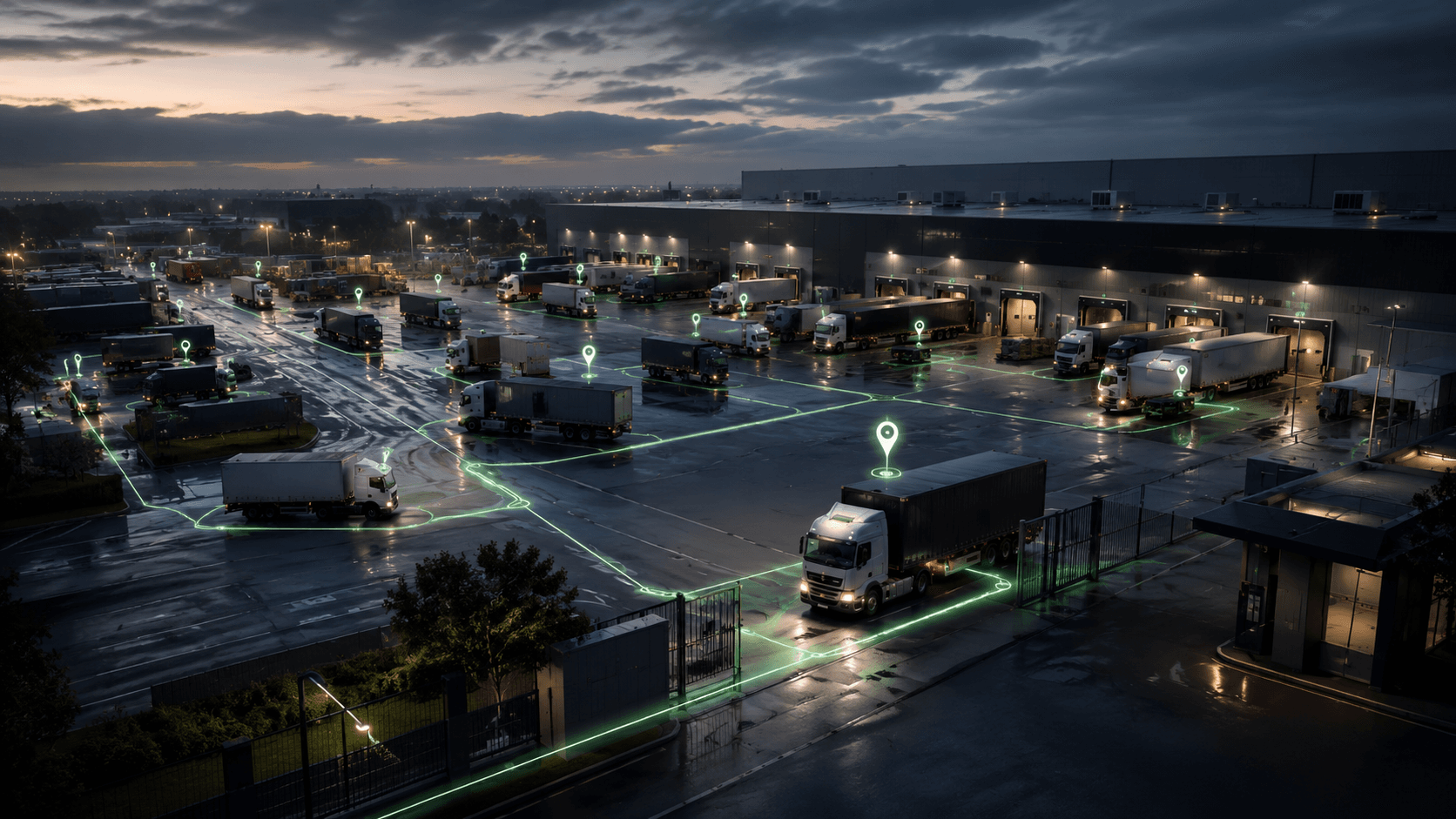
None of this requires owning the trucks. Amazon bundles the data layer with its assets because that is its model. But the layer itself — live vehicle data, unified across a fleet, turned into customer-facing certainty — is available to any operator willing to connect the telematics it already has.
That is the asymmetry worth exploiting. Amazon had to build its data layer; your trucks, trailers, and subcontractors already generate the raw material every day. For most European fleets the data exists — it is simply trapped in a dozen disconnected systems, one per telematics brand, plus dark subcontractor legs. The gap between you and Amazon's freight experience is not capital. It is integration.
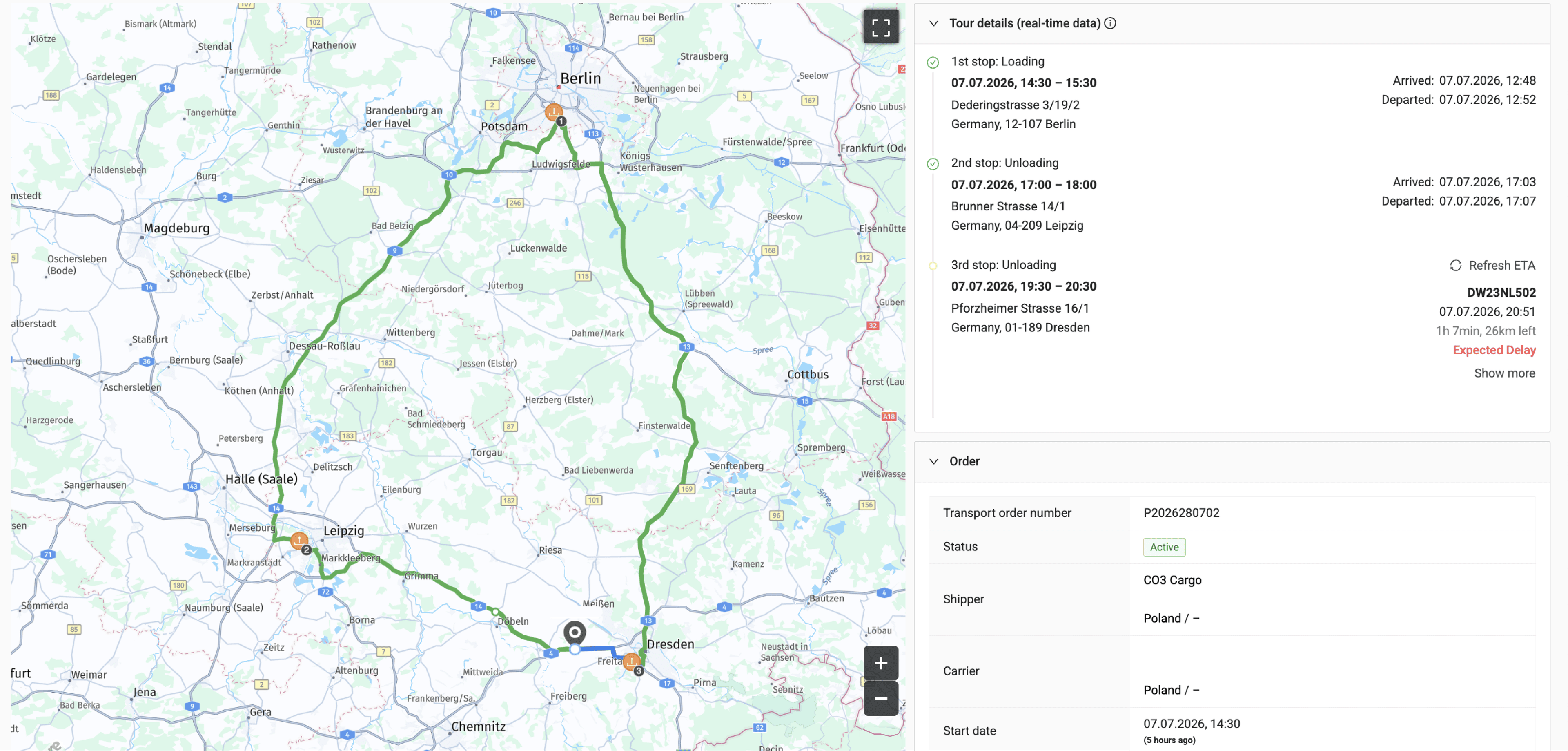
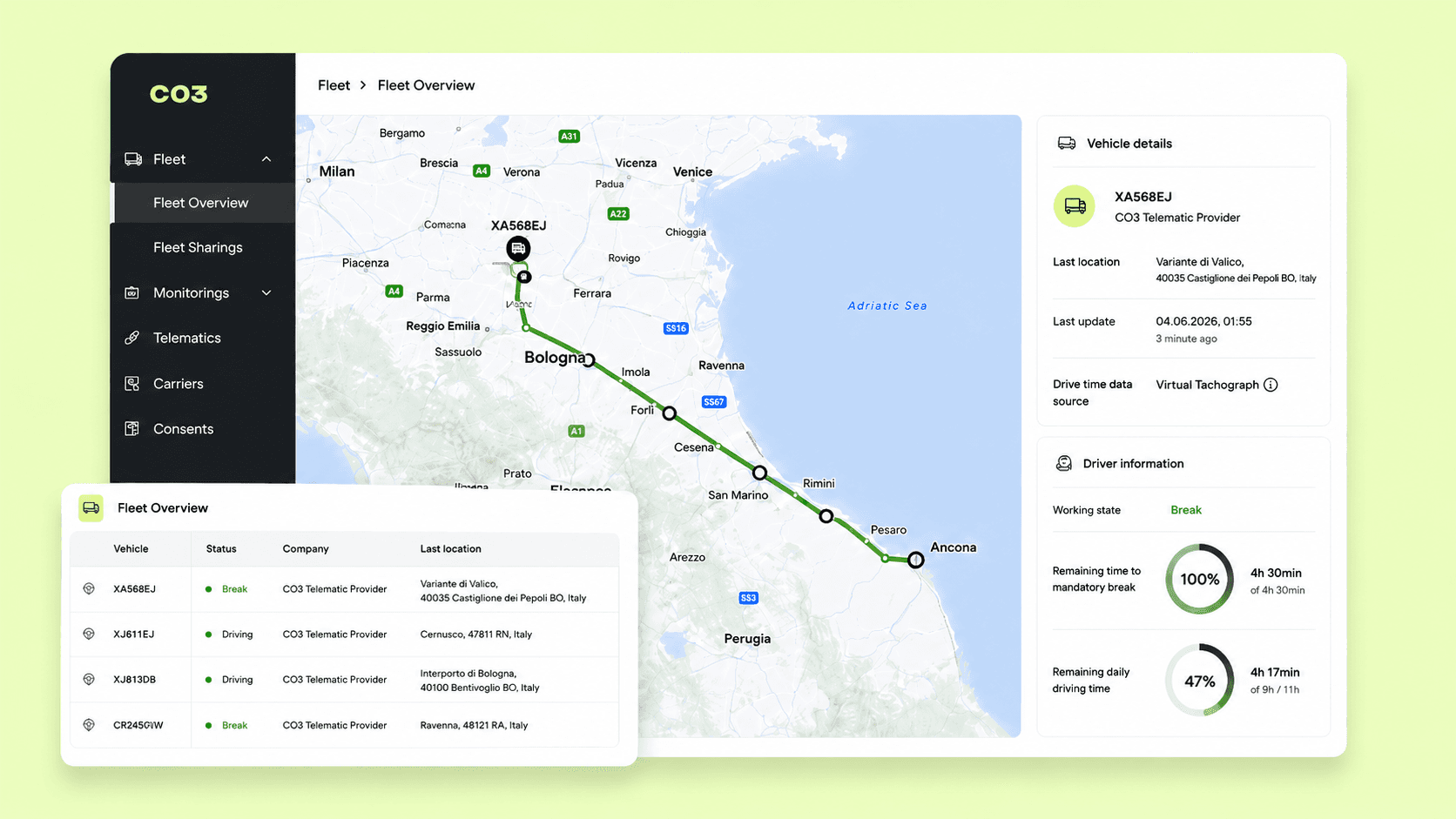
How CO3 fits in. CO3 connects the systems a fleet already runs — more than 500 integrations across trucks, trailers, telematics devices, and cooling units, including subcontractors — into a single API, without installing hardware. On top of that unified feed sit the capabilities Amazon's announcement showcases: live GPS visibility across the whole fleet, predictive ETAs, temperature monitoring, fuel and CO2 reporting per leg and order. The difference in model matters as much as the features: your data stays yours, accessible by API, usable in your own customer products — not absorbed into a larger player's ecosystem.
The independence dividend
There is a second half to this story that the alarmists miss entirely: integrated mega-platforms create a counter-market.
Every shipper that moves freight through a single integrated ecosystem makes a trade: simplicity in exchange for control, and efficiency in exchange for data exposure. Sophisticated shippers understand this. Many will deliberately keep a meaningful share of their freight with independent carriers and logistics service providers — for negotiating leverage, for resilience, for sector expertise, and because they would rather their demand patterns not live inside a company that also runs a marketplace.
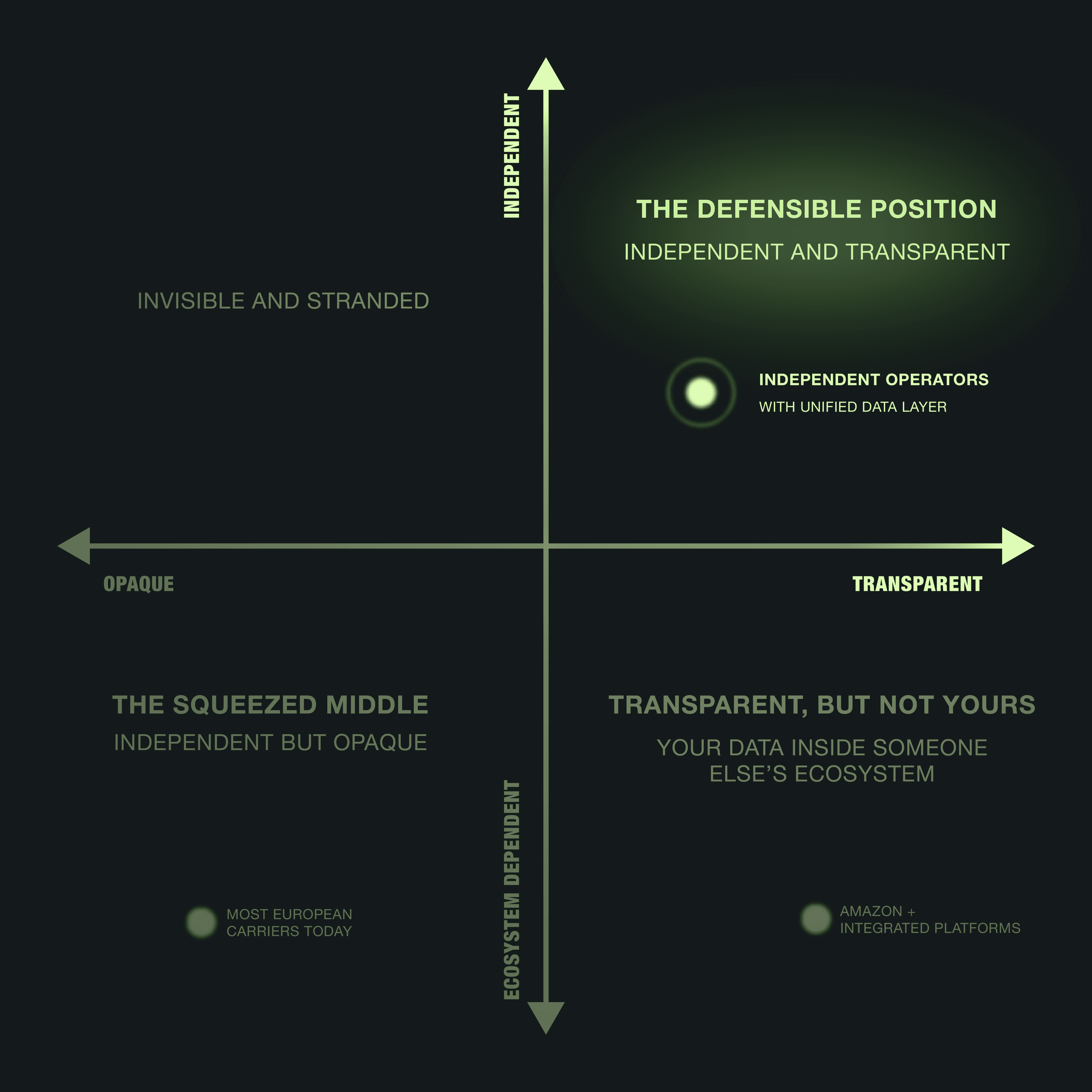
In Europe, this instinct has a regulatory dimension on its side. Data sovereignty is not a niche concern here: questions about where operational data is processed, who can access it, and under which jurisdiction are appearing in transport tenders with increasing frequency. An independent operator running on European infrastructure, able to give customers visibility without requiring them to enter a closed ecosystem, has a story that resonates — but only if the visibility is actually good. "Independent but opaque" loses to "integrated and transparent" every time. "Independent and transparent" is the winning position, and it is achievable.
A future-proofing playbook for the next 12 months
Concretely, sequenced, without a transformation program:
- Close your visibility gap — including subcontractors (first 90 days). Inventory every leg type you run and establish where you have live data. Connect existing telematics across your own fleet and subcontractor base. This is the foundation for everything below; it requires integration, not hardware.
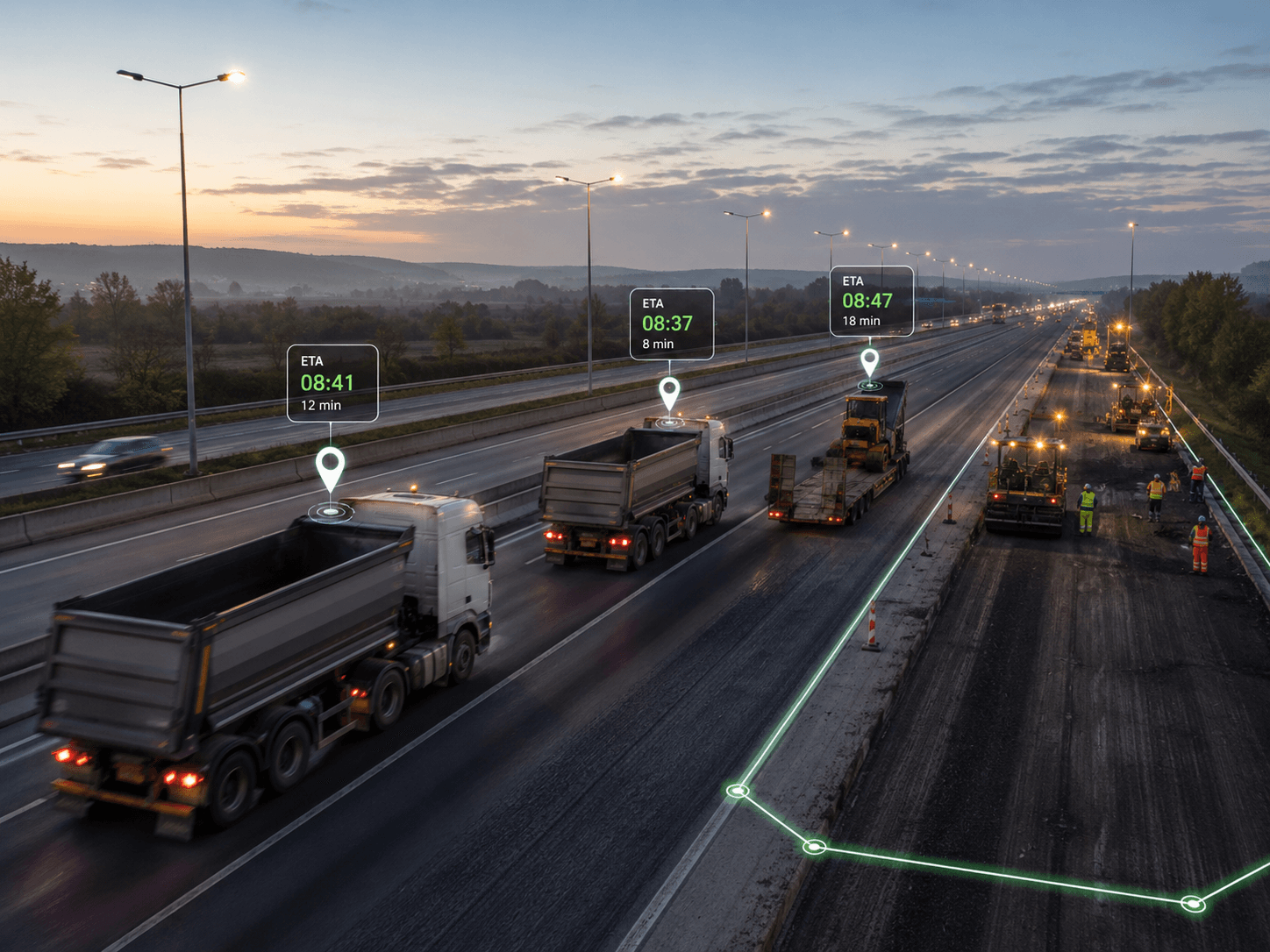
- Turn visibility into proactive communication (next 90 days). Amazon's "proactive milestone updates" should be your benchmark: the customer hears about a problem from you, with a revised ETA and a plan, before they notice it themselves. That requires ETAs you trust and exception thresholds per customer — and it converts the same operational performance into visibly better service.
- Kill your paper trail. Electronic proof of delivery, automated status into the customer's systems via API or EDI, no more end-of-month document chases. This is unglamorous and disproportionately valued by the people who fill in tender scorecards.
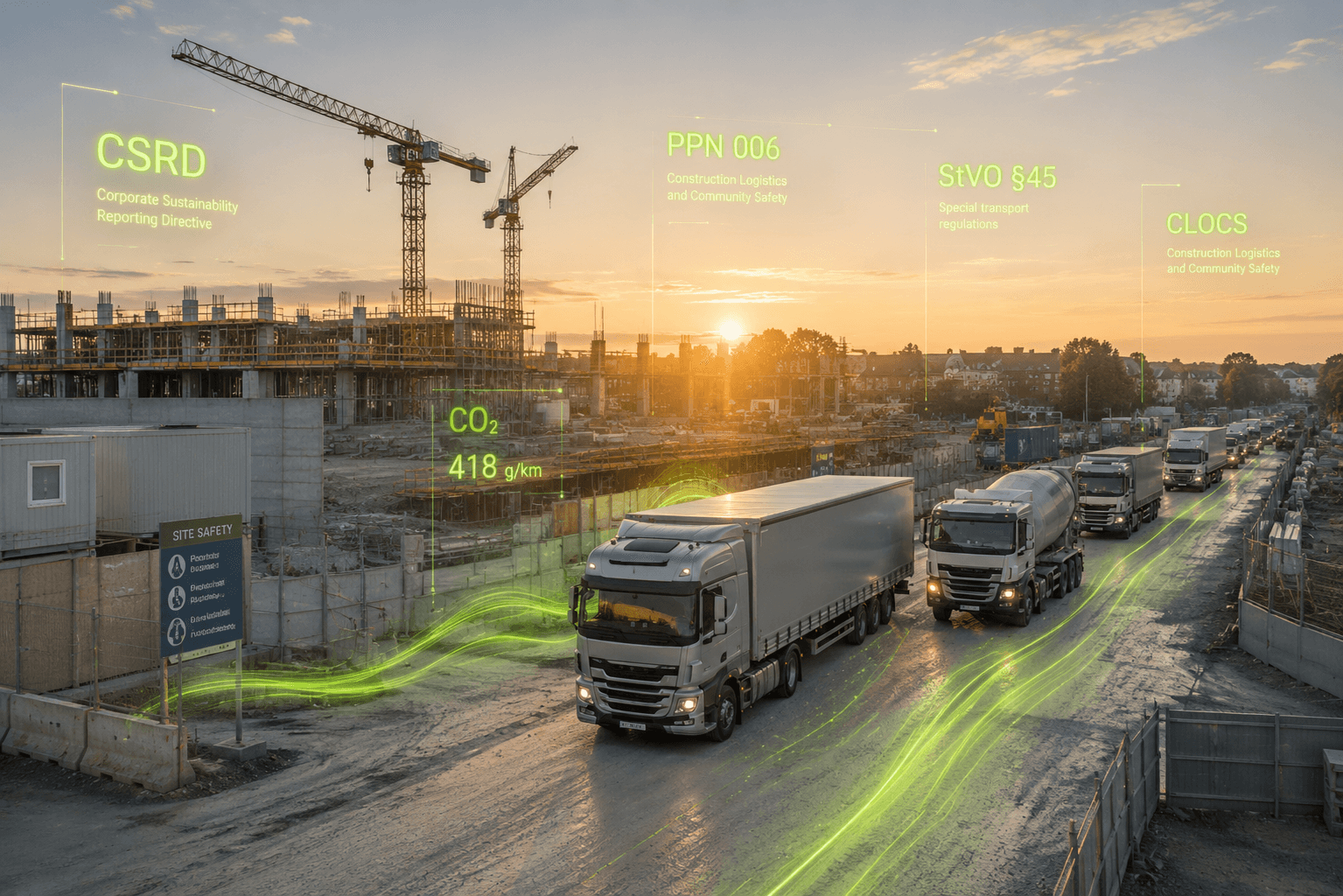
- Make your data a sales asset. On-time performance by lane, temperature compliance documentation, CO2 reporting per shipment your customers can use for their own obligations. Mid-sized operators usually have genuinely good operational stories — they just can't prove them. Proof beats promises in every tender.
- Decide your ecosystem strategy deliberately. Working with large platforms — as subcontractor, partner, or even customer — is not betrayal; it can be a smart capacity strategy. The line to hold is the data layer: whoever you work with, your fleet's data should flow through systems you control, so the relationship stays reversible.
Self-assessment: are you future-proof?
- Can your customers see live status of their shipments without calling you?
- Do they hear about delays from you before they notice them?
- Can you see every subcontracted leg as clearly as your own fleet?
- Is your proof of delivery electronic and instantly available?
- Can a customer's system pull your tracking data via API or EDI today?
- Can you prove your on-time performance, by lane, with data?
- Can you give customers per-shipment CO2 figures they can use in their reporting?
- If a large platform offered to "handle everything," could you articulate what you'd lose?
- Does your fleet data live in systems you control and could take with you?
- Have you read a recent tender's visibility requirements against your actual capabilities?
Three or more "no" answers is the gap Amazon's announcement is pointed at. CO3 can run this assessment with your team against your live setup.
What to watch over the next 12–18 months
Watch whether ASCS crosses the Atlantic — Amazon's European road network already runs at scale for its own volumes; an EU launch of freight services would compress the adaptation window sharply. Watch tender language: visibility, proactive alerting, ePOD, and per-shipment emissions data are moving from "nice to have" annexes into scored requirements — the moment they become knock-out criteria, the unprepared lose revenue without ever losing a price negotiation. And watch the consolidation dynamic: as integrated platforms set the experience bar, expect mid-sized operators to differentiate through technology partnerships and selective M&A rather than solo platform-building — the build-vs-buy logic applies to whole companies, not just software.
Closing thought
Amazon entering LTL is not a warning to panic about — it is the clearest free market research the industry will get this year. It tells you exactly what the most data-driven logistics operator on earth believes shippers will pay for: certainty, built on a live data layer. You cannot match Amazon's trailers, and you don't need to. You can match — on your own fleet, for your own customers — the part that actually changes expectations: knowing, proving, and proactively communicating what your operation already does well. The trucks were never the moat. The data layer is. Build yours on your own terms, before someone else's terms arrive. CO3 can help you start this quarter.
Glossary
- LTL (less-than-truckload): Freight shipping where multiple shippers share trailer space, typically 1–6 pallets or 150–15,000 lbs per shipment, instead of booking a full truck.
- FTL (full truckload): A shipment occupying an entire trailer for a single customer.
- Amazon Supply Chain Services (ASCS): Amazon's portfolio (launched May 2026) opening its freight, distribution, fulfilment, and parcel capabilities to all businesses.
- ePOD (electronic proof of delivery): Digital confirmation of delivery, available immediately instead of via paper documents.
- EDI (electronic data interchange): Standardized system-to-system exchange of business documents like tenders, status updates, and invoices.
- Telematics: In-vehicle hardware/software transmitting GPS position, speed, fuel, temperature, and vehicle events.
- Data sovereignty: Control over where data is stored and processed, and under which legal jurisdiction it falls.
- Predictive ETA: A continuously recalculated arrival forecast based on live position, traffic, driver hours, and lane history.
- Vertical integration: One company controlling multiple supply chain stages (e.g., warehousing, line-haul, and last mile) in a single offering.
- Drop trailer: A pickup method where a trailer is left at the shipper's site for flexible loading, rather than a live (attended) loading slot.






















.png&w=3840&q=75)











.png&w=3840&q=75)