CO2 reporting and zoning rules on construction sites: a UK and Germany compliance deep-dive

CO2 reporting and zoning rules on construction sites: a UK and Germany compliance deep-dive
Two regulatory shifts are quietly rewriting what it costs to run a large construction site in the UK and Germany. The first is carbon reporting — a stack of CSRD, SECR, PPN 006, UK CBAM and federal procurement rules that now reaches every truck and every subcontractor moving in and out of site. The second is access — restricted-corridor planning conditions, Lkw-Durchfahrtsverbote, ULEZ, Umweltzonen, CLOCS routes and verkehrsrechtliche Anordnungen — that turn a wrong-turn truck into a council complaint, a fine, or a stop-work notice. Both rules now bite twice: once at tendering, where the bid stands or falls on the carbon and access plan, and again in operations, where the data has to hold up to an audit. The contractors that win in 2026 are not the ones with the prettiest sustainability brochure — they are the ones whose telematics platform produces audit-grade evidence on both fronts, in real time, across every carrier and every subcontractor that touches the site.
Why 2026 is the inflection year for construction compliance
Three things happened at the same time, and most contractors are still treating them as separate workstreams.
Carbon reporting moved from policy to procurement. CSRD's first wave of disclosures hits in 2026 for large EU groups, including construction conglomerates and their German subsidiaries. The UK's PPN 006 has, since February 2025, made a Carbon Reduction Plan a precondition of every central-government contract worth more than £5 million per year.
Local authority access tolerance dropped. Across both countries, municipalities are tightening Construction Traffic Management Plans, expanding low-emission zones, and issuing more heavy-truck transit bans. The Ordnungsamt in Germany can issue a fine without going to court.
Subcontractor pull-through became standard. Tier-1 contractors with their own CSRD or PPN obligations now pass the requirements down. A subcontractor without site-level Scope 1 data, or without evidence that its fleet sticks to the planning-permission route, increasingly fails procurement before the price is even read.
The result: every truck movement in and out of a construction site is now a cost line, a reporting line, and a planning-permission line at the same time — and the data to defend each one lives in a different system.
[[ILLUSTRATION 1 — Hero image: split frame showing aconstruction site at dawn. Faint overlays of regulatory references (CSRD, PPN 006, StVO §45, CLOCS) drift across the trucks moving in. Caption: Two countries, two regulatory stacks, one operating reality.]]
Use case 1 — CO2 emission reporting
The legal stack, side by side
Germany.
The headline regime is the Corporate Sustainability Reporting Directive (CSRD), implementing the European Sustainability Reporting Standards. The post-Omnibus thresholds reduce the scope to companies with more than 1,000 employees and turnover above €450 million, with first reports covering FY 2025 or 2026. Under ESRS E1, in-scope contractors must disclose gross Scope 1, 2 and 3 emissions separately — no netting against credits — with sufficient granularity to defend the figure to an auditor. For most construction groups, Scope 1 is dominated by the trucks and plants moving in and out of site. Scope 3, Category 4 (upstream transport) captures the subcontracted haulage that brings aggregate, asphalt, concrete and prefab to the gate.
Underneath CSRD sits the Bundes-Klimaschutzgesetz (KSG) — Germany's federal climate law — which obliges the federal government to a 65% emissions cut by 2030 and net climate neutrality by 2045. The relevant procurement instrument is the AVV Klima (Administrative Regulation on Procurement of Climate-Friendly Services), in force at federal level since January 2022, which mandates the use of a CO2 shadow price in award decisions. From 2026, the national emissions trading system (nEHS) moves from fixed pricing to auction, with certificates expected in a €55–€65 range — directly affecting diesel and heating fuel costs at the jobsite.
Finally, the Lieferkettensorgfaltspflichtengesetz (LkSG) — the Supply Chain Due Diligence Act — adds a separate obligation on large contractors to assess and document environmental due diligence in their subcontractor base. Some 2026 German tenders are already weighing sustainability criteria at 20–30% of the total award score.
United Kingdom.
Two instruments matter.
SECR (Streamlined Energy and Carbon Reporting) covers all UK quoted companies, large unquoted companies and large LLPs — broadly, those meeting two of three tests: £36 million turnover, £18 million balance sheet, 250 employees. The reporting is annual, Scope 1+2 plus energy use, with a low-energy exemption below 40,000 kWh. The "large company" Companies Act thresholds were uplifted in April 2025, but the SECR thresholds in the 2018 regulations were not — meaning a company that is no longer "large" under the Companies Act may still be in scope for SECR.
PPN 006 (Procurement Policy Note 006, the successor to PPN 06/21 under the Procurement Act 2023) requires a published Carbon Reduction Plan for every central-government contract above £5 million per year, calculated across the life of the contract. The CRP must cover Scope 1, Scope 2 and a defined subset of Scope 3 categories, including upstream transport.
How CO3 fits in
CO3 sits at the layer where construction logistics produces its hard data. Three things matter for the use case here.
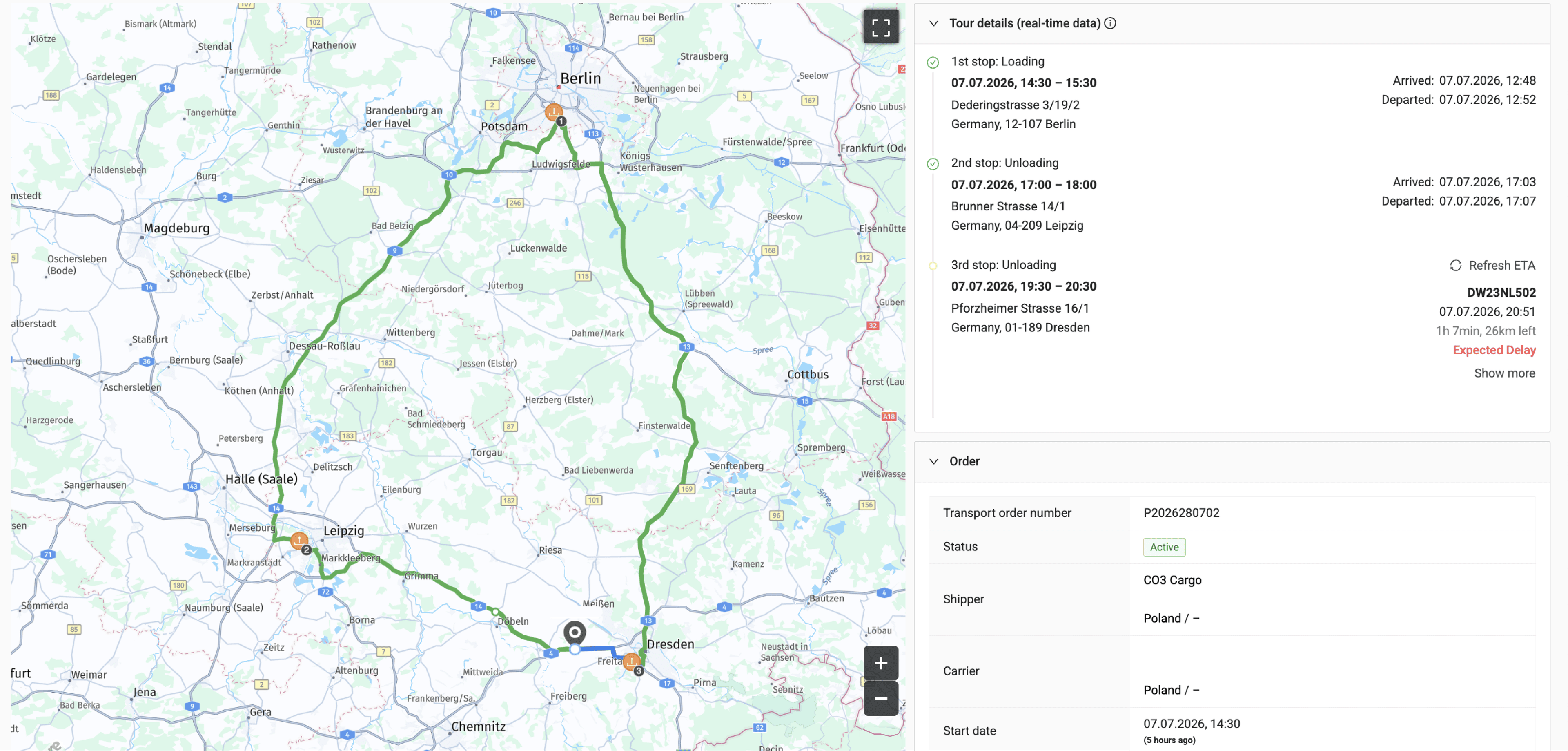
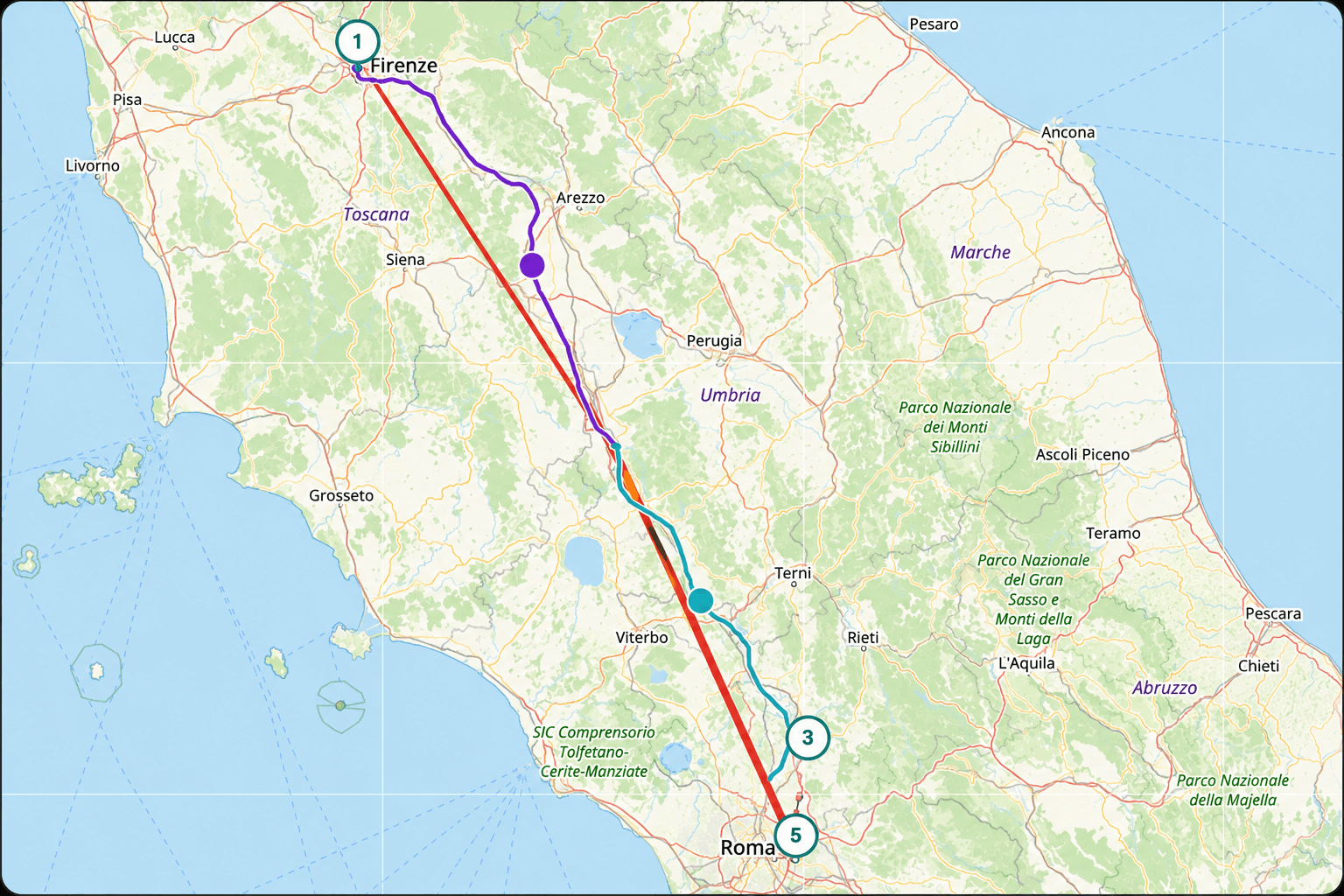
One unified data source for every truck. CO3 aggregates 500+ telematics integrations — every major truck OEM (Mercedes-Benz, MAN, Scania, Volvo, DAF, Iveco, Renault, Ford), trailer telematics, retrofit boxes and subcontractor feeds — into a single API. For the contractor, that means the Scope 1 number for a jobsite includes the owned fleet and the carrier in week 14, on one data plane, without per-haulier portal logins.
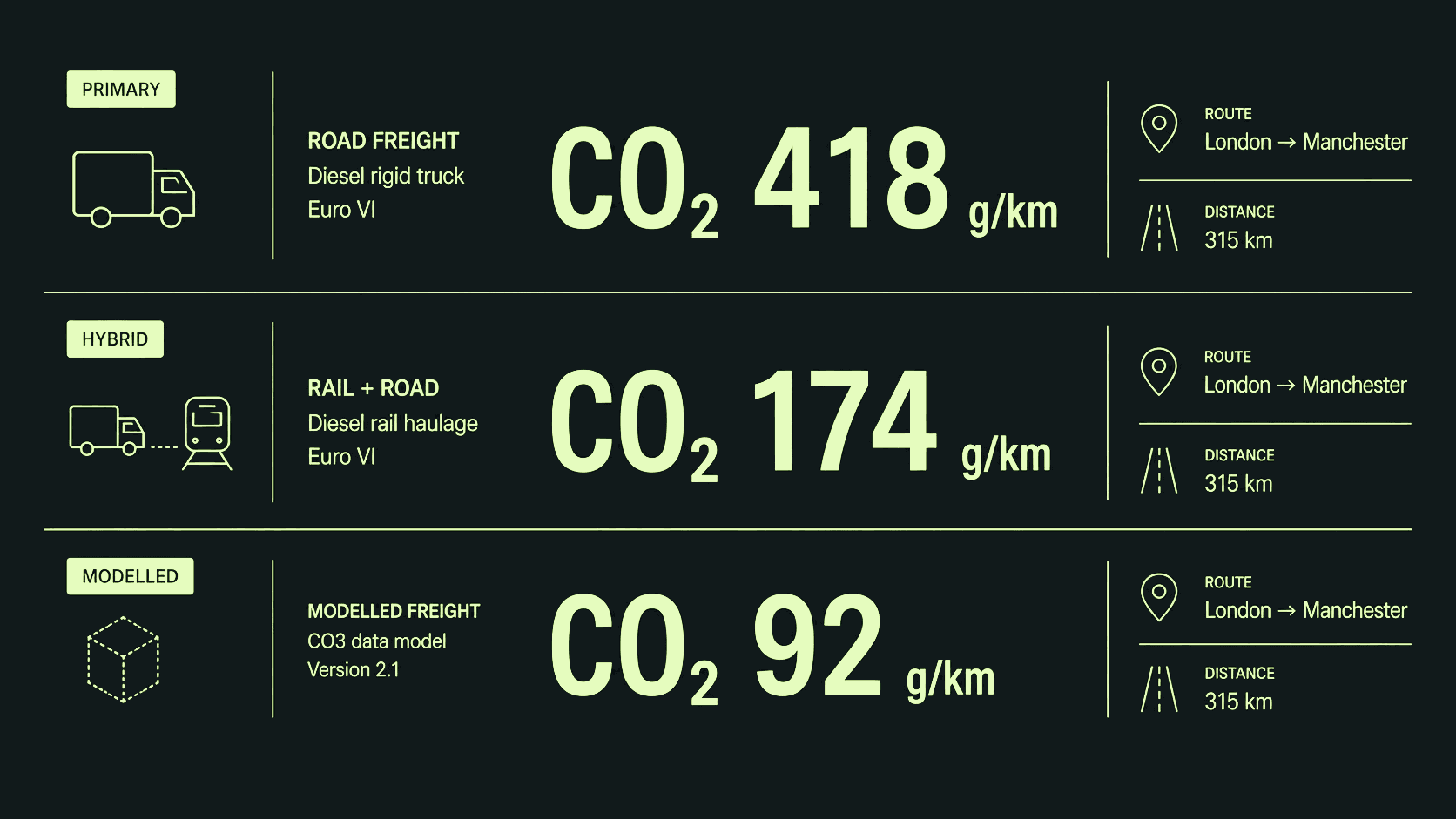
Emissions calculated per leg, aggregated per order or jobsite, aligned with GLEC and ISO 14083. CO3's CO2 engine returns a calculationMethod tag on each leg (PRIMARY where measured fuel is available, HYBRID where distance is real but coefficients are default, MODELLED where neither is available) and a primaryDataShare metric across the project. This is the disclosure the auditor needs: not a flat number, but a number with provenance.
Exportable for both tender and audit. The same data exports as a CSV for the procurement questionnaire on Monday and as a CSRD evidence file for the auditor on Friday. The "answer the client's procurement questionnaire in hours, not weeks" benefit is not theoretical — it is what happens when the underlying data exists in one place.
A pragmatic note on positioning: CO3 today calculates per-leg CO2 on completed road-freight orders and aims to align with GLEC and ISO 14083 rather than claiming a formal certification. Live in-progress emissions and non-road modes are on the roadmap. The conservative framing matters because audit teams will reject overclaim faster than they will accept a measured number.
Use case 2 — Zoning and access requirements
The legal stack, side by side
Germany.
The relevant rules sit in three layers.
StVO §45, the Road Traffic Regulations, is the primary instrument. Under §45 Abs. 9, municipalities can impose Lkw-Durchfahrtsverbote — through-traffic bans on vehicles over 3.5 tonnes — to protect residential populations from noise and emissions. Sign 253 marks the ban; commonly attached are Anlieger frei (residents and deliveries exempt) or the stricter Anlieger bis Baustelle frei (residents free only up to the construction site). A violation is a €100 fine per truck. The number of such bans grew sharply through 2024–2025 as municipalities responded to Maut-related rat-running through villages.
Umweltzonen. Around 80 German cities operate environmental zones, all of which now require the green sticker (grüne Plakette). Berlin, Munich, Stuttgart, Hamburg and an expanding list of mid-sized cities — Heidelberg, Tübingen, Erfurt — enforce via roadside checks. Entering without compliance is €100 per truck, plus the operational disruption of being turned away from the site.
Verkehrsrechtliche Anordnung. Any construction measure that occupies or restricts public traffic space requires a separate order from the local Straßenverkehrsbehörde, typically issued by the city traffic office. The order specifies how the site is cordoned off, what diversions apply, how heavy traffic is routed in and out, and the validity window. The application is time-consuming and must be submitted weeks in advance.
Layered on top is BImSchG and TA Lärm — the Federal Immission Control Act and its Technical Instructions on Noise. Quiet hours (Ruhezeiten) run 22:00–06:00 on weekdays, all day on Sundays and public holidays, with a 13:00–15:00 midday window in some states. The 32nd BImSchV (Equipment and Machinery Noise Protection Ordinance) regulates 57 categories of outdoor equipment, including construction machinery. Enforcement sits with the Ordnungsamt, which can fine without a court process — usually after a single neighbour complaint.
United Kingdom.
The dominant instrument is the Construction Traffic Management Plan (CTMP), attached either as a planning condition under the Town and Country Planning Act 1990 or as a Section 106 obligation. A CTMP specifies the access routes for HGVs, turning points, visibility splays, delivery schedules, restrictions on sensitive periods (school drop-off, peak hours) and the routes that must not be used — typically schools, residential streets, conservation areas and protected habitats. The plan is approved before commencement; breach is a planning-condition breach.
For developments in London and an expanding list of UK cities, the CLOCS Standard (Construction Logistics and Community Safety) operates alongside the CTMP. CLOCS, the national standard since 2014, requires the principal contractor to risk-assess and specify the safest vehicle routes, distribute mapping to every fleet operator and subcontractor, and require FORS Silver or equivalent accreditation. CLOCS was created after research showed construction vehicles caused a disproportionate 35% of cyclist and pedestrian fatalities involving HGVs in London.
Two further London instruments bite hardest on heavy logistics. The Ultra Low Emission Zone (ULEZ), now covering Greater London, requires HGVs to meet Euro VI or pay a £100 daily charge — enforced via ANPR. The Direct Vision Standard (DVS) requires every HGV over 12 tonnes operating in Greater London to hold an HGV Safety Permit; the minimum star rating was raised to 3 in October 2024, and sub-3-star vehicles must install Progressive Safe System equipment or face daily Penalty Charge Notices.
Beyond London, the Clean Air Zone network — Bath, Birmingham, Bradford, Bristol, Portsmouth, Sheffield, Tyneside and others — applies broadly the same Euro VI standard for HGVs.
Who it actually applies to — and the subcontractor problem
Both regimes catch the same trap: the breach is on the truck, but the liability sits with the principal contractor.
In the UK, a planning condition or Section 106 obligation is the principal contractor's. A subcontractor sending a tipper down the wrong residential street is the principal contractor's planning-condition breach to defend. CLOCS compounds this: clients must require CLOCS compliance through the supply chain, and operators must provide "acceptable evidence" — usually telematics traces — that the route plan was followed.
In Germany, the same pattern repeats. The Verkehrsrechtliche Anordnung is granted to the developer or principal contractor. A Lkw-Durchfahrtsverbot breach by a subcontractor surfaces on the principal contractor's project as a council complaint. The Ordnungsamt addresses the issue to the developer first and chases the subcontractor second.
In both countries, the result is the same: the principal contractor needs evidence of every subcontractor truck's route, in real time — not after the planning officer calls.
How CO3 fits in?
The 500+ integrations and unified API that make CO3 work for carbon reporting are the same foundation that make it work for access compliance. Three operational controls.
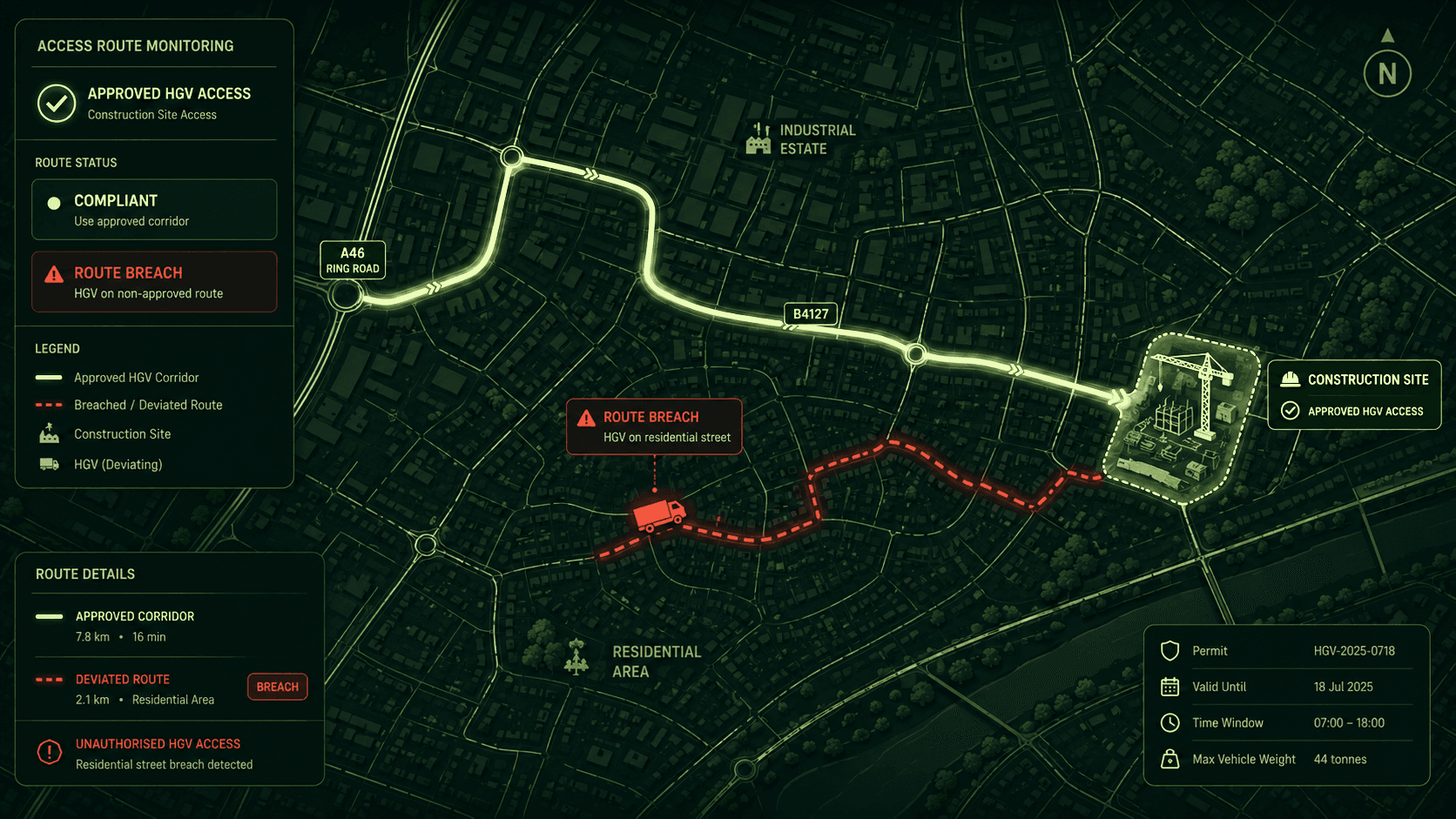
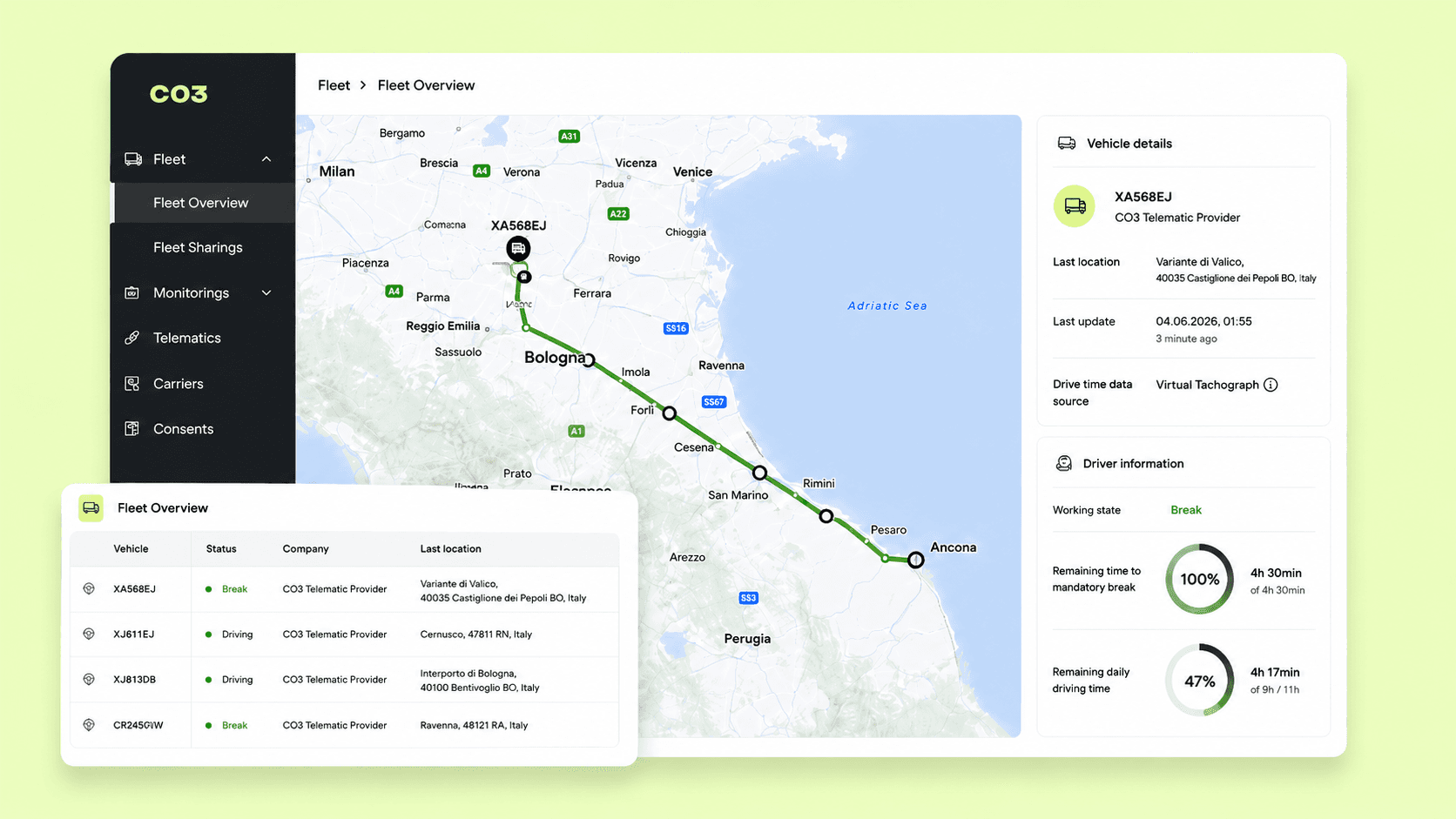
Restricted-corridor geofences. The CTMP route or the Verkehrsrechtliche Anordnung-approved corridor is loaded as a geofence. Any truck leaving the corridor triggers an alert to dispatch before it reaches the next village. The dispatcher can re-route the driver in real time, not after the resident's photograph.
No-go zones. Schools, nature reserves, residential streets explicitly excluded by the planning condition, Lkw-Durchfahrtsverbot zones flagged by the municipality — all geofenced. A truck entering one is flagged in seconds, with a complete audit trail (carrier, vehicle, driver, timestamp) ready for the contractual conversation with the subcontractor and the defensive position toward the council.
LEZ and quiet-hours pre-clearance. Every inbound truck is checked against ULEZ, CAZ, Umweltzone and DVS rules before it enters the city. Quiet-hours windows in central German cities are pre-blocked: trucks scheduled to unload after 21:30 are flagged the day before, not at 21:55.
The point is not the alert — alerts are easy. The point is that the alert arrives in time to change the outcome, and the underlying data is captured cleanly enough to defend the project's planning compliance in front of a council officer or an environmental regulator. The audit trail across owned and subcontracted fleet sits in one place, not five.
The shared thread
The two use cases look different on paper. They are not.
Both regimes have moved compliance from a year-end paperwork exercise to a live operating discipline. Both have shifted the unit of accountability from the owned fleet to every truck that touches the site, including subcontractors. Both reward the contractor with primary data over the one with a narrative. And both penalise the contractor whose tender plan is divorced from what its trucks actually do.
The infrastructure question for the project director is no longer "do we have a sustainability report" or "do we have a CTMP". It is: does the same data layer that produces our Scope 1 number also produce our route-breach evidence — and is it real-time enough for the next forty-eight hours to look different from the last forty-eight?
What to watch over the next twelve to eighteen months?
- CSRD wave 2 lands. Mid-sized listed companies join the regime in the FY 2027 reporting cycle, broadening the subcontractor pull-through further down the construction supply chain.
- UK CBAM goes live 1 January 2027. Imported steel, cement and aluminium prices reset. Contractors with full bill-of-materials carbon data will compete differently from those without.
- German municipal access tightens. Expect more cities to roll out Lkw-Durchfahrtsverbote and to add roadside ANPR enforcement. The Urban Vehicle Access Regulations registry (urbanaccessregulations.eu) is the working list — and it grows quarterly.
- ULEZ / CAZ expansion continues. More UK cities are queued for CAZ Class C (HGV-affecting) introduction. The Direct Vision Standard's minimum star rating is on a trajectory to rise to 5 stars by 2030 across Greater London.
- Procurement weighting shifts further. The 20–30% sustainability weighting now seen in some German federal tenders is a leading indicator; UK PPN 006 is expected to be tightened, not relaxed, in its first review.
Closing thought
The contractors that win in 2026 are not the ones with the best sustainability narrative — they are the ones whose telematics platform produces audit-grade evidence on both carbon and access, in real time, across every carrier and every subcontractor that touches the site. The regulatory direction in both the UK and Germany is one-way. The cost of being behind on data is going up.
If you would like to run the self-assessment above against your own operation, or see what a single jobsite Scope 1 readout plus geofence layer would look like across your current carrier base, CO3's team will run a working session with you. The audit is the easy part. The data layer is the work.
Glossary
- CSRD (Corporate Sustainability Reporting Directive). The EU directive setting mandatory sustainability disclosures for large companies. In Germany, applies from FY 2025/2026 to firms with >1,000 employees and >€450M turnover (post-Omnibus thresholds).
- ESRS E1. The European Sustainability Reporting Standard on climate change. Requires disclosure of gross Scope 1, 2 and 3 emissions with audit-grade methodology.
- SECR (Streamlined Energy and Carbon Reporting). UK regulation covering all UK quoted, large unquoted companies and large LLPs. Annual Scope 1+2 plus energy reporting.
- PPN 006 (formerly PPN 06/21). UK Procurement Policy Note requiring a published Carbon Reduction Plan for every central-government contract above £5 million per year.
- UK CBAM (Carbon Border Adjustment Mechanism). Levy on imported aluminium, cement, fertiliser, hydrogen, iron and steel from 1 January 2027.
- KSG (Bundes-Klimaschutzgesetz). German federal climate law. -65% emissions by 2030, net climate neutrality by 2045.
- AVV Klima. Administrative Regulation on the Procurement of Climate-Friendly Services. Mandates a CO2 shadow price at federal level since January 2022.
- nEHS. Germany's national emissions trading system. Auctioned from 2026 in a €55–€65 corridor.
- LkSG (Lieferkettensorgfaltspflichtengesetz). German Supply Chain Due Diligence Act. Adds documented environmental due diligence on subcontractors.
- ISO 14083. International standard for transport-chain GHG accounting. Defines primary, hybrid and modelled data quality.
- GLEC Framework. Industry-standard methodology for logistics emissions accounting, aligned with ISO 14083.
- CTMP (Construction Traffic Management Plan). UK planning document attached to a Section 106 or pre-commencement condition. Defines HGV routes, turning points, delivery windows, restricted zones.
- CLOCS (Construction Logistics and Community Safety). UK national standard for safe construction logistics. Requires fleet operator FORS Silver and explicit route mapping for all vehicles >3.5t.
- FORS (Fleet Operator Recognition Scheme). UK accreditation for fleet operators. Silver tier is the CLOCS contractual minimum.
- ULEZ. Ultra Low Emission Zone (Greater London). Requires HGVs to meet Euro VI or pay £100/day.
- Direct Vision Standard (DVS). TfL star rating for HGVs >12t entering Greater London. Minimum 3 stars from October 2024.
- StVO §45. German Road Traffic Regulations clause allowing municipalities to impose Lkw-Durchfahrtsverbote.
- Umweltzone. German low-emission zone. ~80 cities. Requires grüne Plakette (green sticker) for HGVs.
- Verkehrsrechtliche Anordnung. Order from the Straßenverkehrsbehörde required for any construction measure affecting public traffic space.
- BImSchG. German Federal Immission Control Act. Governs noise and emissions from commercial operations.
- TA Lärm. Technical Instructions on Noise — the operational rulebook under BImSchG.
- Ruhezeit. Quiet hours. 22:00–06:00 weekdays, all day Sun/holidays, 13:00–15:00 midday in some German states.






























.png&w=3840&q=75)











.png&w=3840&q=75)