Demurrage and Detention in Road Freight: Where the Hours Actually Disappear
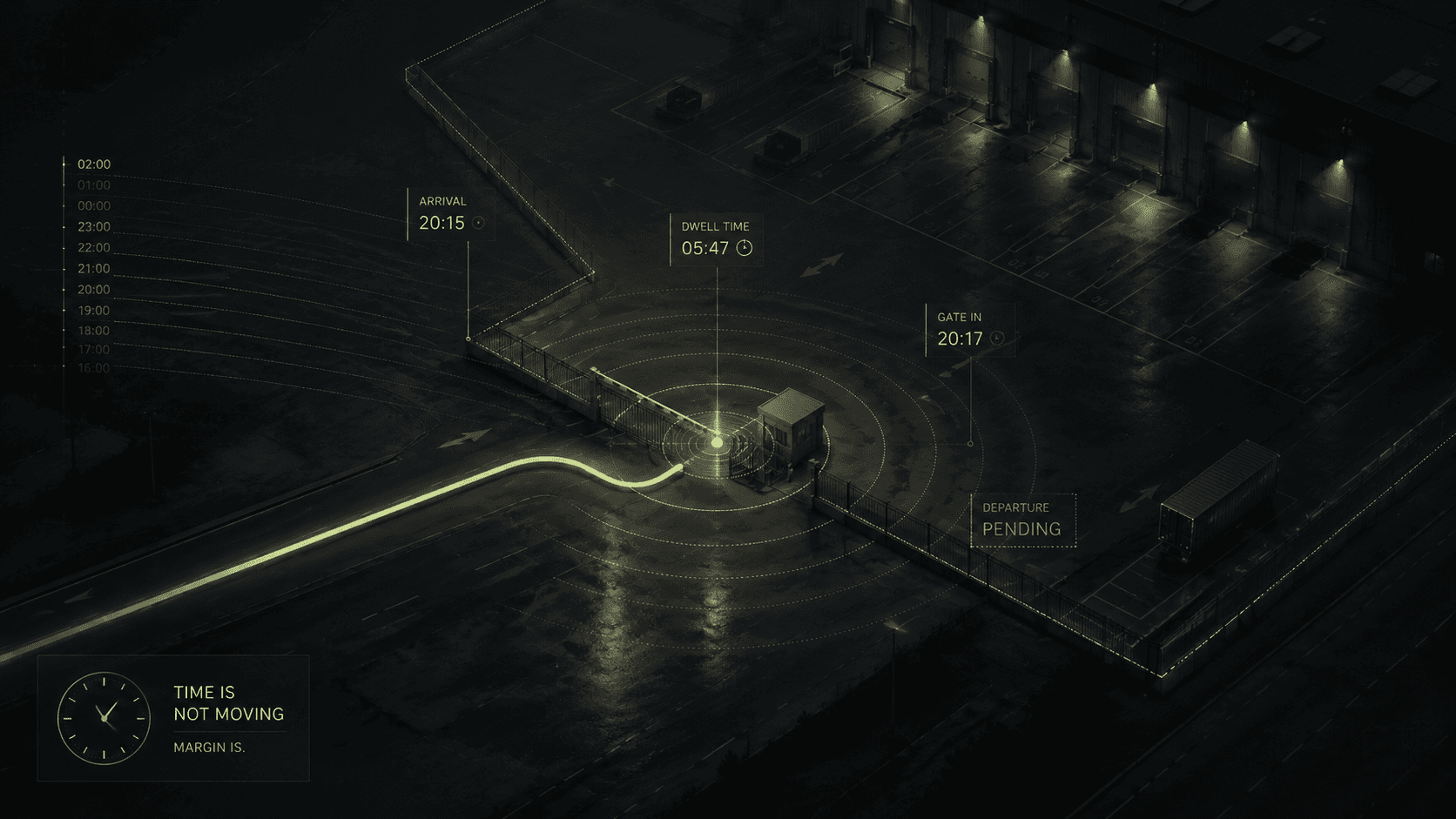
In road freight, the meter that quietly drains margin is waiting time — the hours a truck sits at a loading or unloading site beyond its free window. The trade borrows the words "demurrage" and "detention" from shipping, but for hauliers the practical issue is detention: a driver and a €200k+ asset stuck at a gate, burning a fixed cost and a finite driving day. Most of these charges are disputed, under-recovered, or absorbed silently, because nobody has trustworthy data on what actually happened. This piece explains the terms, shows where the hours really go, and explains why settling them is a data problem.
Why waiting time is the costliest thing nobody manages
A truck only earns money when it's moving freight. Every hour parked at a loading bay is an hour of fixed cost — driver wages, vehicle financing, opportunity cost of the next job — with zero revenue against it. Worse, detention eats into the driver's legally capped driving day, so a long wait doesn't just cost the idle hour; it can blow up the rest of the schedule, trigger a mandatory rest, and delay the next delivery.
Yet waiting time is the least-managed cost in most operations. Fuel gets scrutinised to the litre; detention gets argued about after the fact, if at all. The reason is simple: nobody has a clean, agreed record of when the truck arrived, when loading started, and when it left. Without that, detention becomes a he-said-she-said negotiation that hauliers usually lose.
Demurrage vs. detention: what the words actually mean
The terms come from maritime and container logistics, and they get muddled. For road freight, here's the practical distinction.
Free time is the grace period a site allows for loading or unloading before charges begin — typically around two hours for a road shipment, though it varies by shipper, commodity, and contract.
Detention is the charge that applies when loading or unloading runs past that free time — the truck and driver are detained at the site. This is the one that matters most to hauliers, because it directly ties up the vehicle and the driver. In trucking, detention is commonly billed by the hour once free time is exceeded.
Demurrage, strictly, relates to equipment (containers, trailers) sitting beyond agreed free time — more a container-logistics and intermodal term. In a pure road-haulage context, when people say "demurrage" they often mean detention. Where road meets rail or sea — drayage, port and terminal handoffs — true demurrage on containers can also bite.
Where the hours actually disappear
Detention is rarely one big delay. It's an accumulation of smaller ones, and naming them is the first step to recovering them.
The gate and check-in. Time lost queuing to enter the site and completing paperwork before the truck even reaches a dock. Invisible to most systems, because "arrival" often gets logged at the dock, not the gate.
The dock-availability gap. The truck is on site and ready, but no bay is free. This is the single biggest detention driver at busy sites and is almost entirely the receiver's making — yet the haulier carries the cost unless it can prove the timeline.
The loading/unloading overrun. The physical handling takes longer than planned — wrong paperwork, missing forklift driver, partial loads, manual recounts.
The yard-dwell tail. The handling is done, but the truck waits for release paperwork, a signature, or a security check before it can leave.
Each of these is a place where minutes leak into hours. And because they happen at the customer's or shipper's site, the haulier has the least control and, usually, the least data.
Why detention charges go unrecovered
Here's the uncomfortable truth: a large share of detention is never billed, or is billed and then successfully disputed away. The reason is almost always evidentiary.
No trusted timeline. To charge for detention you must prove arrival time, free-time start, and departure time. If your only record is the driver's note or a manual call-in, the customer can — and does — challenge it.
Conflicting records. The haulier's data says one thing, the receiver's gate log another. With no shared source of truth, the dispute defaults to the more powerful party, which is rarely the haulier.
It's not worth the fight. Each individual detention claim is small enough that chasing it costs more in admin than it recovers — so operations let it slide. Multiply that across thousands of loads and the silent write-off is enormous.
Planning blindness. Without data on which sites and lanes generate chronic detention, operators can't price it into contracts, schedule around it, or push the worst offenders to improve. The cost stays invisible and therefore unmanaged.
The fix is a trusted, automatic timeline
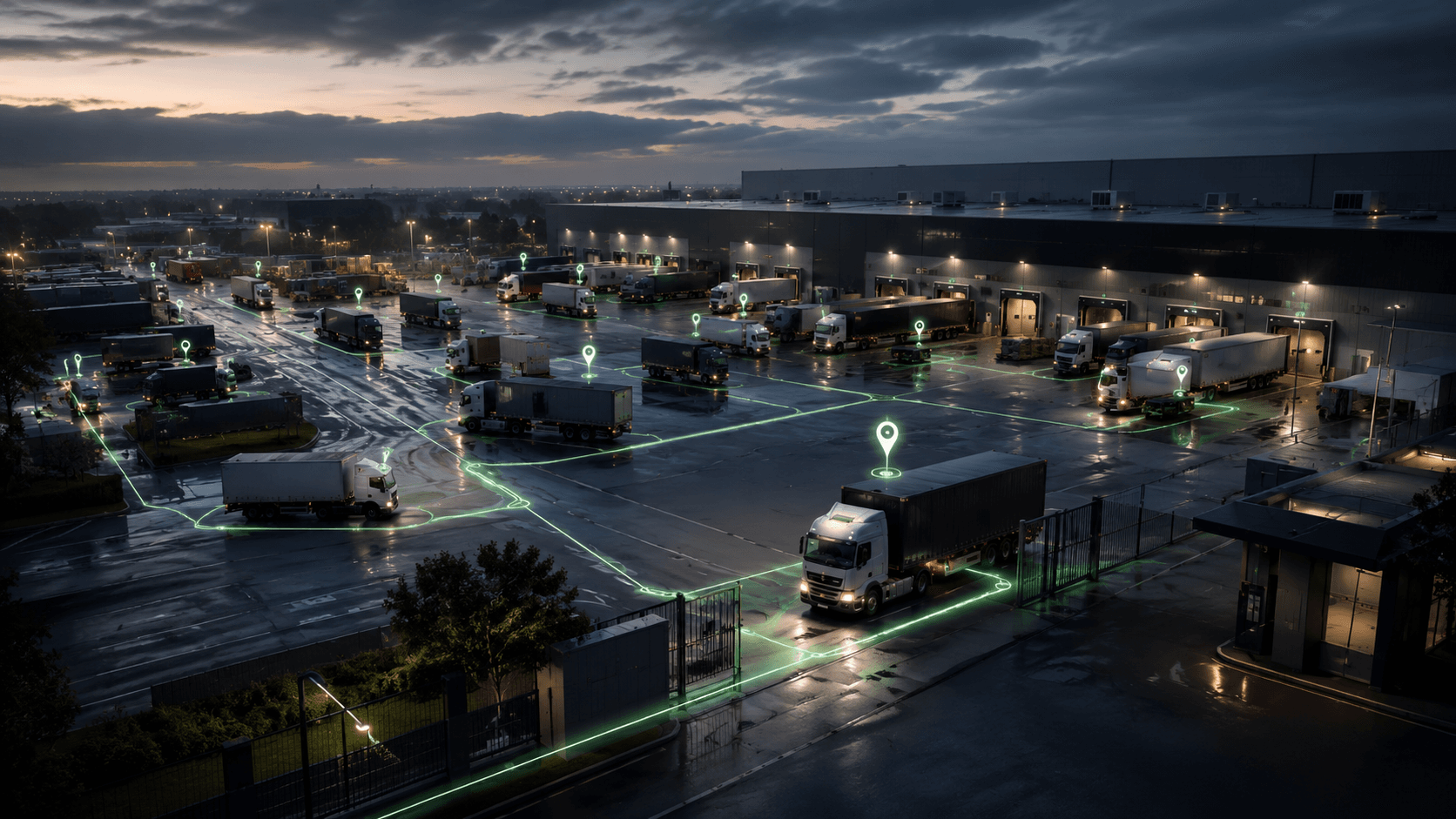
Detention is, at root, a data problem. If every load carried an automatic, time-stamped record of when the truck arrived (at the gate, not just the dock), when it left, and how long it dwelled — drawn from the vehicle itself rather than a manual note — most disputes evaporate. You can bill with confidence, defend the charge, and just as importantly, analyse detention to fix its causes.
That analysis is where the real money is. Once you can see that Site A averages 40 minutes and Site B averages three hours, you can renegotiate, reschedule, or re-price. Detention you can measure is detention you can manage.
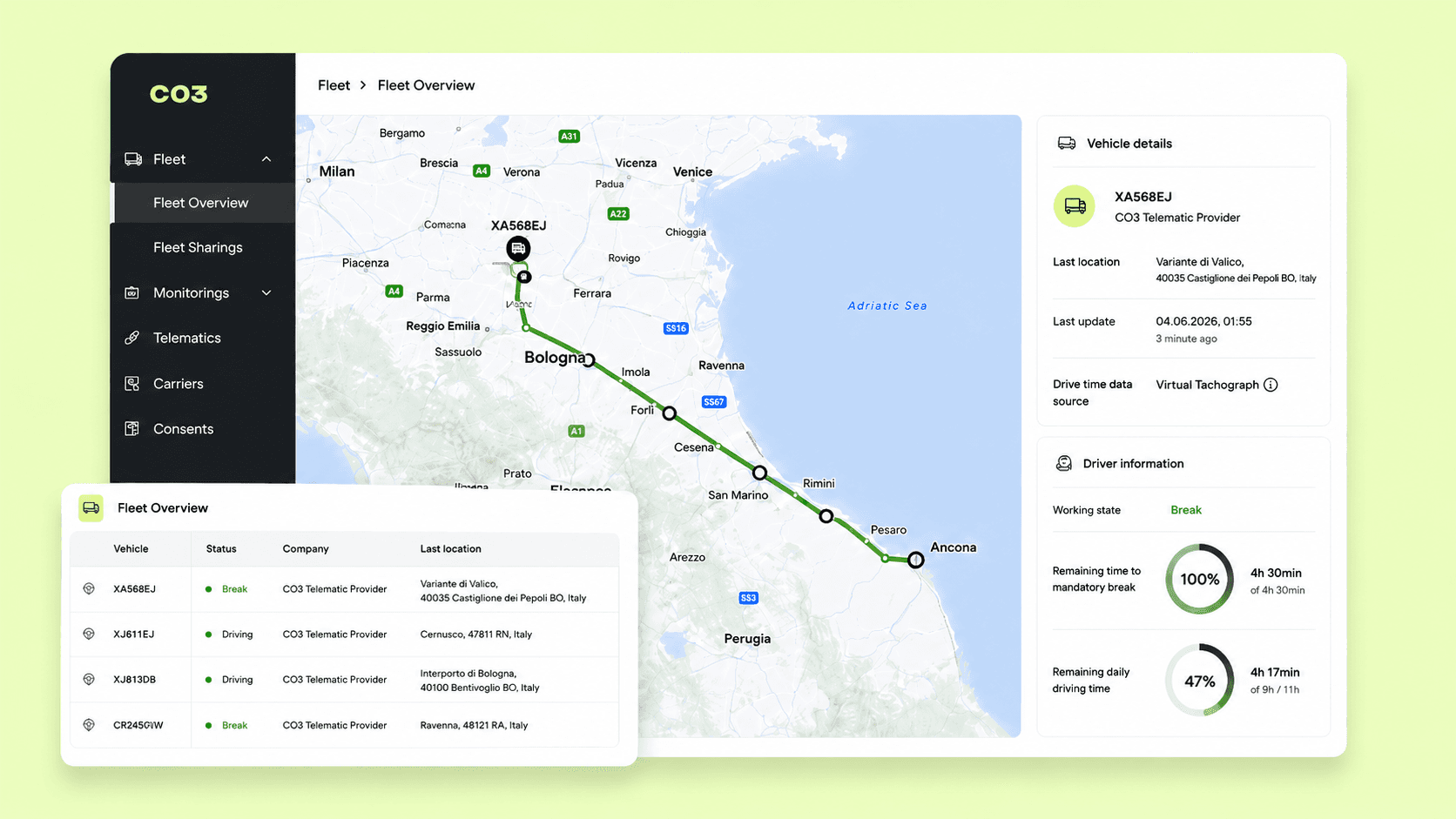
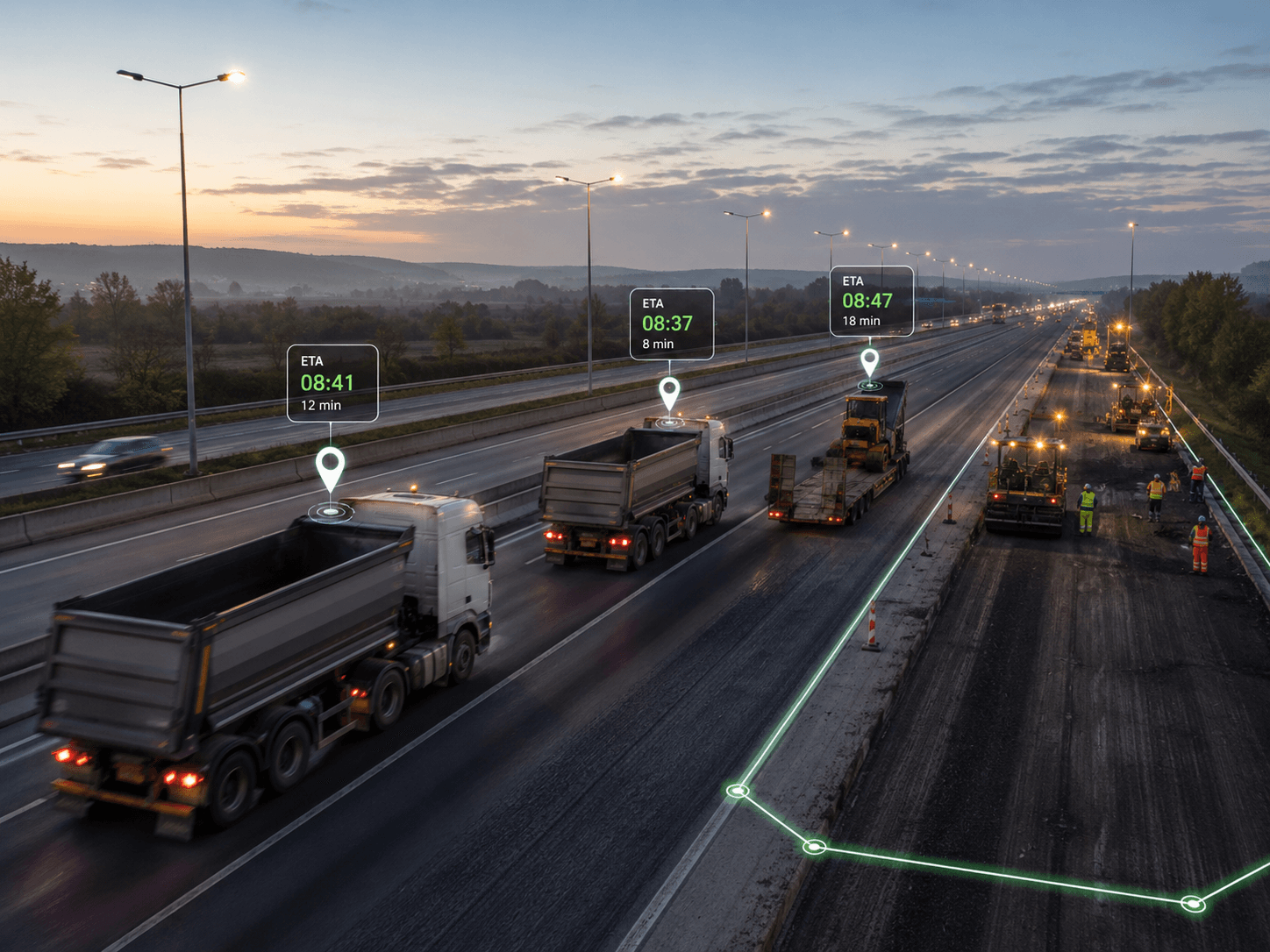
How CO3 fits. CO3 aggregates live position and telematics data from 500+ integrations across trucks, trailers, and subcontractors into a single API. Because position comes directly from the vehicle, arrival, dwell, and departure can be derived from real movement data rather than manual check calls — giving operators an objective timeline per load and the ability to spot which sites and lanes generate chronic dwell.
This is also a place where the road-freight story differs from the container-focused coverage that dominates the topic. The pain for a haulier isn't a container accruing daily fees in a port — it's a truck, a driver, and a driving day being consumed at a loading bay. The data that fixes it has to come from the truck.
Getting started without new hardware or a fight with customers
First, make arrival and departure automatic. Use the vehicle's own position data to time-stamp gate arrival, dwell, and departure for every load, so the timeline isn't dependent on a driver remembering to log it.
Second, rank your sites and lanes by dwell. You'll usually find a small number of locations generating most of the detention. That list is your negotiation and scheduling agenda.
Third, bring the data to the commercial conversation. Whether you're billing detention or asking a shipper to fix a slow dock, an objective, vehicle-sourced timeline changes the conversation from opinion to evidence.
Self-assessment checklist
- Do you capture arrival time at the gate, or only at the dock?
- Can you produce an objective dwell timeline for any load on demand?
- What share of your detention entitlement do you actually bill and recover?
- Do you know which sites and lanes cause the most waiting?
- Are your detention records strong enough to win a dispute?
- Do you factor known-bad sites into scheduling and pricing?
- Is dwell data drawn from the vehicle, or from manual check-ins?
- Could you quantify your total annual detention cost today?
If you can't answer the last one, you're almost certainly absorbing more waiting-time cost than you realise. CO3 can help you measure it from live vehicle data.
What to watch over the next 12–18 months
Driver-hours rules under the Mobility Package make detention more than a billing issue — a long wait that triggers a mandatory rest now has knock-on compliance and scheduling costs, raising the stakes on every dwell hour. Tightening capacity and driver shortages give hauliers more leverage to charge for and push back on detention. And as automatic, vehicle-sourced timelines become standard, the evidentiary advantage shifts toward operators who have the data — making detention recovery a realistic margin lever rather than a lost cause.
Closing thought
Detention is the cost that hides in plain sight: too small to chase one load at a time, too big to ignore across a fleet. The hours disappear at gates, docks, and yards where the haulier has the least data and the least control. Fix the data — an automatic, trusted timeline from the vehicle itself — and you turn an unwinnable argument into a manageable, even recoverable, cost. CO3 was built on exactly that vehicle data.
Glossary
- Free time: The grace period allowed for loading/unloading before charges begin.
- Detention: Charge for a truck and driver held at a site beyond free time; the key term for road haulage.
- Demurrage: Strictly, charge for equipment (containers/trailers) held beyond free time; common in container/intermodal logistics.
- Dwell time: Total time a vehicle spends stationary at a site.
- Yard dwell: Waiting after handling is complete, e.g. for release paperwork.
- Drayage: Short-haul road movement of containers to/from ports or rail terminals.
- Geofence: A virtual boundary around a site used to detect vehicle arrival/departure automatically.









.png&w=3840&q=75)






.png&w=3840&q=75)