From Alert Floods to Managed Exceptions: How Road Freight Operations Stop Drowning in Notifications.
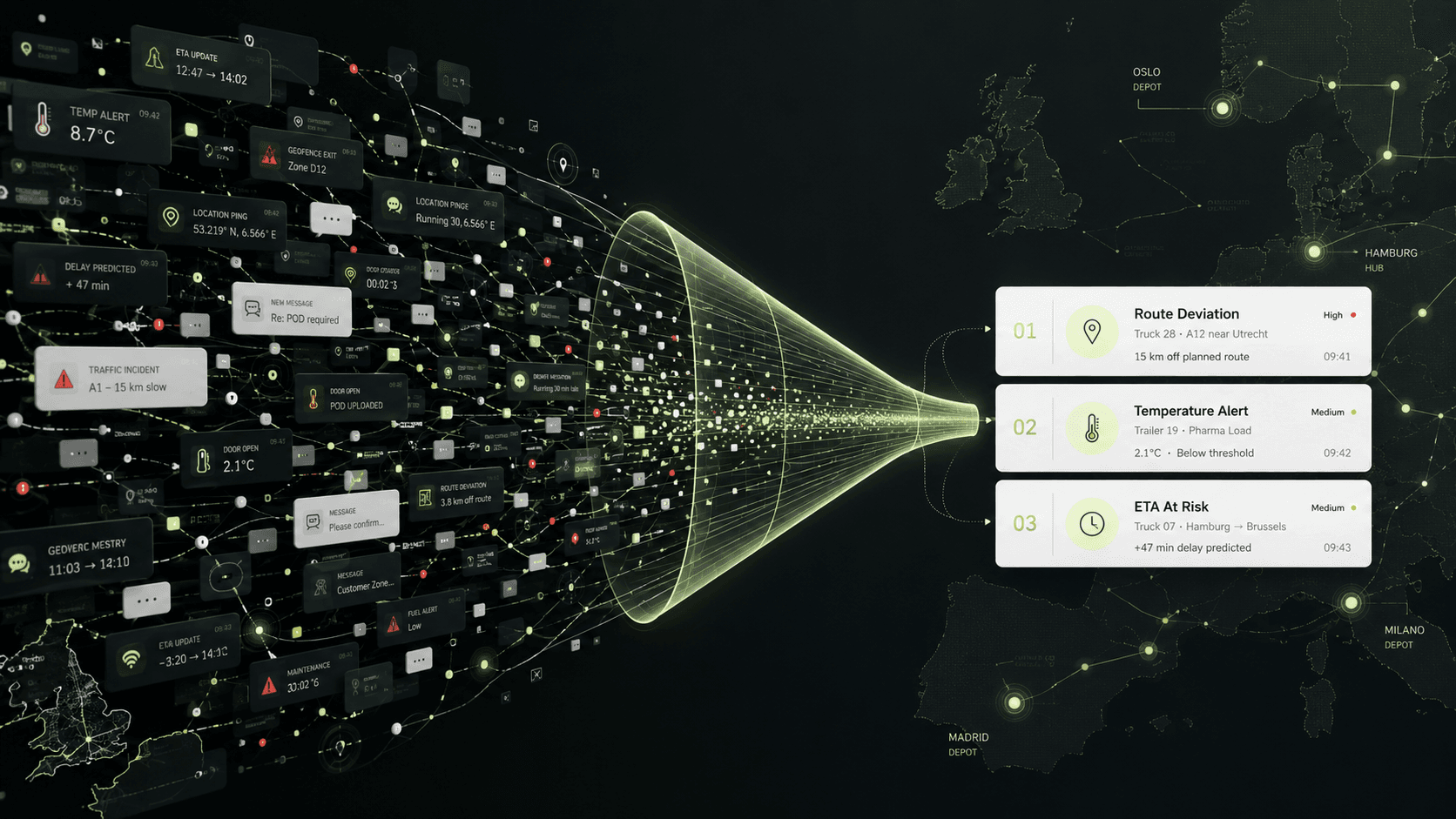
Most transport operations don't have a visibility problem anymore — they have a response problem. Tracking systems, telematics portals, and customer platforms generate hundreds of signals a day, and planners drown in notifications that mostly don't matter. Exception management is the discipline of turning that flood into a short list of things that actually need a human: detect early, classify by impact, route to the right person with context, and learn from every miss. The foundation is not a cleverer alerting tool — it is complete, live, trustworthy data across every vehicle and subcontractor on the load.
Why this matters now
For a decade, the promise of real-time transport visibility was simple: know where your trucks are. Most mid-sized and large European fleets got there. They can see positions, ETAs, and temperatures on a screen.
And yet the operational pain barely moved. Warehouse teams still get surprised by late trucks. Customers still call before the planner knows something went wrong. Reefer/frigo loads still get rejected because a temperature excursion was discovered at the warehouse gate instead of two hours after it started.
The reason is uncomfortable: seeing a problem and managing a problem are different capabilities. Knowing a truck is 90 minutes late does not tell you which customer order is affected, whether the dock slot can be moved, whether the next leg's driver will run out of legal driving time, or whether anyone needs to be told at all. That gap — between detection and coordinated response — is where the money leaks. Industry analysts now describe response quality, not visibility, as the differentiator for the next decade of logistics operations. Visibility has become table stakes.
There is a second pressure. The largest players in logistics are now selling visibility features as a product. When a major integrated logistics provider announces freight services with "proactive milestone updates," "automated driver alerts," and "real-time freight security from load to unload" as headline benefits, it tells you where customer expectations are heading. Shippers will expect their mid-sized carriers and logistics service providers to detect and resolve problems before the customer notices — because someone in the market already does.
What exception management actually means
Management by exception is an old operations idea: humans should only look at the things that deviate from plan. Everything running normally should run silently.
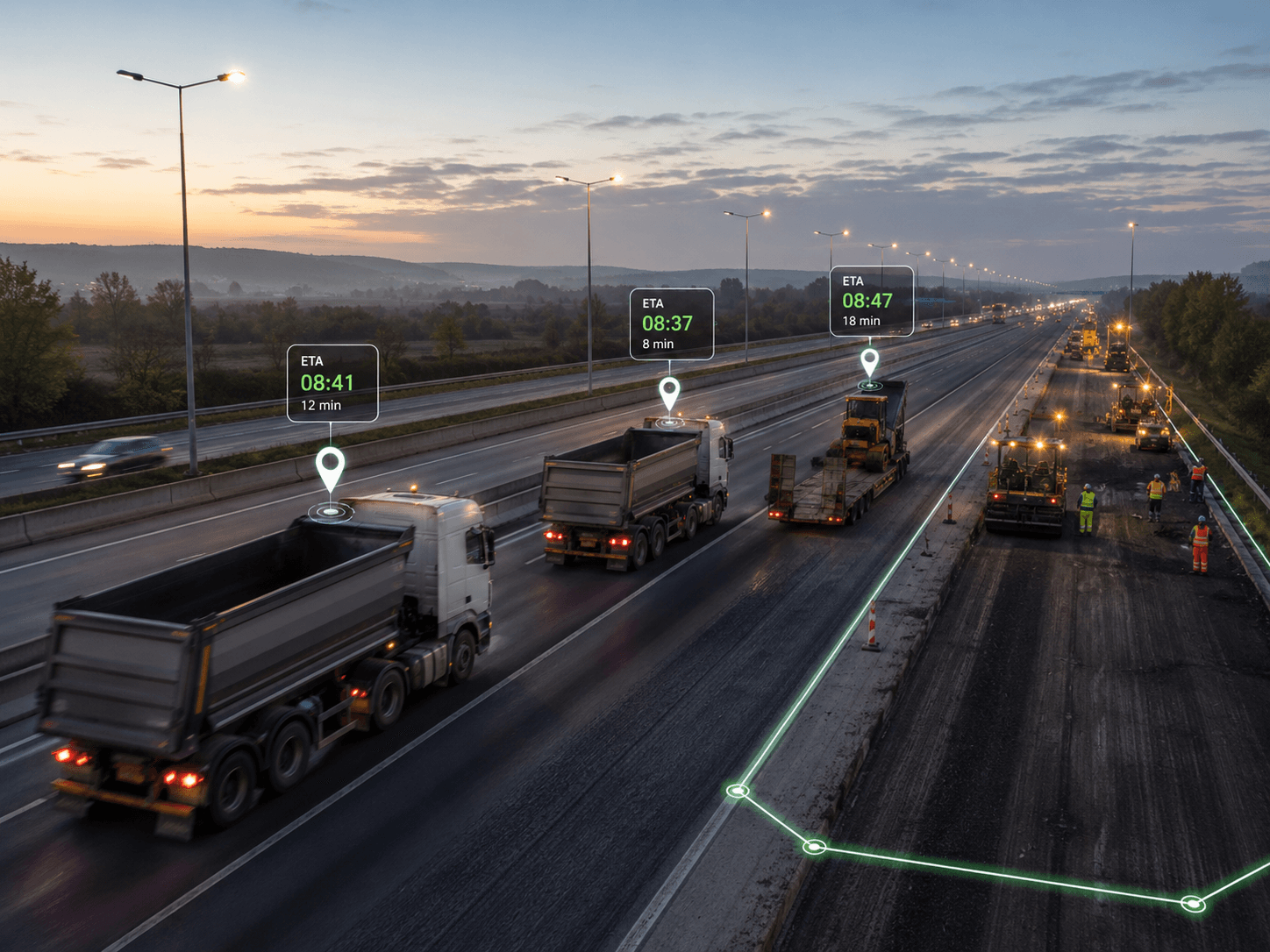
Applied to road freight, an exception is any event that threatens the plan: a predicted late arrival beyond tolerance, a temperature excursion on a pharma or food load, an unplanned stop in a high-theft corridor, a missing position feed on a subcontracted leg, a driver approaching their legal driving-time limit, a trailer that decoupled where it shouldn't have.
An alert is just a message about an event. The difference between an alerting system and an exception management system is everything that happens after the message:
A mature exception process does five things. It detects the deviation early, ideally before it happens (a predictive ETA breach, not an actual one). It classifies severity — the same 60-minute delay is trivial for a stock replenishment and critical for a production line. It contextualizes — who is affected, what are the options, what has worked before. It routes the exception to one accountable owner with that context attached. And it learns — every resolved exception feeds back into thresholds and playbooks so the same noise doesn't fire twice.
Most operations today do the first step badly and the other four not at all.
Where road freight operations get stuck
Four patterns come up again and again.
The alert-flood trap
The natural reaction to "we keep getting surprised" is to switch on more notifications. Geofence entries, geofence exits, every ETA change, every stop, every door opening. Within weeks, planners receive hundreds of notifications a day, of which a handful matter. The human response is rational and predictable: they stop reading. Alert fatigue is not a discipline problem — it is a design problem. An alert system that cries wolf trains its users to ignore the wolf.
The test is brutal but simple: what share of your alerts leads to an action? If it is under 30%, your alerting is noise generation, and your real exceptions are hiding inside it.
The dark-leg problem
You cannot manage an exception you cannot see. In European road freight, a single shipment routinely crosses two or three carriers and subcontractors, each on a different telematics system — or none your systems can read. The subcontracted leg is statistically the leg where things go wrong (it's the one you control least), and it is usually the leg with the worst data. Exception management built on partial coverage produces a dangerous illusion: a quiet dashboard that is quiet because it is blind, not because things are fine.
The context-free alert
"ETA for vehicle B-CO-3XX changed." Changed to what? Which orders are on it? Does the new ETA still make the warehouse slot? Is the warehouse flexible? A context-free alert transfers work to the planner instead of removing it: they now have to open three systems to figure out whether the notification matters. Each individual lookup costs a few minutes; multiplied across a dispatch team and a few hundred daily alerts, it quietly consumes whole headcounts.
The no-owner, no-memory problem
In many operations, alerts go to a shared inbox or a group channel. Everyone sees them; no one owns them. The same exception gets handled three times or zero times. And when it is resolved, the resolution evaporates — nothing is recorded about what the threshold should have been, which customer accepted the delay, or which subcontractor keeps producing the same failure. Operations without an exception memory pay for the same lesson every week.
A practical framework: the exception funnel
Think of exception management as a funnel that compresses thousands of raw signals into a handful of decisions.
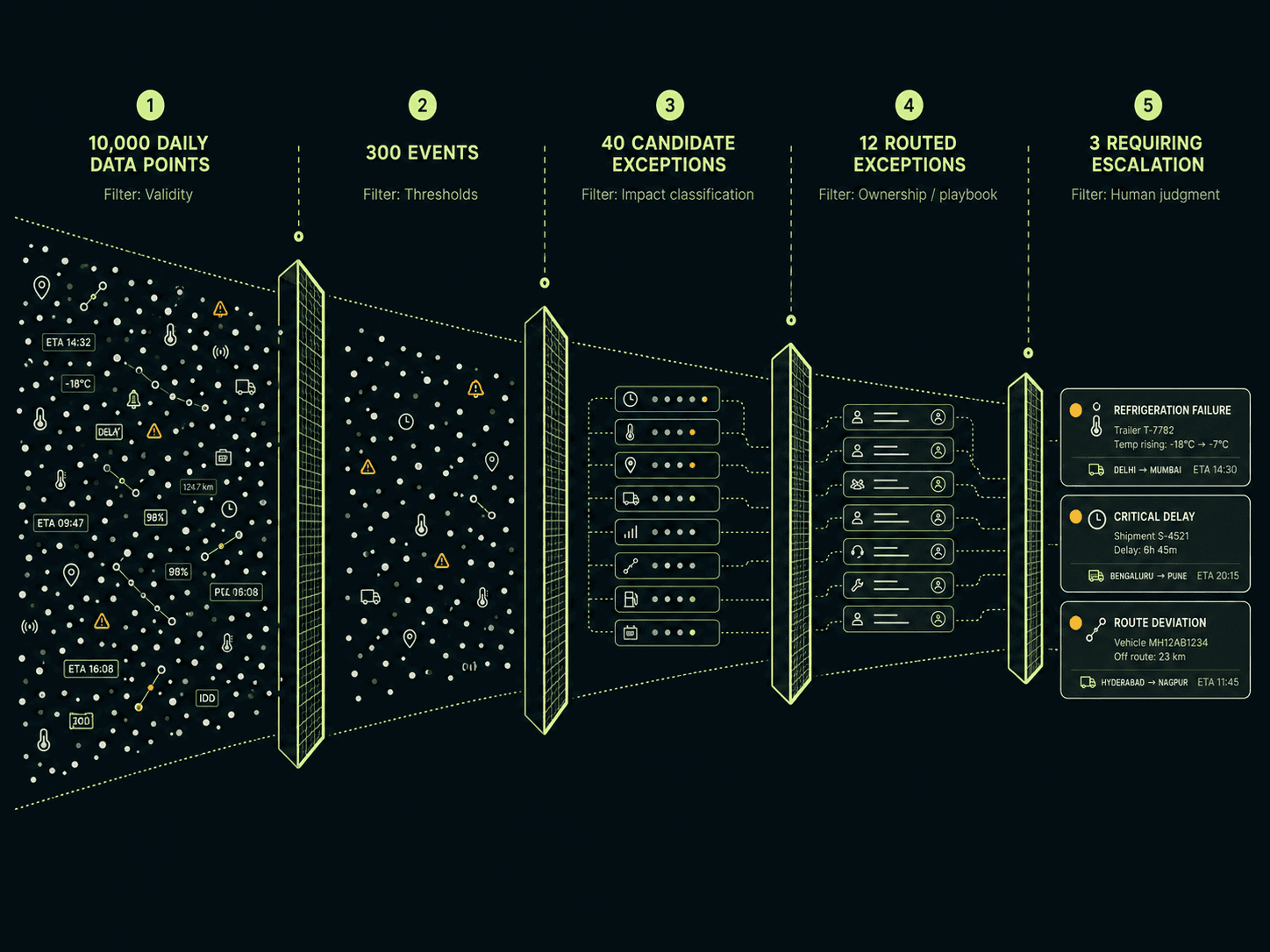
Stage 1 — Trustworthy signal. Everything starts with data quality and coverage. Position data must be live (minutes, not half-hours), complete across all legs including subcontractors, and validated — a GPS jump or a stale feed must be recognized as a data problem, not reported as a vehicle problem. This stage is unglamorous and decisive: every false signal that enters the funnel multiplies work downstream.
Stage 2 — Meaningful thresholds. Generic thresholds generate generic noise. A useful threshold reflects the lane, the load, and the receiver: a 30-minute tolerance for a fixed production slot, three hours for a flexible warehouse delivery. Temperature alerting that knows the difference between a brief door-opening spike and a failing cooling unit. Thresholds should be reviewed against outcomes — if an alert type never changes a decision, widen it or kill it.
Stage 3 — Impact classification. When a threshold fires, the question is "so what?" — which orders, which customers, which downstream commitments. This is where most setups stop short, because answering it requires the transport plan and the live vehicle data in the same system. Severity should be assigned automatically: critical (customer promise or compliance at risk), major (cost will be incurred), minor (log it, no action).
Stage 4 — Routing with a playbook. Each exception type gets one owner and a default first move: late ETA beyond tolerance → notify receiver, offer new slot; temperature excursion → contact driver, verify setpoint, document for the quality file; unexplained stop in a risk area → security protocol. Playbooks turn exceptions from improvisation into routine — and they make performance measurable.
Stage 5 — The feedback loop. Once a week, look at the misses in both directions: exceptions that fired and didn't matter (tighten the funnel) and problems that hurt you without ever firing an alert (you have a coverage or threshold gap). Track one number above all: time-to-resolution from first detectable signal to closed exception. It is the single best summary of operational responsiveness.
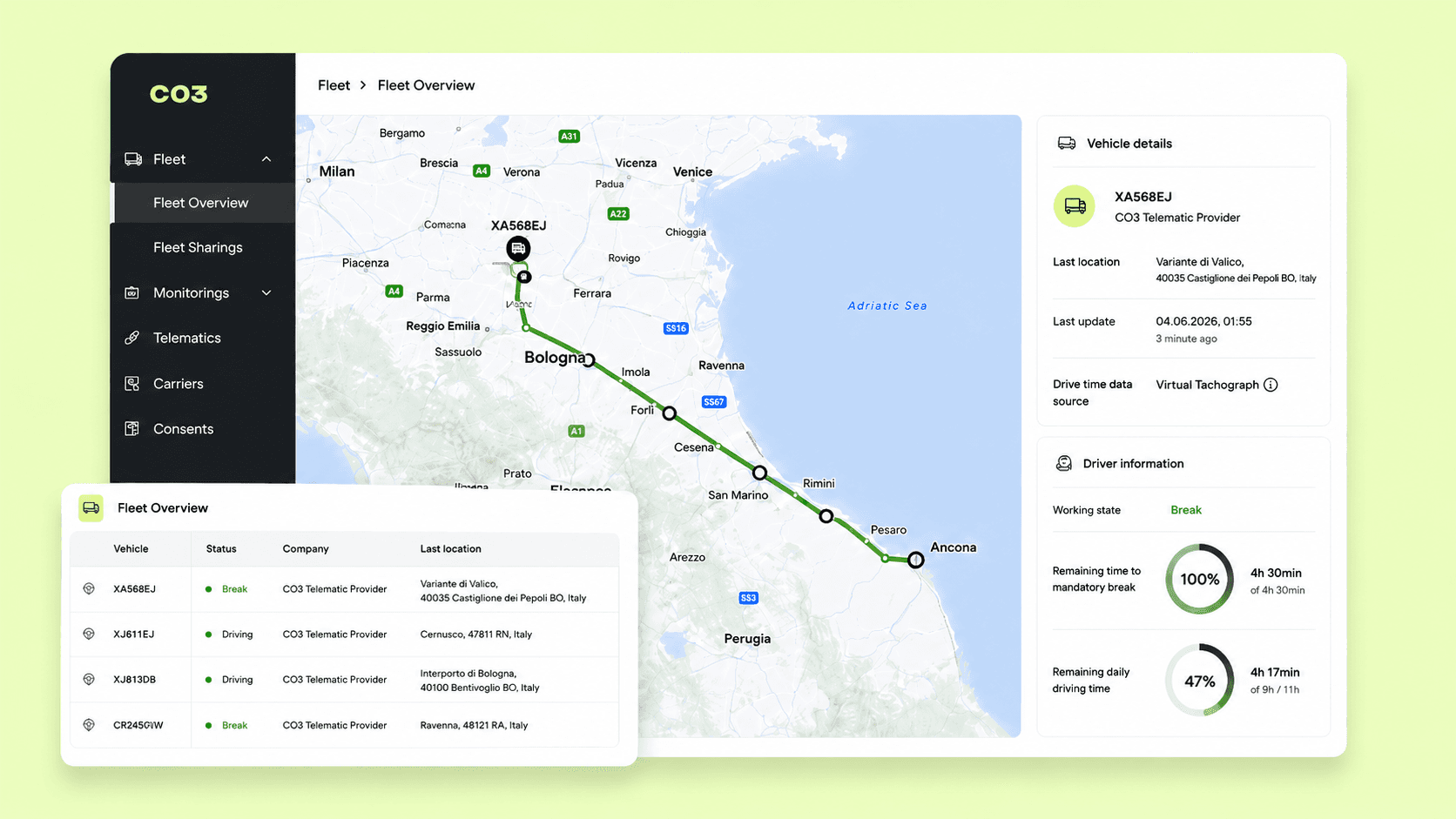
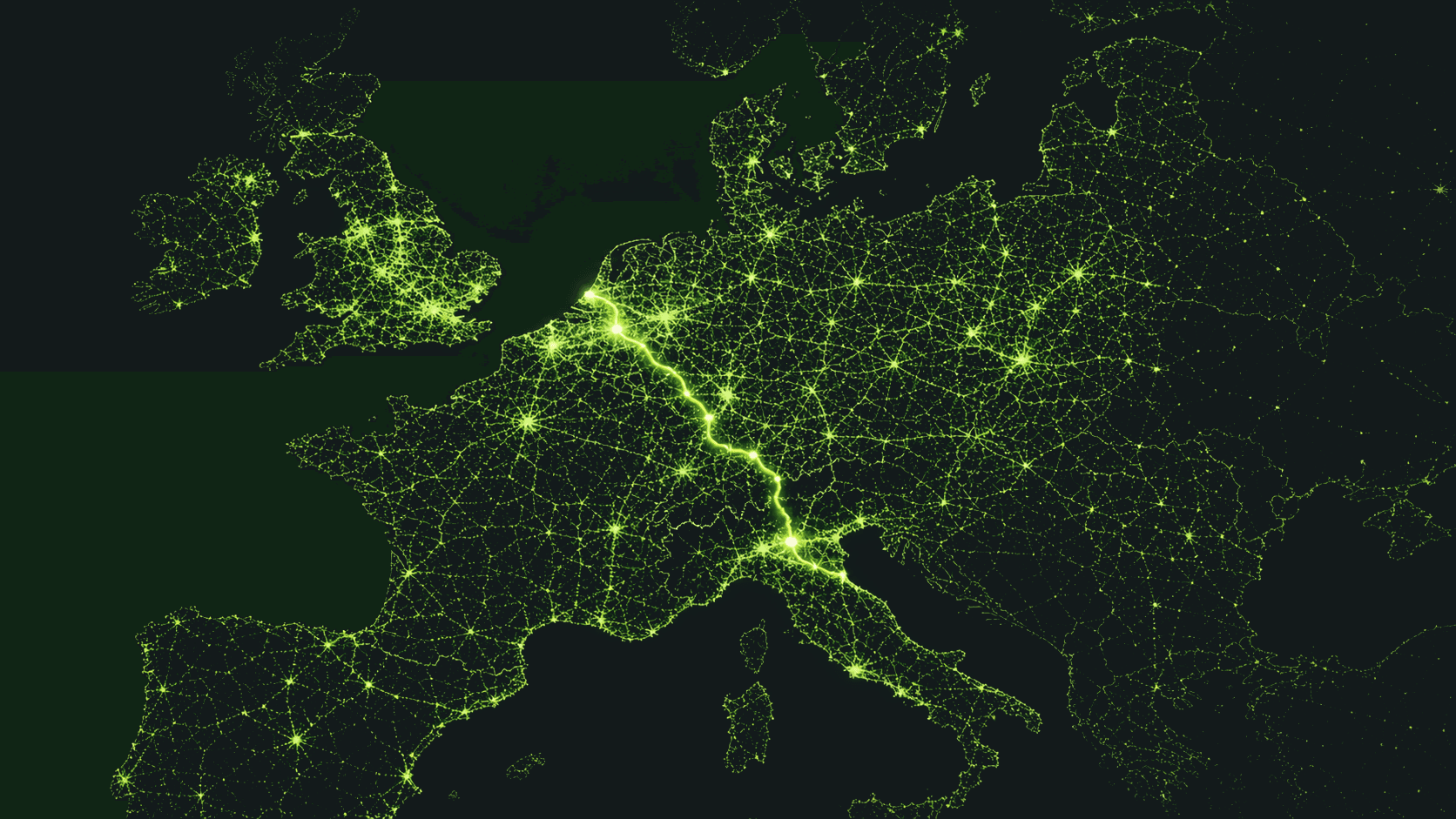
How CO3 fits in. Exception management is only as good as the data layer underneath it. CO3 aggregates live telematics from more than 500 integrations — trucks, trailers, telematics devices, and cooling units, including subcontractors' systems — into a single API, without installing new hardware. That gives the exception funnel what it needs at stage 1: positions, ETAs, temperatures, and vehicle events from the source, across the whole fleet rather than the directly-owned part of it. Whether the funnel logic runs in your TMS, your control tower, or a dedicated tool, it is fed by one consistent, validated stream instead of a dozen portals.
What "good" looks like in practice
A useful mental picture: a dispatch team of six running 400 daily shipments. Before, each planner watches portals and a shared inbox; problems surface when a customer calls. After, the team starts the shift with an exception queue — a ranked list of, say, nine items, each with the affected orders, the severity, and the suggested first move attached. Everything else is running to plan and stays out of sight. Two of the nine resolve with a single customer notification. One — a reefer trending warm on a pharma load — triggers the quality playbook and a driver call within minutes of the trend starting, not at the delivery gate.
Nothing in that picture is futuristic. Every component exists today. What separates teams that operate this way from teams that drown is rarely the alerting software — it is whether the underlying data is complete enough, live enough, and trusted enough that people act on it without double-checking.
Getting started without a rip-and-replace
You do not need a new TMS or a control-tower program to begin. A pragmatic path:
First, close the coverage gaps. List every leg type you run — own fleet, charter, subcontractor, last-mile partner — and establish where you have live data and where you are dark. Connecting existing telematics (yours and your subcontractors') is the highest-leverage move; it usually requires integration work, not hardware.
Second, run an alert audit. For two weeks, count alerts received versus alerts acted on, per type. Kill or widen everything below an agreed action rate. This single exercise typically removes more than half the noise and costs nothing.
Third, write playbooks for your top three exception types. Late ETA, temperature excursion, dark vehicle — for most operations these cover the bulk of the pain. One owner, one severity rule, one default first move each. Measure time-to-resolution from day one.
Then expand: more exception types, tighter thresholds, more automation of the routine responses — at the pace your team's trust in the data grows.
Self-assessment: ten questions
Run your current setup through these:
- Can we see live data for every leg of a shipment, including subcontracted ones?
- Do we detect predicted problems (ETA breach ahead) or only actual ones?
- Does every alert carry the affected orders and customers with it?
- Is severity assigned automatically, or does a human triage every notification?
- Does each exception type have exactly one accountable owner?
- Do we have a written first move for our top three exception types?
- What share of our alerts leads to an action — and do we know the number?
- Do we measure time-to-resolution per exception?
- When an exception is resolved, is anything recorded that improves the next one?
- Did any problem hurt us last month without ever triggering an alert?
Three or more "no" answers means your operation is doing alerting, not exception management. CO3 can run this audit with your team against your live fleet data.
What to watch over the next 12–18 months
Three developments are worth tracking. First, AI-assisted triage is becoming real: systems that classify exception severity, assemble context, and propose the first response automatically, with humans approving rather than investigating. The technology is moving fast; its usefulness still stands or falls with data quality underneath. Second, customer-facing expectations keep compressing — proactive notification of delays is shifting from a differentiator to a contractual expectation in tenders, driven by what the largest integrated players now offer as standard. Third, sensor density is rising: door sensors, cargo cameras, smarter cooling units, and the broader smart-tachograph rollout mean more event types will be detectable — which makes a disciplined funnel more valuable, not less, because more signals without better filtering just means a bigger flood.
Closing thought
Visibility tells you what is happening. Exception management decides what you do about it — and does so before your customer calls. The operations that win the next few years won't be the ones with the most dashboards; they'll be the ones with the shortest distance between a deviation and a resolved decision. That distance is built on data you can trust across every vehicle and every subcontractor. Start by measuring it. CO3 can help you see what you're missing.
Glossary
- Exception: Any event that threatens the transport plan — a predicted late arrival, temperature excursion, unplanned stop, or data blackout — and therefore needs a decision.
- Alert: A notification about an event. An alert only becomes useful when paired with impact, ownership, and a next step.
- Management by exception: An operating principle where humans only review deviations from plan; everything on-plan runs without attention.
- Alert fatigue: The state where users receive so many low-value notifications that they stop reading all of them, including the critical ones.
- Exception funnel: A staged filter that compresses raw data points into a small set of routed, actionable exceptions.
- Time-to-resolution: Elapsed time from the first detectable signal of a problem to the exception being closed. The core KPI of exception management.
- Dark leg: A portion of a shipment (often subcontracted) with no live tracking data.
- Predictive ETA breach: A delay detected from a forecasted arrival time before the vehicle is actually late.
- Temperature excursion: A period where cargo temperature leaves its contractual range, critical in pharma and food transport.
- Playbook: A predefined response for an exception type: owner, severity rule, and default first move.
- Telematics: In-vehicle hardware/software transmitting GPS position, speed, fuel, temperature, and vehicle events.
- Control tower: A central function (team plus software) monitoring transport execution across carriers and modes.












.png&w=3840&q=75)











.png&w=3840&q=75)