Construction

The vehicle data platform for construction logistics.

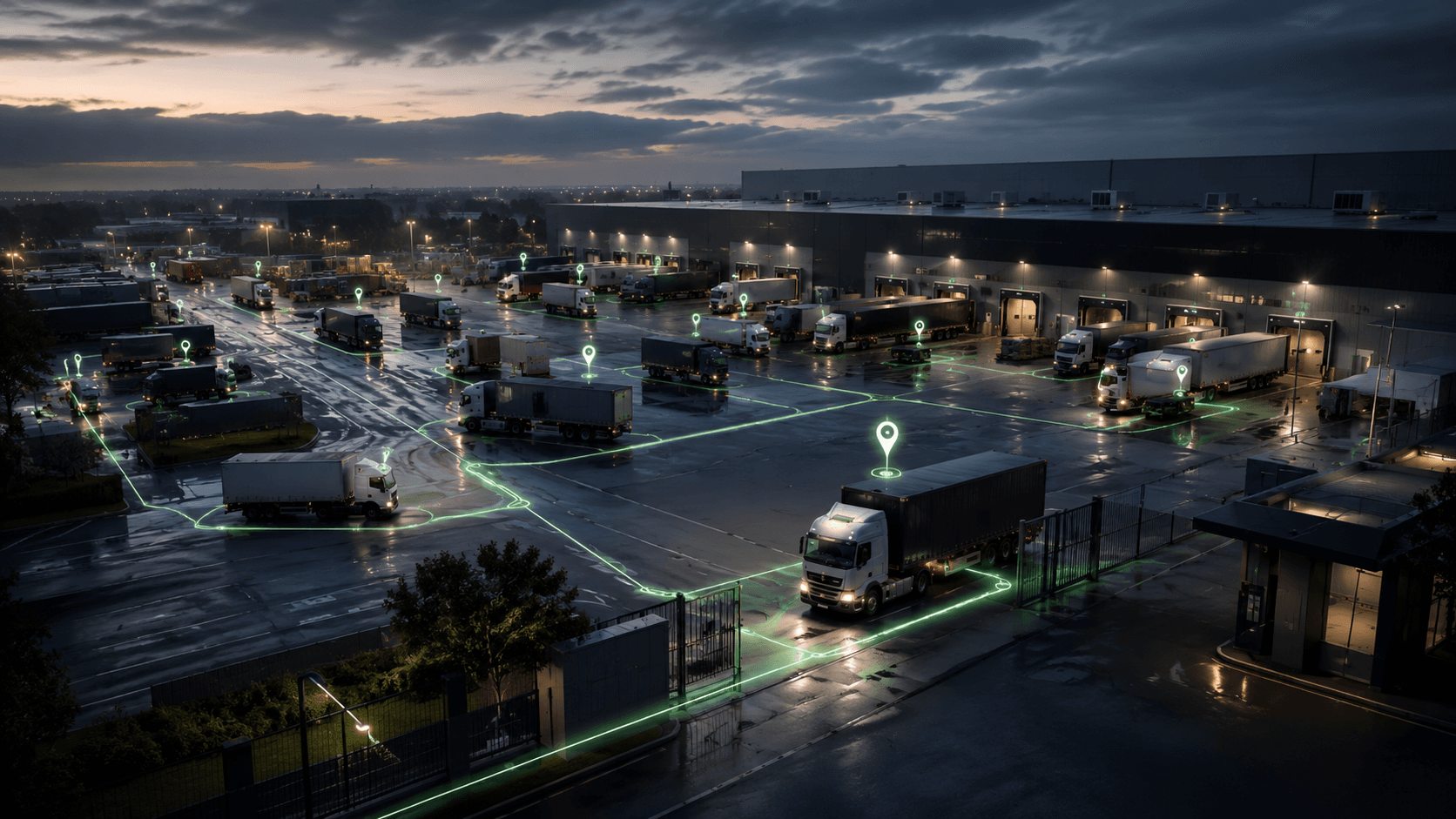
A single site can take 40 truck deliveries a day from a dozen different carriers, and construction firms rarely own any of them. CO3 connects every carrier and telematics system delivering to your sites into one real-time stream, through one API and hardware-free, so you can see and sequence every delivery, keep trucks on the agreed route and prove the CO2 of every load.

Trusted across European construction logistics

The construction logistics data problem

You don't have a subcontracting problem. You have a data problem.

Every truck on your site belongs to someone else.

Construction rarely runs its own fleet. Tippers, mixers and flatbeds are all subcontracted, so the vehicles moving your material never appear in one telematics view.

Deliveries arrive blind.

Without reliable ETAs you can't sequence the gate, so trucks queue, drivers wait and the site stalls.

Trucks take the wrong roads.

Permits and local authorities dictate which roads heavy vehicles may use, to keep them out of villages and residential streets. But you can't see, steer or prove the route each carrier actually takes.

Your site CO2 is unprovable.

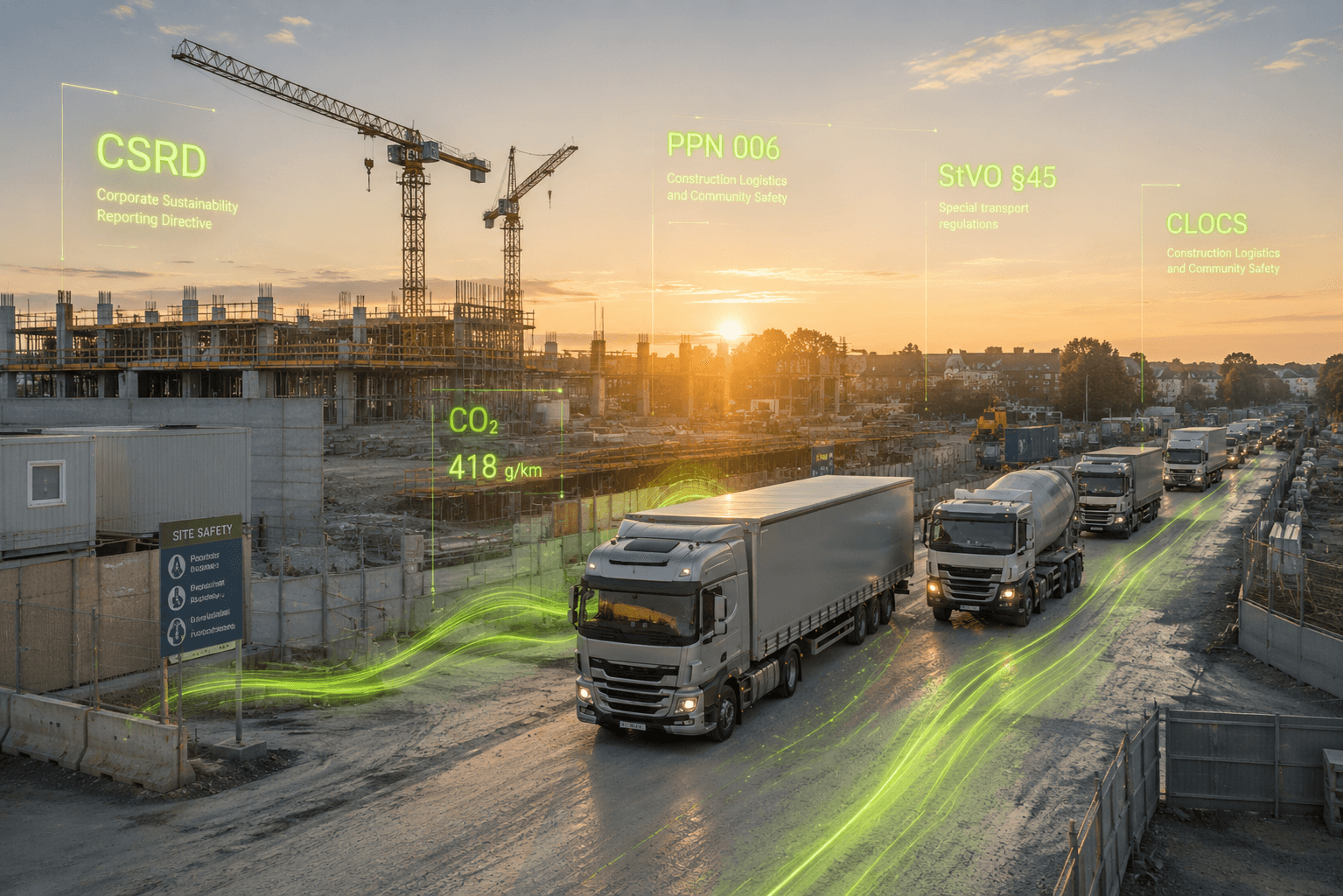
CSRD, PPN 006 and client tenders now demand transport emissions you can trace to source, and modelled averages won't pass.

One live data layer

One live data layer across every truck and carrier on your sites. We clear the way.

Efficiency

Sequence the gate with reliable delivery ETAs across every carrier, so trucks arrive in order, not in a queue, and the site keeps moving.

Cost

Cut idling, waiting time and failed or duplicated deliveries by seeing every inbound truck, from every carrier, in one live view.

Sustainability

Prove the carbon of every load. CO3 reports site and project transport CO2 from primary truck fuel-burn, ISO 14083-aligned: the auditable method CSRD, PPN 006 and green-tender scoring now require, not modelled averages that don't survive scrutiny.

Compliance

Keep every truck on the permitted haul route, out of villages and residential streets, and evidence it, alongside low-emission-zone, access and driver-hours compliance.

Network

The densest vehicle data network in Europe.

integrations
575+
of the European fleet covered
95%
countries live
37+
truck & trailer OEM partnerships
12
to onboard a new vehicle
<3 min

How it works

From a dozen carriers to one live view, in minutes.

  1. Connect

    Connect every carrier delivering to your sites from 575+ ready integrations. No hardware, no dev project.

  2. Aggregate

    CO3 normalises every feed into one real-time stream: every truck inbound to every site, mapped and deduplicated.

  3. Act

    Sequence deliveries, keep trucks on the agreed route and report per-project CO2 through one API or the CO3 portal.

Built for construction's hardest data jobs.

One site, 40 trucks, 12 carriers. None of them yours.

Construction rarely owns the trucks: nearly every delivery is subcontracted, so almost none of your site traffic appears in a telematics dashboard. CO3 connects every carrier as fast as if they were your own, in under three minutes and with no hardware, so one site view covers every inbound truck.

Read: One construction site, 40 trucks, 12 carriers: the mixed-fleet visibility problem

Trucks

The right roads, not just any road

Permits and local authorities dictate which roads heavy trucks may use, to keep them out of villages and residential streets. CO3's live location data lets you set the agreed haul route, see which carriers stick to it, and check low-emission-zone and access eligibility before a complaint or a fine, not after.

Read: Inside Europe's 320+ low-emission zones: the construction-truck routing problem
Mixed Fleet

Integrations

It already works with your carriers.

575+ live integrations across truck OEMs, trailer OEMs and third-party telematics, covering more than 95% of the European fleet. Whatever your subcontracted carriers drive, CO3 already speaks to it.

Related reading

SITE UK GERMANY
May 27, 2026—14 min

CO2 reporting and zoning rules on construction sites: a UK and Germany compliance deep-dive

CSRD, PPN 006, Lkw-Durchfahrtsverbote, CTMP, ULEZ — two regulatory stacks now bite at the same time, on the same truck. A compliance guide for construction contractors...

Trucks
May 27, 2026—6 min

One construction site, 40 trucks, 12 carriers: the mixed-fleet visibility problem
Forty trucks a day across twelve carriers, and only the contractor's own fleet appears in any telematics dashboard. The 30-day integration plan for closing the 80% vis...

Mixed Fleet
May 29, 2026—8 min

Inside Europe's 320+ low-emission zones: the construction-truck routing problem

More than 320 low-emission zones across Europe — and the heavy-truck rules tighten every January. The routing playbook for construction fleets.

Frequently asked questions

What is a construction logistics data platform?

A construction logistics data platform connects the telematics from every truck and carrier delivering to your sites into one real-time stream, so you can sequence deliveries, keep trucks on agreed routes and report transport CO2 per load and per project. CO3 does this through one API, with no hardware.

How does CO3 give visibility over carriers I don't own?

CO3 connects the telematics already on your subcontracted carriers' trucks: 575+ ready integrations covering over 95% of the European fleet. Each carrier can be live in under three minutes, with no hardware, so every truck delivering to your site appears in one view.

Can CO3 control which roads trucks take to my site?

Yes. With live location data across every carrier, CO3 lets you set the agreed haul route, see which trucks follow it, and check low-emission-zone and access eligibility, so heavy vehicles stay out of villages and restricted streets, and you can prove it.

Does CO3 produce CSRD- and PPN 006-ready CO2 data?

CO3 calculates transport emissions from primary truck fuel-burn aligned to ISO 14083: the auditable, source-traceable method that construction CSRD reporting, PPN 006 and green tenders require, reportable per load and per project rather than as a modelled average.

How does this reduce queueing and waiting at the gate?

Reliable delivery ETAs across every carrier let you sequence arrivals instead of reacting to them, so trucks come in order, drivers wait less, and site teams aren't standing idle.

Do we need to install hardware on our carriers' trucks?

No. CO3 connects to the telematics already on the vehicles. There is no hardware and no integration project. Most carriers are live in minutes.

See every truck heading to your site.

One data layer across every truck and carrier delivering to your sites.

Construction Fleet & Site Logistics Data Platform | CO3